What to look for when choosing one
First check whether your planned portions will fit in your existing freezer. If you regularly make larger batches, choose an additional chest freezer based on your total frozen food, available space and ongoing energy consumption.
The Verbraucherzentrale recommends choosing an appliance size that matches your actual needs. The Federal Centre for Nutrition advises freezing food in the quantities you need, in individual portions.
| What matters |
What to look for when buying |
Who this matters to most |
| Space for dough and other frozen food |
Check how much freezer space you have and the largest amount of food you usually store at once. If you freeze larger fresh batches, also check the appliance’s freezing capacity. |
If you want to store several dough portions alongside other food, consider your total frozen stock. Around 36% of consumers prioritise having enough space for dough and other frozen food. |
| Dimensions and location |
Check the width, depth and height, as well as the route for getting the appliance into place and the space needed to open the lid. If it will be kept in a cold room, check that the specific model is approved for those conditions. |
If space is limited, I want to know in advance whether the appliance will fit in the intended spot with the lid open. Around 29% of consumers prioritise suitable external dimensions and location. |
| Ongoing energy consumption |
If you’re comparing similarly sized appliances, check the stated annual energy consumption and avoid choosing one that is much bigger than you need. |
If you’ll keep an additional chest freezer running between baking days, you’ll want to factor in its energy use. Around 21% of consumers focus mainly on ongoing electricity costs. |
| Portion storage and ice build-up |
Check whether baskets make it easier to take out individual portions. LowFrost or SmartFrost specifications apply to the model in question and don’t automatically mean that defrosting is unnecessary. |
For lunchboxes, I want to be able to find individually labelled portions easily and get an idea of how much effort defrosting will involve. Around 14% of consumers prioritise easy access to individual portions. |
Chest freezers at Joybuy
This selection includes chest freezers for storing portions of biscuit dough and other frozen food. Choose the capacity, dimensions and features to suit what you need to store and where you plan to keep the appliance.
 No image available
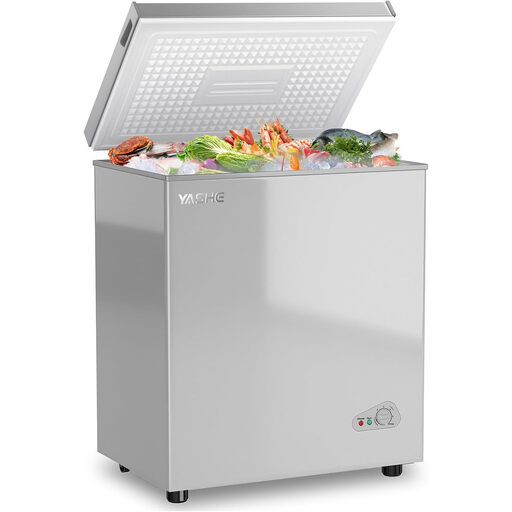
YASHE BC-150Q-EU chest freezer, 150 l
An option for storing separate dough portions alongside other frozen food.
Joybuy lists a capacity of 150 l, two removable baskets and six temperature settings.
Joybuy
 No image available
AUCMA chest freezer, 141 l, convertible
An option if you want to store dough portions and other frozen food in one chest freezer.
Joybuy lists a capacity of 141 l, one removable basket and the option to switch between fridge and freezer modes. The external dimensions are also listed as 632 × 554 × 848 mm.
Joybuy
 No image available
AUCMA chest freezer, 197 l, convertible
An option for larger amounts of frozen food, provided the extra capacity suits the space available.
Joybuy lists a capacity of 197 l, one removable basket and convertible fridge and freezer modes. The external dimensions are listed as 816 × 554 × 848 mm.
Joybuy
 No image available
Gorenje FH15E6W5 chest freezer, 141 l
If you plan to keep it in a cold room, check whether this specific model is approved for the conditions there.
Joybuy lists a capacity of 141 l, a freezing capacity of 8 kg/24 h and flexible wire baskets. FreezeProtect is specified for this model down to −15 °C.
Joybuy
 No image available
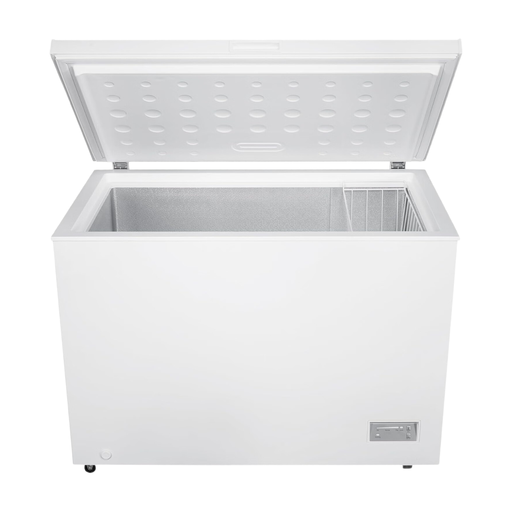
Beko CF316EWN chest freezer, 308 l
An option for larger amounts of frozen food. Check that the capacity and dimensions suit your needs.
Joybuy lists a usable capacity of 308 l, a freezing capacity of 16 kg/24 h, one basket and wheels. The model is also listed with an E energy rating and as suitable for unheated rooms.
Joybuy
Frequently asked questions
How much freezer space do I need for biscuit dough alone?
First work out how many dough portions and how much other food you want to keep in the freezer at the same time. If they fit in your existing appliance, choosing a size to suit your needs suggests you won’t need an extra chest freezer just for dough.
How should I prepare dough portions for lunchbox biscuits later on?
Divide the dough into the portions you need, pack them in freezer-safe packaging and label them. The Federal Centre for Nutrition recommends freezing food in individual portions, while the German Federal Institute for Risk Assessment advises against eating biscuit dough raw. So bake the biscuits before packing them in a lunchbox.
What should I consider when positioning and defrosting a chest freezer?
Check the external dimensions, the route for getting the appliance into place, the clearance needed to open the lid and the temperature rating for the room where you plan to keep it. Manufacturer specifications such as LowFrost or SmartFrost describe reduced ice build-up; they don’t generally mean that defrosting is unnecessary.
Which energy label applies when buying a new chest freezer online in Germany?
The EU energy label, with ratings from A to G, applies to household freezers. The European Commission requires retailers to display the energy labelling information clearly in online listings. This doesn’t mean there’s a legally required minimum rating for your personal purchase.
How can I compare the energy consumption of different chest freezers?
For appliances that suit your capacity and space requirements, compare the stated annual energy consumption in kWh. The Verbraucherzentrale notes that an appliance that’s too large for your needs can use more electricity than necessary.


