If you’re eating the beans that same evening, you don’t need to buy a new chest freezer just for that; a separate appliance makes most sense if you regularly freeze larger quantities for meals later on. Choose a capacity that suits your beans and other frozen food, and check freezing capacity, annual energy consumption and available space separately. The Verbraucherzentrale (German consumer advice centre) warns that an oversized appliance can use electricity unnecessarily. Blanching prepares beans for freezing, but it doesn’t replace cooking them thoroughly before eating: the Bundeszentrum für Ernährung (German Federal Centre for Nutrition) recommends freezing them in portions, and the Bundesinstitut für Risikobewertung (German Federal Institute for Risk Assessment) advises cooking green beans thoroughly.
Who would benefit from a chest freezer?
Households that freeze larger quantities of beans
If you regularly freeze several portions for meals together later on, you’ll need space for the beans as well as other frozen food. The Verbraucherzentrale advises choosing an appliance size that matches your actual needs, while the Bundeszentrum für Ernährung recommends freezing beans in portions.
Households with limited space
If there’s no room for a large chest freezer, make sure its external dimensions, clearance for the open lid and the route to its final position all work together.
Households that often take out individual portions
If you take individual meals from a mixed selection of frozen food, an organised layout can make things easier. The Bundeszentrum für Ernährung recommends labelling frozen portions with their contents, quantity and date.
What should you look for when buying?
First, check whether your existing freezer compartment has enough room. Only if you need extra space for portions to use later is it worth comparing chest freezers by size and features.
Use your existing freezer compartment
A good fit if: you only occasionally freeze a few portions for later meals and have room in your freezer compartment.
Things to weigh up: you won’t need another appliance, but space may be tight if you’re freezing a larger harvest or several portions at once.
Compact chest freezer
A good fit if: you want to store extra portions regularly but have limited floor space.
Things to weigh up: check the capacity, freezing capacity and annual energy consumption of the specific model; a smaller chest freezer isn’t automatically more energy-efficient.
Larger chest freezer
A good fit if: you often freeze larger quantities of beans and other food, and have enough space for the appliance.
Things to weigh up: unused capacity can mean wasted electricity. A fast-freeze function doesn’t replace checking the freezing capacity in kg/24 h.
| What matters when buying |
What to look for |
Who should consider it? |
| Capacity to suit your food |
Compare the usable capacity in litres with the portions of beans and other frozen food you plan to store; don’t choose a larger chest freezer than you need. |
If I regularly store portions of beans for meals together later on, I need enough room for my other frozen food too; around 36% of consumers prioritise having the right storage capacity. |
| Ongoing electricity use |
For appliances with a suitable capacity, compare annual consumption in kWh and use the EU energy label as an additional point of reference. |
If I’m adding an appliance that will run all the time, I want to understand its annual energy consumption; around 29% of consumers put electricity use first. |
| Space and location |
Measure the width, depth and height, allow room for the lid to open and check the route for moving it into position. If the room is unheated, check the permitted ambient temperature for the specific model. |
If space is limited, the chest freezer, its open lid and the route to its final position all need to fit; around 21% of consumers prioritise dimensions and installation conditions. |
| Access to portions and freezing capacity |
Check whether baskets make it easier to reach individual packs, and look at the freezing capacity in kg/24 h if you plan to freeze larger quantities of fresh food. |
If I take out individual packs or freeze a larger batch of fresh food, I want to be able to find portions easily and choose a suitable freezing capacity; around 14% of consumers prioritise access and freezing capacity. |
Common buying mistakes
-
Buying a chest freezer just for tonight’s meal
A separate appliance makes most sense if you regularly freeze larger quantities for meals later on.
First work out which portions you actually want to keep, then check whether your existing freezer compartment has enough room.
An extra appliance can use electricity all the time, even if you hardly use it.
-
Assuming capacity in litres tells you the freezing capacity
Storage capacity and the amount an appliance can freeze within 24 hours are two different things.
Compare the food you plan to store with the usable capacity, then check the fresh quantity you plan to freeze in one day against the stated freezing capacity in kg/24 h.
-
Assuming reduced ice build-up means no defrosting
According to the manufacturers, features such as MinFrost and SmartFrost reduce ice build-up; they don’t mean you’ll never need to defrost the appliance.
Check the defrosting method and care instructions in the manual for the specific model.
-
Serving blanched beans without cooking them after defrosting
The Bundesinstitut für Risikobewertung warns that raw green beans contain phasin. Briefly blanching beans before freezing doesn’t make them ready to eat.
Treat freezing as a way to store food, and cook the beans thoroughly before eating.
Brands and models at a glance
Exquisit
The GT100-010E is a compact model for households with limited space.
- Exquisit lists a removable basket and manual defrosting with a drain for defrost water among this model’s features.
- Check the GT100-010E’s usable capacity in its product specifications before using a specific capacity in litres as a deciding factor.
Gorenje
The FH15E6W5 is an option for storing extra food; the FH14EAW is a different model variant.
- Gorenje lists a usable capacity of 141 l and a freezing capacity of 8 kg/24 h for the FH15E6W5.
- Don’t apply specifications for the FH14EAW to the FH15E6W5.
Haier
The HCE200C is an option for households looking to store more food.
- Haier lists a capacity of 196 l, energy efficiency class C, lighting and a Fast-Freeze function for the HCE200C.
- These specifications apply to the HCE200C. The feature name doesn’t replace checking that its freezing capacity suits the quantity you plan to freeze each day.
Beko
The HSA24540N is a larger chest freezer for storing more food.
- Beko lists a capacity of 230 l and energy efficiency class E for the HSA24540N.
- Beko describes MinFrost as a feature that reduces ice build-up; the name doesn’t guarantee that you won’t need to defrost the appliance.
Liebherr
The CFe 1870 Pure is a larger chest freezer, and the manufacturer specifies the ambient temperatures it can be used in.
- Liebherr lists a capacity of 281 l and FrostProtect for ambient temperatures as low as −15 °C.
- SmartFrost and StopFrost are described as reducing frost build-up, not as proof that the chest freezer never needs defrosting.
Chest freezers at Joybuy
This selection includes chest freezers for extra storage. Product names range from 95L to 291L; compare the capacity with your needs and the external dimensions with the space you have available.
 No image available
AUCMA convertible chest freezer, 141L
For extra storage, with a basket to help keep packs organised.
The product name lists a capacity of 141L, energy efficiency class E, a 7-setting thermostat, a removable basket and a defrost water drain.
View at Joybuy
 No image available
AUCMA convertible chest freezer, 95L
For a modest amount of extra storage, with a basket to help keep packs organised.
The product name lists a capacity of 95L, energy efficiency class E, a 7-setting thermostat, a removable basket and a defrost water drain.
View at Joybuy
 No image available
AUCMA convertible chest freezer, 291L
For larger quantities of extra food, with lighting to help you find what you need.
The product name lists a capacity of 291L, energy efficiency class E, interior lighting, digital temperature control and a removable basket with a defrost water drain.
View at Joybuy
 No image available
AUCMA convertible chest freezer, 197L
For extra storage, with a basket to help keep packs organised.
The product name lists a capacity of 197L, energy efficiency class E, digital temperature control, a removable basket and a defrost water drain.
View at Joybuy
 No image available
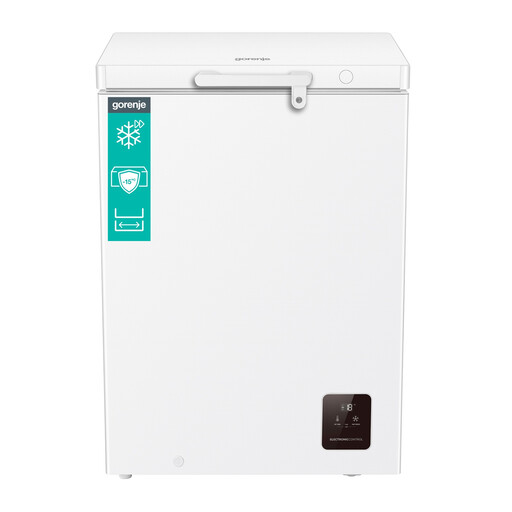
Gorenje FH15E6W5 chest freezer, 141L
For extra portions of beans and other food, with flexible baskets to help keep everything organised.
Gorenje lists a usable capacity of 141 l and a freezing capacity of 8 kg/24 h for the FH15E6W5. The product name also lists FastFreeze and flexible baskets.
View at Joybuy
Frequently asked questions
Do I need to buy a chest freezer for beans we’re eating tonight?
No, not just for that meal. A separate freezer is worth considering if you regularly want to store food or freeze larger quantities for meals later on.
How should I prepare green beans for freezing and eating later?
The Bundeszentrum für Ernährung recommends washing and trimming the beans, blanching them briefly, plunging them straight into iced water, draining them well and freezing them in portions. Green beans must be cooked thoroughly before eating: the Bundesinstitut für Risikobewertung warns that raw beans contain phasin. Blanching them for freezing doesn’t make them ready to eat.
How can I keep the chest freezer and individual portions organised?
Label portions with their contents and the date; the Bundeszentrum für Ernährung recommends labelling frozen food in this way. If you often take out individual packs, check whether the specific model has baskets and whether they suit the way you organise your food.
How do I compare chest freezer energy consumption?
Compare the stated annual consumption in kWh for appliances with a capacity that suits your needs. The Verbraucherzentrale points out that an oversized freezer can use electricity unnecessarily; actual energy consumption at home also depends on how you use the appliance.
What should I know about the energy label and taking back an old appliance?
In 2021, the Representation of the European Commission in Germany explained that the rescaled EU energy efficiency scale for fridges and freezers runs from A to G, with very few appliances expected to achieve class A initially. Section 17 of the German Electrical and Electronic Equipment Act (ElektroG) covers the free take-back of a similar old appliance when you buy a new one, subject to the conditions set out there. Check with the retailer whether your old appliance can be taken back at the delivery address.


