
Lieferung heute & morgen

Qualitätsgarantie

Willkommens-Angebote freischalten: KOSTENLOSE Lieferung | Bis zu 80 % RABATT | Kostenlose 30-Tage-JoyPlus-Testphase
App herunterladen
A chest freezer, often called a deep freezer, is a valuable addition to many households. It provides extra storage space for bulk shopping, harvests from your own garden, or general food stockpiling. However, the purchasing process has several pitfalls that can lead to unnecessary costs or inadequate performance. Misinterpreted marketing claims and overlooked technical details are common reasons for making the wrong choice. This guide will show you what to look for to make an informed decision.
Before we dive into the important technical parameters, let's look at the typical problems that can arise during the selection process.
To avoid the mistakes mentioned above, you should check a few key technical specifications before buying. These objective parameters will help you find the right appliance for your needs.
The required capacity depends heavily on your household size and individual habits. As a rule of thumb, you can plan for 40 to 80 litres per person.
Measure the intended installation spot carefully and plan for additional space for ventilation (usually 5–10 cm on the sides and back) to prevent the compressor from overheating.
The energy efficiency class is indicated on the EU energy label and ranges from A (very efficient) to G (less efficient). Running an energy-saving chest freezer not only protects the environment but also your wallet. The annual energy consumption in kilowatt-hours (kWh) is also listed on the label, allowing for a direct cost comparison.
The operating noise level, specified in decibels (dB), is particularly important if the deep freezer will be placed in or near living areas. A quiet chest freezer typically has a rating of 40 dB or less, which is roughly equivalent to the volume of a quiet conversation.
The climate class indicates the temperature range in which the appliance functions correctly. This is crucial for a chest freezer for a basement or other unheated rooms.
Some models are specifically designed for colder environments and operate reliably at temperatures down to -15 °C. Look for manufacturer specifications like "WinterProof."
Additional features can enhance convenience and safety:
Here are some models that are well-suited for different user profiles based on their objective features.
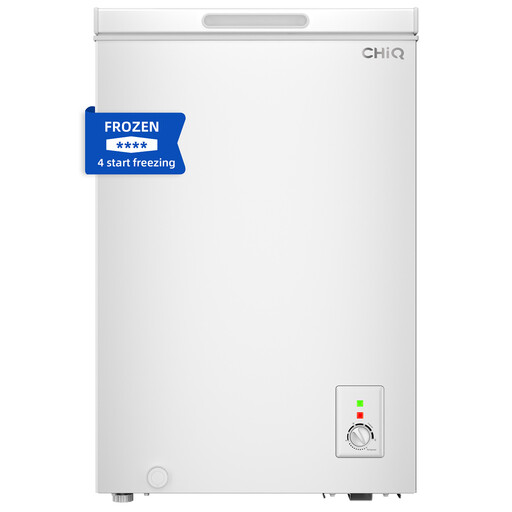
Why It's a Match: With 99 litres of usable capacity and a small footprint of just 0.26 m?, this appliance is perfect for apartments, students, or as a secondary unit in the kitchen. It offers enough space for weekly stockpiling without dominating the room.
This model prevents you from buying an oversized, energy-intensive freezer. Its capacity is tailored to the needs of smaller households.
Low operating noise of 39 dB allows for use near living areas. The hovering door makes loading and unloading easier.

Why It's a Match: This appliance is designed for users seeking a reliable solution for unheated spaces like basements or garages. Its medium 142-litre capacity is well-suited for couples or small families with increased storage needs.
The WinterProof technology ensures operation in ambient temperatures as low as -15 °C, directly solving the problem of an unsuitable climate class.
The Multi Zone function allows it to be converted into a refrigerator, offering maximum flexibility. The SuperFrost function is also integrated.
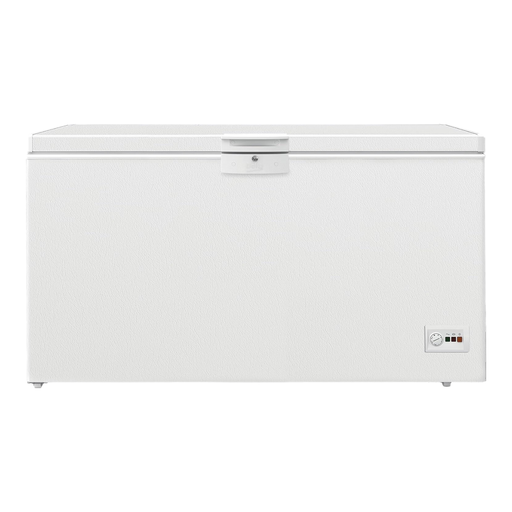
Why It's a Match: With a very large usable capacity of 451 litres, this freezer is designed for extensive stockpiling in large households or for users who regularly buy in bulk.
This model provides the necessary volume to avoid the mistake of choosing a freezer that's too small. It is also suitable for operation in unheated rooms (down to -15 °C).
Very quiet operation at only 36 dB. Equipped with a temperature alarm and a lockable door for enhanced security of your frozen goods.
We've compiled a complete, up-to-date list of products that fully meet these strict selection criteria and all relevant safety regulations.
The SuperFrost function (also known as Super Freeze or Fast Freeze) lowers the freezer's internal temperature to its lowest possible setting for a set period. This is particularly useful when you're adding a large quantity of fresh, unfrozen food. The rapid cooling shock ensures that the food freezes quickly, which minimises the formation of large ice crystals, thereby better preserving vitamins, nutrients, and cell structure. At the same time, it prevents the temperature of already frozen items from rising due to the warmth of the new food.
Power consumption depends on the size, energy efficiency class, and usage. A modern, energy-saving chest freezer in class C with around 200 litres of capacity, such as the Bauknecht BGTE 250MC model, has an annual consumption of about 126 kWh according to manufacturer specifications. Assuming an electricity price of 30p/kWh, the annual running costs would be approximately ?37.80. An older or less efficient appliance can easily consume double or triple that amount. It is therefore worthwhile to compare the annual consumption figures listed on the EU energy label.
A well-stocked chest freezer operates more efficiently than a nearly empty one. The already frozen items act as a cold reservoir, helping to stabilise the temperature more quickly after the lid is opened. This means the compressor needs to run less frequently and for shorter periods, which saves energy. If your freezer is consistently half-full or less, a smaller model might be the more economical choice. If you only fill the freezer intermittently, you can fill the empty spaces with freezer packs or water-filled containers to optimise energy consumption.