
Lieferung heute & morgen

Qualitätsgarantie

Willkommens-Angebote freischalten: KOSTENLOSE Lieferung | Bis zu 80 % RABATT | Kostenlose 30-Tage-JoyPlus-Testphase
App herunterladen
A chest freezer can provide extra storage space for supplies, meat, fish, vegetables or ice cream. However, capacity alone does not determine how practical it is for everyday use. A chest freezer that is too large requires a lot of floor space, while a smaller appliance can quickly become difficult to organise in a multi-person household.
Three points are also often underestimated when buying:
As a general guide:
A large chest freezer should not be chosen solely based on its maximum capacity. Check the available floor space, access to the installation location and the lid’s opening area in advance. For cellars and garages, door widths, stairs and potentially uneven surfaces are also important.
The EU energy label categorises refrigeration and freezing appliances on a scale from A to G. A chest freezer with energy efficiency class E is therefore not automatically particularly economical. The specific annual consumption stated on the energy label and in the product data sheet is what matters.
For comparison:
Actual electricity consumption depends on factors including room temperature, how full the appliance is, the temperature setting, the seals and the defrosting condition. An energy-efficient chest freezer should therefore not be placed permanently next to radiators or in direct sunlight.
Noise levels are relevant for living spaces, utility rooms or adjoining cellar areas. The product data for the models considered here specifies values between 35 and 40 dB. The lower the figure, the less noticeable the operating compressor is likely to be in everyday use. Even a quiet chest freezer is still a compressor appliance with changing operating noises.
A chest freezer with temperature control allows you to adjust the temperature according to how full the appliance is and how it is being used. Mechanical dials are straightforward, while digital controls can provide a more precise display. A temperature alarm is useful if food is being stored for long periods or the appliance is located in a cellar that is rarely visited.
Before installation, check the details for the climate class and minimum ambient temperature. According to the product description, some Beko models are designed for unheated rooms and ambient temperatures as low as −15 °C. This makes them more flexible for use in garages, cellars or utility rooms. This suitability should not automatically be assumed for other models.
Also important:
A chest freezer with a basket makes it easier to organise smaller packs. For larger quantities, however, baskets are only part of the solution: labelled boxes and simple sorting by food type prevent lengthy searching and reduce the amount of time the lid is left open.

Why this product suits this profile: This compact chest freezer is suitable for flats, smaller households and additional supplies. According to the product description, it can switch between fridge and freezer modes.
The removable basket makes sorting easier. A defrost water drain supports manual cleaning.
95 litres of usable capacity, 7-stage temperature control, operating noise of 38 dB and annual consumption of 165 kWh according to the product details.
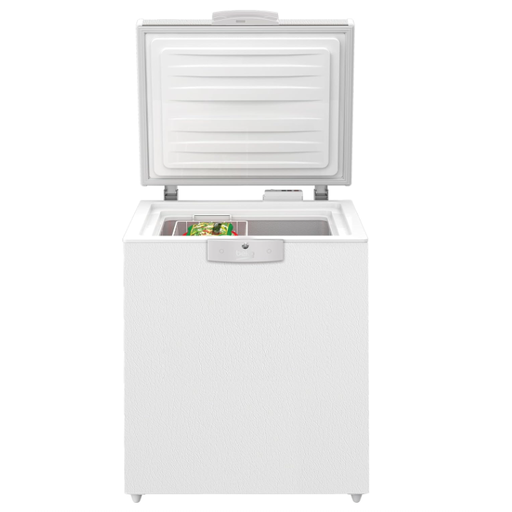
Why this product suits this profile: This model combines medium capacity with a display, interior lighting, temperature alarm and lockable lid.
Temperature monitoring helps you spot deviations early. According to the product details, it is suitable for unheated rooms down to −15 °C.
148 litres of usable capacity, energy efficiency class D, annual consumption of 147 kWh and a noise level of 39 dB according to the product description.
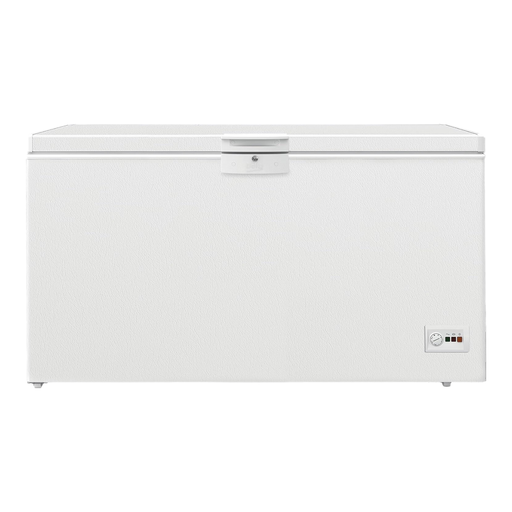
Why this product suits this profile: Its large usable capacity is aimed at families, bulk shoppers and small catering or commercial applications with sufficient available space.
Three baskets, interior lighting and a temperature alarm help to reduce common organisation and monitoring problems when storing large quantities.
451 litres, 20.5 kg freezing capacity in 24 hours, 36 dB and operation in unheated rooms down to −15 °C according to the product data.
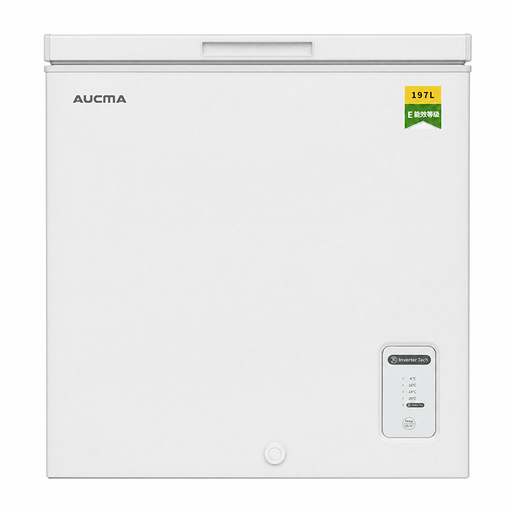
Why this product suits this profile: With 197 litres of usable capacity, there is room for family supplies, while the switchable fridge and freezer modes offer additional flexibility.
Digital temperature control, a defrost water drain and a removable basket support monitoring and cleaning.
197 litres, 5-stage digital temperature control, 38 dB and annual consumption of 197 kWh according to the product details.
We have put together a complete, regularly updated list of products that fully meet these strict selection criteria and the safety regulations applicable in the EU.
Before ordering a chest freezer, check the following points:
Consumption depends on the model, size, room temperature, how full it is and the temperature setting. Product data often states annual consumption in kilowatt hours. Multiply this figure by your individual electricity tariff to make a rough estimate of running costs. An appliance that is permanently iced up or has a poor seal may require more energy.
This depends on the climate class and permitted ambient temperature. According to the manufacturer’s specifications, models specifically approved for unheated rooms may, for example, operate down to −15 °C. Before buying, check the operating conditions in the product description and instruction manual.
It is not possible to give a universally applicable fixed service life. Regular defrosting, unobstructed ventilation, a clean seal and avoiding overfilling can help support reliable operation. If you notice unusual noises, persistent ice build-up or a rising internal temperature, the appliance should be inspected.