
Lieferung heute & morgen

Qualitätsgarantie

Willkommens-Angebote freischalten: KOSTENLOSE Lieferung | Bis zu 80 % RABATT | Kostenlose 30-Tage-JoyPlus-Testphase
App herunterladen
A chest freezer provides extra storage space for frozen food, seasonal produce and larger shops. For single households, small families, holiday homes or small businesses, however, the question soon arises: is a small chest freezer enough, or do you need a chest freezer with 140 or 200 litres?
When buying, it is not just the litre capacity and low price that matter. Unsuitable dimensions, high electricity consumption or installation in an inappropriate place such as a garage can significantly limit its practical benefits. Our selection shows what to look for in a mini chest freezer, an upright freezer and a larger chest freezer.
A figure such as 95 litres or 141 litres describes the stated internal volume. In a chest freezer, however, food often needs to be stacked. Without removable baskets or a clear organisation system, accessing smaller packs can become awkward.
An upright freezer with drawers usually offers more straightforward organisation, but requires more vertical floor space. Before buying, you should therefore consider whether you will mainly store large quantities or lots of smaller packs.
The energy efficiency class is an important point of comparison, but it does not replace checking the annual energy consumption in kWh. Two appliances in the same class can have different consumption figures depending on their size and design.
Examples from the product information:
For a realistic estimate, multiply the stated annual consumption by your electricity tariff. Actual costs also depend on room temperature, how full the appliance is, how often the lid is opened and maintenance.
Calling a chest freezer quiet only makes sense in relation to its stated noise level. Models rated at 37 to 40 dB may be suitable for many living areas, but the perceived noise also depends on the floor, distance from the wall and room acoustics.
For a flat or office, figures such as 38 dB or 39 dB are particularly worth considering. If the appliance is installed in a separate basement room, noise is often less important than energy consumption and suitability for the ambient temperature.
Measure not only the available space, but also the route to the installation location. A chest freezer opens from the top, so you need enough clearance above the lid. You must also observe the clearances specified by the manufacturer for ventilation and heat dissipation.
As a rough guide:
A 4-star freezer compartment, or the 4-star marking, indicates a storage temperature of around −18 °C and is intended for the longer-term storage of frozen food. However, this marking does not replace information about the maximum freezing capacity.
Freezing capacity is usually stated in kilograms per 24 hours. If you regularly freeze larger quantities of fresh food, you should pay particular attention to this figure. Functions such as fast freezing can be useful, although depending on how they are used, they temporarily increase electricity consumption.
A chest freezer with a thermostat allows you to adjust the temperature. Mechanical dials are straightforward to use, while electronic controls may offer additional functions such as fast freezing or a temperature display.
For a chest freezer for the garage, the climate class is crucial. Not every appliance is suitable for unheated rooms. According to the product information, the Bauknecht GTE 150MD and the larger BGTE 250MC feature WinterProof technology for ambient temperatures down to −15 °C. Nevertheless, you should check the instruction manual, ventilation requirements and installation conditions before installation.
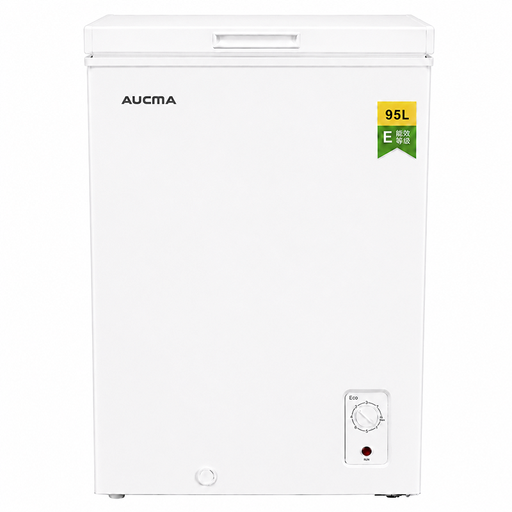
Why this product suits this profile: Measuring 550 × 475 × 848 mm, the 95-litre chest freezer takes up relatively little floor space and is suitable for flats, apartments or smaller retail areas.
A removable basket makes organising food easier. The 7-level thermostat and stated consumption of 165 kWh per year make the running-cost data easy to understand.
Switchable between cooling and freezing modes; operating noise of 38 dB; 4-star freezer compartment.
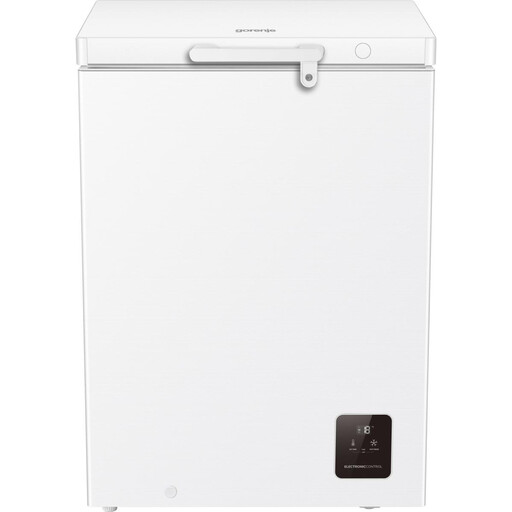
Why this product suits this profile: Combining medium capacity with a fast-freezing function, this 141-litre chest freezer offers a stated storage time of up to 13 hours in the event of a power cut.
The product information states 37 dB, 182 kWh per year and climate class SN-T. This allows noise, consumption and ambient temperature suitability to be assessed separately.
Freezing capacity of 8 kg per 24 hours; 4-star compartment; fast-freezing function.

Why this product suits this profile: This model is aimed at households, small cafés or shops that regularly need to store provisions. Its 198-litre capacity, two baskets and switchable Multi-Zone function offer a range of usage options.
The stated energy efficiency class C and annual consumption of 126 kWh make it easy to compare with larger appliances. Door Balance keeps the lid open in position.
198-litre capacity; freezing capacity of 13 kg per 24 hours; WinterProof down to −15 °C according to the product information.
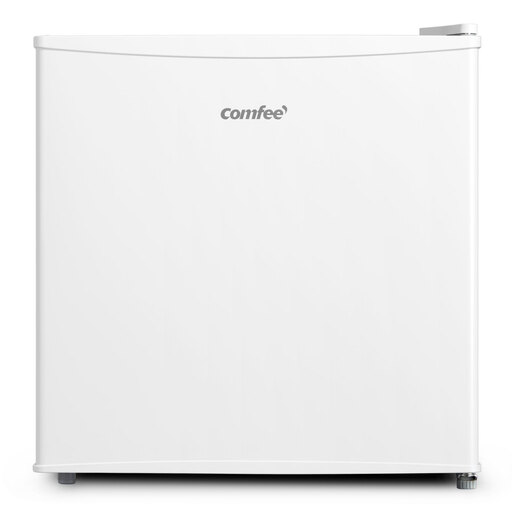
Why this product suits this profile: This mini chest freezer, or compact upright freezer, is designed for small flats, offices, holiday homes or individual frozen-food supplies.
With 31 litres of capacity, storage space is clearly limited, so the appliance is not accidentally chosen as a storage solution for larger households. The door hinge can be reversed.
31-litre capacity; 4-star freezer compartment; 41 dB and 147 kWh per year according to the product information.
We have put together a complete, regularly updated list of products that fully meet these strict selection criteria and the safety regulations applicable in the EU.
For two people, a chest freezer with around 80 to 120 litres may be sufficient if you shop regularly and do not store large amounts of food. Anyone who batch-cooks meals, buys meat in larger quantities or freezes seasonal produce may benefit from 140 litres or more.
This depends on the climate class and permitted ambient temperature range. In winter, a garage can fall well below the temperature intended for many household appliances. You should therefore check the manufacturer’s specifications. Models specifically described as WinterProof or suitable for low temperatures are more likely to be intended for such spaces, but they must still be installed correctly, with adequate ventilation and in a dry location.
Multiply the stated annual consumption in kWh by your electricity price per kWh. For an appliance with annual consumption of 165 kWh and an assumed tariff of 0,35 Euro per kWh, this gives a calculated figure of 57,75 Euro per year. The actual figure may vary depending on room temperature, usage, ice build-up and how full the appliance is.