
Lieferung heute & morgen

Qualitätsgarantie

Willkommens-Angebote freischalten: KOSTENLOSE Lieferung | Bis zu 80 % RABATT | Kostenlose 30-Tage-JoyPlus-Testphase
App herunterladen
A chest freezer provides extra storage space for frozen food, meal prep, seasonal produce or larger shops. However, there are significant differences between a small chest freezer for the home and a large freezer for a cellar or commercial premises when it comes to space requirements, operation and running costs.
Before buying, three common pitfalls are particularly important:
For single people or couples, a small chest freezer with around 60 to 100 litres may be sufficient. Models with 100-litre chest freezer capacity are often suitable as a second appliance, for offices, holiday lets or small households.
A chest freezer with around 140 to 200 litres provides more capacity for families, provisions and regular large shops. With a 200-litre chest freezer, however, you should check not only the width, but also the depth and the space needed to open the lid.
From around 300 litres upwards, the appliance is considered a large chest freezer and should be measured carefully before purchase. Doors, stairs, lifts and narrow cellar corridors can make delivery more difficult. The lid also needs sufficient clearance to open upwards.
A 4-star freezer compartment, or a 4-star freezer rating, is intended for the long-term storage of frozen food. The marking indicates a storage temperature of around −18 °C or below. However, it says nothing about the size of the interior or the actual electricity costs.
For a chest freezer with energy efficiency class E, you should look at the annual consumption in kWh. The following figures from the product details show why it is useful to look directly at the numbers:
The actual costs depend on your electricity tariff, ambient temperature, how full the appliance is and the temperature setting. For a simple calculation, multiply the annual consumption by your own price per kilowatt-hour.
A quiet chest freezer producing 38 to 40 dB(A) can be less disruptive in a home, open-plan kitchen or utility room. However, the decibel figure describes the operating noise level under the specified conditions. When the compressor starts, the noise may be perceived differently for a short time.
For a chest freezer for a garage or cellar, the climate class is particularly important. Unheated rooms can become very cold in winter. According to the product details, the Beko HSM46740 is designed for ambient temperatures as low as −15 °C. For other appliances, check the permitted ambient temperature in the instruction manual.
Practical features include:
A fridge and freezer chest is particularly interesting if you want to switch between seasonal uses. The changeover must be carried out in accordance with the manufacturer’s instructions; such an appliance does not automatically replace a separate refrigerator with different temperature zones.

Why this product suits the profile: With 95 litres of usable capacity, compact dimensions of 550 × 475 × 848 mm and a stated noise level of 38 dB, it is suitable for smaller households, homes or as additional storage space.
The 7-stage temperature control, removable basket and defrost water drain make the features easy to understand. The stated consumption is 165 kWh per year.
Switchable between refrigeration and freezing; 4-star freezer rating and energy efficiency class E according to the product data.
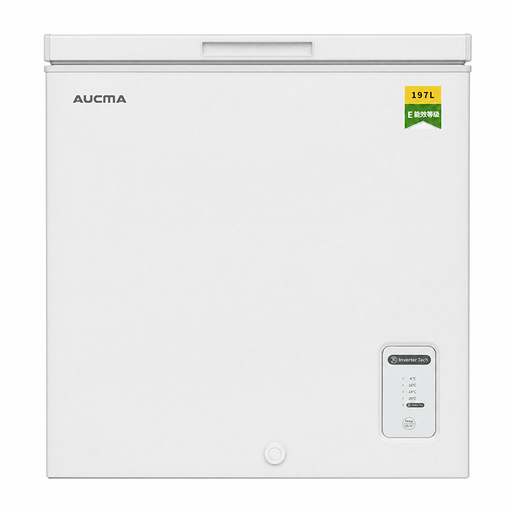
Why this product suits the profile: The 197-litre interior combines a moderate footprint with additional storage capacity. The model is intended for households, homes, small cafés or utility rooms.
The dimensions of 816 × 554 × 848 mm should be checked before ordering. A digital five-stage temperature controller makes adjustment easier.
38 dB operating noise, 197 kWh annual consumption, 4-star freezer rating and switchable refrigeration or freezing operation.
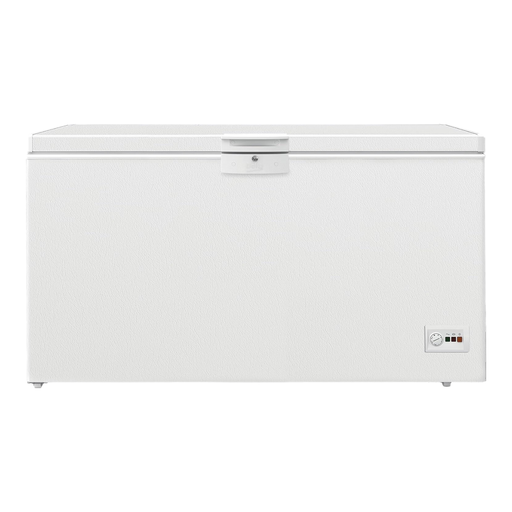
Why this product suits the profile: With a capacity of 451 litres, three baskets and a stated suitability for unheated rooms down to −15 °C, this model is an appealing option for large quantities of provisions in a garage, cellar or utility room.
The temperature warning helps address the risk of unnoticed warming. Before buying, you must allow for the width of 155.5 cm, ventilation clearances and the need for manual defrosting.
20.5 kg freezing capacity per 24 hours, 36 dB, interior lighting, lockable lid and three removable baskets.
We have put together a complete, regularly updated list of products that fully meet these strict selection criteria and the safety regulations applicable in the EU.
A chest freezer should be placed on a stable, level and dry surface. The ventilation clearance specified by the manufacturer must be maintained around the appliance; several of the models mentioned require at least 10 cm. Heat sources such as radiators and ovens, as well as direct sunlight, should be avoided.
After transport, the appliance should first be left upright in accordance with the instruction manual before it is connected to the mains. When defrosting, disconnect the chest freezer from the power supply. Sharp objects or unsuitable heaters can damage the interior and the refrigeration circuit.
Consumption depends on the model size, energy efficiency class, ambient temperature and usage. In the product data available, the figures range from 165 to 279 kWh per year. To calculate your individual cost, multiply this figure by your electricity price.
This depends on the stated climate class and the permitted ambient temperature. A chest freezer for a garage should be explicitly approved for cold, unheated rooms. You will also need a dry surface, sufficient ventilation and a suitable power connection.
It is not possible to give a reliable general lifespan. Among other things, it is affected by operating hours, location, care, seals and defrosting intervals. Regular cleaning, unobstructed ventilation areas and avoiding overfilling can help support the intended operation. The warranty and service conditions of the respective manufacturer remain decisive.