
Lieferung heute & morgen

Qualitätsgarantie

Willkommens-Angebote freischalten: KOSTENLOSE Lieferung | Bis zu 80 % RABATT | Kostenlose 30-Tage-JoyPlus-Testphase
App herunterladen
A chest freezer provides additional storage space for frozen food, meat, fish, ice cream or home-frozen supplies. However, choosing the right product is not just about capacity. Unsuitable dimensions, high running costs or a lack of temperature suitability for cold rooms can quickly make a purchase impractical.
This guide explains what households in Germany should look out for and which models suit different usage scenarios.
A 100-litre chest freezer requires more than just floor space. You also need to be able to open the lid fully. With a top-opening chest freezer, there should also be sufficient clearance from the wall and any shelves above it.
Before buying, you should measure:
For a small kitchen or office, a compact upright freezer with a front door may be more practical than a chest freezer.
The energy efficiency class alone does not describe the actual annual electricity costs. The stated annual consumption in kilowatt hours is also important. A larger chest freezer may use more electricity than a smaller appliance, even if both have a similar energy class.
Models with energy class E are widely available in the range. An appliance with energy class D may offer lower consumption with comparable usage. To calculate the cost:
Annual consumption in kWh × your electricity price = approximate annual electricity costs
Actual costs depend on factors including the ambient temperature, how full the appliance is, the temperature setting and the condition of the door seal.
In an unheated garage or cellar, the room temperature can drop significantly during winter. Not every chest freezer is designed for these conditions. Check the stated climate class and look for details such as “WinterProof” or a permitted ambient temperature of at least -15 °C.
A chest freezer for a garage should also be placed somewhere dry, stable and sufficiently ventilated. Moisture, direct sunlight and insufficient clearance from the wall can affect both performance and energy consumption.
A mini chest freezer with a capacity of around 30 to 60 litres is suitable for single-person households, small flats, offices or holiday accommodation. Capacities of 95 to 100 litres provide additional storage space for couples and smaller households. A 140-litre chest freezer is a sensible choice if you regularly store larger quantities.
At around 198 litres, suppliers often refer to an appliance as a 200-litre chest freezer. You should check the actual stated net capacity. More volume does not automatically mean better use of space: baskets, dividers and the shape of the interior all affect how easy it is to keep everything organised.
Freezing capacity is usually stated in kilograms per 24 hours. It shows how much fresh food the appliance can freeze within one day. If you regularly batch-cook, portion up larger shops or freeze produce from your garden, this figure is worth considering.
A 4-star freezer rating indicates storage at temperatures of at least -18 °C. However, this does not replace checking the individual operating instructions and storage guidance.
For a quiet chest freezer, the sound power level in decibels is relevant. The appliances considered here have stated levels of between 37 and 41 dB. In open-plan kitchens, flats or offices, this difference can matter in everyday use.
Useful features include:
A chest freezer with a fast-freeze function is particularly suitable for larger quantities of fresh food. The function should only be used in accordance with the operating instructions and for the specified period.
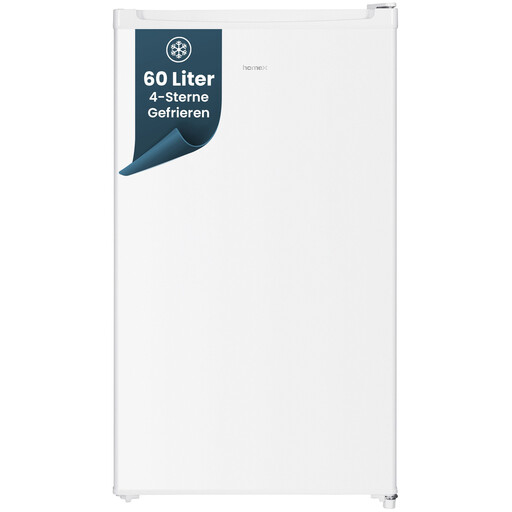
Why this product suits this profile: This compact 60-litre upright freezer is suitable for single-person households, small households or use as a second appliance. Two transparent drawers and an additional compartment make sorting easier.
The net capacity, external dimensions and annual consumption of 165 kWh are clearly stated. This makes it easier to assess the space required before buying.
60 litres, 4-star freezer compartment, freezing capacity of 2.8 kg per 24 hours, energy class E and a noise level of 40 dB.

Why this product suits this profile: This 142-litre chest freezer combines electronic controls with a switchable Multi-Zone function. Depending on your needs, it can be used as either a fridge or a freezer.
The WinterProof specification states that it can operate in unheated rooms down to -15 °C. Nevertheless, you should check the full instructions before placing it in a garage.
142 litres, energy class D, annual consumption of 146 kWh, freezing capacity of 8 kg per 24 hours, 39 dB and a fast-freeze function.

Why this product suits this profile: With 198 litres of usable capacity, this chest freezer is designed for households that store larger quantities or regularly batch-cook. Two baskets help keep the interior organised.
Stated consumption is 126 kWh per year; dimensions, noise level and freezing capacity are also clearly listed. This allows you to weigh the generous capacity against the available installation space.
198 litres, energy class C, freezing capacity of 13 kg per 24 hours, switchable Multi-Zone function, WinterProof down to -15 °C and 40 dB.
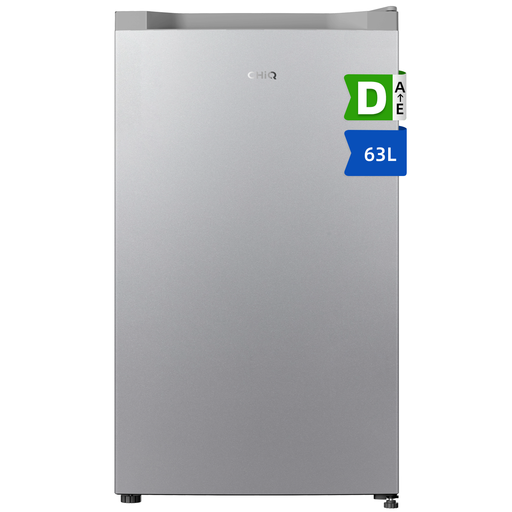
Why this product suits this profile: This upright model has a footprint of approximately 47 × 44.7 cm. The front door and reversible hinge make it easier to integrate into a kitchen, office or utility room.
The slim design means you do not need to allow additional overhead clearance for a lid. Manual defrosting should be taken into account as part of regular maintenance.
63 litres, energy class D, 38 dB, 4-star freezer compartment, two adjustable drawers and a reversible door hinge.
We have put together a complete, regularly updated list of products that fully meet these strict selection criteria and the safety regulations applicable in the EU.
A chest freezer for a flat or kitchen should be placed on a level, dry surface. Follow the ventilation clearances specified in the instructions and leave the appliance standing upright for several hours after transport before plugging it in.
The following measures can help ensure stable operation:
With a switchable chest freezer, you must follow the manufacturer’s instructions before switching between fridge and freezer modes. After changing the setting, the appliance needs time to reach the new temperature.
Consumption depends on the size, energy class, ambient temperature and usage. Compare the stated annual consumption in kWh and multiply it by your electricity price. A smaller appliance is not automatically cheaper if it is opened frequently or placed in a very warm room.
This is only permitted if the climate class and manufacturer’s specifications cover the temperatures that occur there. Models with a WinterProof function are designed for cold, unheated rooms, provided the stated minimum temperature is observed. The garage should be dry and offer sufficient ventilation.
It is not possible to guarantee a fixed service life. Factors including the compressor, seal, defrosting behaviour, location and maintenance all have an influence. Regular cleaning, correct loading and avoiding unnecessary temperature fluctuations can help support reliable operation.