
Lieferung heute & morgen

Qualitätsgarantie

Willkommens-Angebote freischalten: KOSTENLOSE Lieferung | Bis zu 80 % RABATT | Kostenlose 30-Tage-JoyPlus-Testphase
App herunterladen
A chest freezer provides extra storage space for frozen food, bulk packs and seasonal produce. At the same time, it takes up room, uses electricity continuously and can be difficult to keep organised if used incorrectly. Your choice should therefore not be based solely on capacity or a low purchase price.
Typical buying and usage situations can lead to unnecessary costs:
The internal volume should suit your household and shopping habits. A 95 l chest freezer or a 98 l model is suitable for smaller homes, additional supplies or limited floor space. Models with 141 l or 197 l offer more capacity for families without taking up as much room as larger appliances.
A 230 l chest freezer is a mid-sized solution for regular bulk storage. If you need more space, a 291 l chest freezer or a 308 l model may be suitable. A 451 l chest freezer is more suitable for large households, catering areas or small cafés and convenience stores.
Before placing your order, check the following:
The EU energy efficiency scale ranges from A to G. A model rated E or D should also be assessed based on its annual consumption in kWh. Actual costs depend on the electricity tariff, ambient temperature, how full the freezer is and how it is used. With long-term use, a lower consumption figure may be more significant than a small difference in the purchase price.
Noise level is also important in living areas. A quiet chest freezer rated at 35 to 40 dB may be more suitable for a flat, utility room or area close to living spaces. The decibel rating is a measurement taken under specific conditions and should not be regarded as a complete indication of how the noise will be perceived in individual circumstances.
A chest freezer for the garage must be suitable for the temperatures occurring there. According to the product details, some models in this selection are designed for unheated rooms with ambient temperatures as low as -15 °C. This does not automatically mean that every appliance can be operated in every garage. Before buying, compare the manufacturer’s climate class information with the conditions at your location.
Useful features include:
A convertible chest freezer can refrigerate or freeze depending on your needs. This is useful if your storage requirements change throughout the year. For every appliance, check the specific temperature ranges and operating instructions in the product description or manual.
The following models differ mainly in terms of capacity, features, noise level and intended use. The information corresponds to the respective product details.
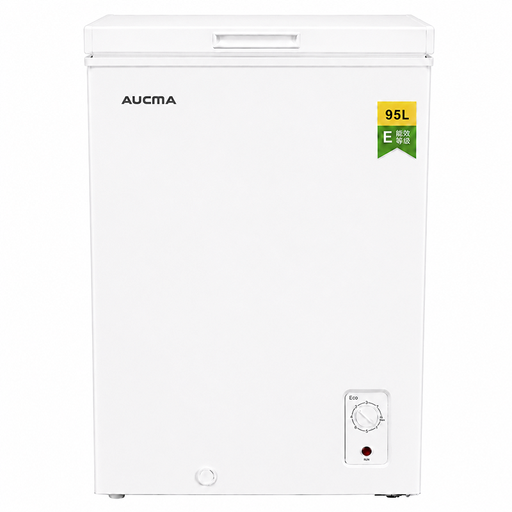
Why this product suits this profile: This compact model offers 95 l of capacity, a switchable refrigeration and freezing function, and dimensions of 550 × 475 × 848 mm. With a noise level of 38 dB, it is suitable according to the product details for a flat, apartment or garage.
The manageable capacity reduces the risk of reserving unnecessary floor space for a small household. A removable basket helps maintain basic organisation.
95 l usable capacity, 7-stage thermostat, 38 dB operating noise and annual consumption of 165 kWh according to the product data.
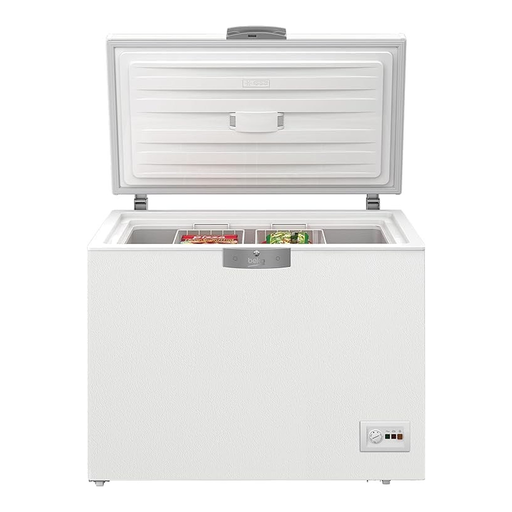
Why this product suits this profile: Two freezer baskets, LED interior lighting, a temperature alarm and lockable design combine storage space with controlled organisation. According to the product details, the model operates at 35 dB(A).
The temperature alarm alerts you when the internal temperature rises. The baskets and interior light help prevent items from being stored in a disorderly way.
230 l usable capacity, energy efficiency class D, two baskets, LED display and suitability for unheated rooms down to -15 °C according to the product details.

Why this product suits this profile: 291 l of storage space, 5-stage digital temperature control and a switchable refrigeration or freezing function are suitable for larger supplies, small cafés or changing storage requirements.
The digital controls and LED lighting make it easier to monitor the appliance and find stored goods. A basket and defrost water drain support regular maintenance.
291 l capacity, 38 dB, energy efficiency class E, annual consumption of 226 kWh and 4-star freezer rating according to the product data.
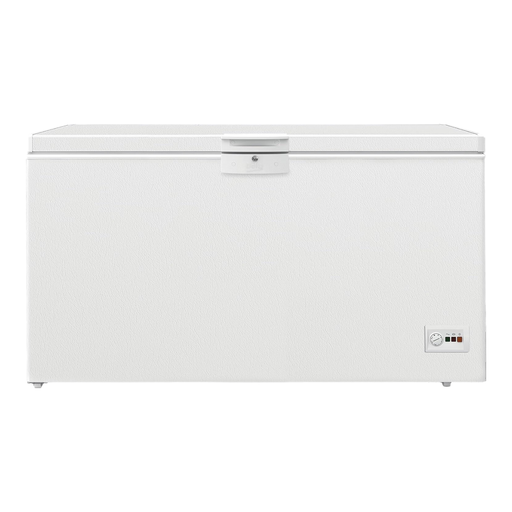
Why this product suits this profile: The large capacity is designed for households and commercial side areas requiring extensive bulk storage. Three baskets, interior lighting and a lockable lid make everyday use easier.
Three wire baskets and LED lighting reduce the time spent searching through the large interior. The temperature alarm indicates possible rises in temperature.
451 l usable capacity, 36 dB, annual consumption of 279 kWh, freezing capacity of 20,5 kg per 24 hours and operation down to -15 °C according to the product details.
For a mid-sized solution, consider a 197 l chest freezer or a 308 l model. The 197 l AUCMA model also offers a switchable function, 38 dB and a removable basket. According to the product data, the Beko CF316EWN with 308 l features a temperature alarm, transport wheels, LED display and a noise level of 40 dB.
Before buying, you should also decide whether manual defrosting is acceptable. With many chest freezers, regular defrosting is part of the recommended maintenance. To do this, switch off the appliance, disconnect it from the mains and do not use sharp objects that could damage the interior or the refrigeration circuit.
We have put together a complete, regularly updated list of products that fully meet these strict selection criteria and the safety regulations applicable in the EU.
In addition to the appliance dimensions, you need room for ventilation, opening the lid and cleaning. Maintain the clearance specified by the manufacturer and place the appliance on a stable, level surface. In unheated rooms, the climate class and ambient temperature information must be taken into account.
You can estimate the costs using the stated annual consumption in kWh and your electricity price. For example, annual consumption multiplied by the price per kWh gives the annual electricity costs. The actual figure may vary depending on room temperature, how full the freezer is, the tightness of the lid seal and how often it is opened.
There is no single standard lifespan that applies to every appliance. It depends, among other things, on the installation location, maintenance, defrosting intervals, ventilation and usage. Regular cleaning, unobstructed ventilation areas and avoiding overfilling help support proper operation.