Meal-prep planners
You blanch carrots for several working days and want to take out small, labelled portions individually. The Federal Centre for Nutrition recommends measuring out the amount you need and freezing it in portions.


If you only need a few portions of carrots for the next working week, first check whether your existing freezer has enough space. A separate chest freezer is most worthwhile if you regularly freeze larger batches and store other food too. The key things to consider are the usable capacity you need, the freezing capacity in kg/24 h, annual energy consumption and how easy it is to find individual portions. If you plan to keep it in an unheated space, make sure the specific model is approved for the ambient temperature there.
You blanch carrots for several working days and want to take out small, labelled portions individually. The Federal Centre for Nutrition recommends measuring out the amount you need and freezing it in portions.
You prepare larger quantities of carrots and store other food at the same time. That means you need to consider both the space for your full stock and the freezing capacity for new food.
You’ll need to check the dimensions and operating conditions at the planned location against the amount of food you want to store. If the space is unheated, check that the specific model is approved for use there.
Best for: If you’re only storing a few portions for the week and don’t have a large amount of extra food, first check how much space is free in your existing freezer.
Things to consider: You won’t need another appliance, but space may be limited if you regularly freeze larger batches. The consumer advice centre lists a fridge-freezer as a possible alternative if you only freeze food occasionally.
Best for: If you regularly freeze several labelled portions and other food, but don’t want a chest freezer that’s mostly empty.
Things to consider: More storage space takes up more floor space. Choose a size that suits everything you plan to freeze, and check the freezing capacity in kg/24 h if you’ll be adding new batches.
Best for: If you regularly freeze large batches or keep a substantial amount of other food in addition to the carrots.
Things to consider: The extra capacity isn’t worthwhile just for a few lunch portions. Check the dimensions and access for delivery, and think about how easy it will be to find smaller packs.
| Buying priority | What to check | Who is it important for? |
|---|---|---|
| The right amount of storage | Your total food stock and usable capacity in litres; floor space and access for delivery. | If you’ll be storing other food alongside your carrot portions, the priority is to have enough storage without paying for more than you need. Around 33% of consumers focus mainly on storage capacity. |
| Freezing capacity for new batches | Freezing capacity in kg/24 h; treat a fast-freeze function as an additional feature. | If you regularly freeze larger quantities of fresh food, freezing capacity matters more than extra empty storage space. Around 27% of consumers prioritise freezing larger batches. |
| Ongoing energy use | Compare the kWh/year figure on the EU energy label for models with a suitable usable capacity. | Once you’ve found a model with the right space and freezing capacity, you may also want to factor in its running costs. Around 20% of consumers put energy use first. |
| Space and access to portions | External dimensions and lid clearance; in unheated spaces, check the permitted ambient temperature for the specific model. | If space is tight and you want smaller lunch portions to be easy to reach, placement and organisation are especially important. Around 20% of consumers prioritise space and access. |
The EU energy label shows annual consumption in kWh and an efficiency class. Compare models with a suitable usable capacity by their energy consumption; actual use and the location of the appliance may affect this figure.
The right size depends on everything you plan to store at the same time. A separate chest freezer isn’t automatically worthwhile if you’re only adding a few portions for the week.
First check the free space in your existing freezer and estimate your total food stock before comparing usable capacities.
An oversized chest freezer takes up space unnecessarily and uses more electricity.
Litres tell you how much storage space you have; kg/24 h tells you how much new food that model can freeze in a day.
If you’re freezing larger batches of blanched carrots, check both figures separately. Don’t put fresh food directly on top of food that’s already frozen.
Manufacturers describe certain features as reducing ice build-up or the need to defrost. That doesn’t mean you’ll never need to defrost the appliance.
Check the specific technology and the model’s instruction manual.
Depending on the appliance, you may still need to defrost and clean it later.
Approval for use at low ambient temperatures applies only to the specific model. It shouldn’t be assumed to apply to all chest freezers.
Compare the temperature at your planned location with the specifications for the exact appliance.
The CF200CWN and CF316EWN offer different usable capacities to suit different-sized food stocks.
The FH20E6W5 combines a 198 l freezer capacity with baskets and approval for use at low ambient temperatures.
The CFc 1875 Plus is a 192-l chest freezer which, according to the manufacturer, is designed to operate at ambient temperatures as low as −15 °C.
According to the manufacturer, the GT200-HE-040E is a chest freezer with 198 l of usable capacity and a fast-freeze function.
The AHB531D1LW has 308 l of usable capacity according to the manufacturer, making it worth considering if you have a similarly large food stock.
This Joybuy selection includes chest freezers for portioned carrots and additional food stocks, mostly in the small to medium size range. Where freezing capacity is specified, compare it separately from usable capacity.
 No image available
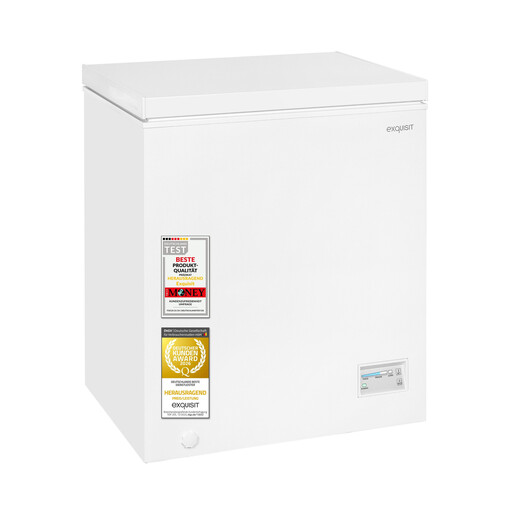
For portions you want to organise in a removable basket.
142 l usable capacity; freezing capacity of 7 kg in 24 hours; fast-freeze function; manual defrost.
 No image available
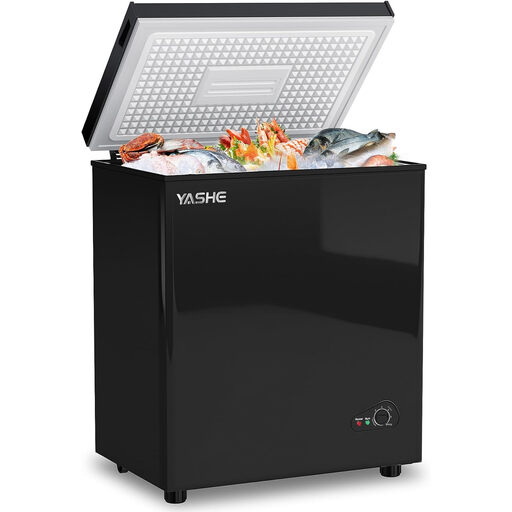
For keeping portions and other food separate in two removable baskets.
150 l; two removable baskets; six temperature settings; fast-freeze function.
 No image available
For storing carrot portions alongside other food; this appliance is described as a convertible fridge and freezer.
197 l; energy class E; digital temperature control; removable basket; defrost water drain.
 No image available
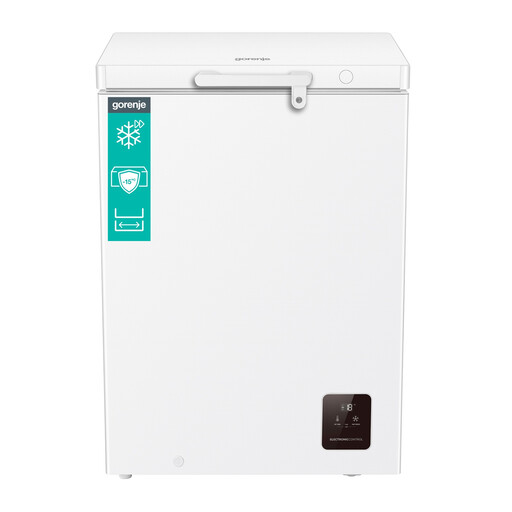
For new batches, if the stated freezing capacity and temperature approval suit the planned location.
141 l; freezing capacity of 8 kg in 24 hours; FastFreeze; approved for ambient temperatures as low as −15 °C; one wire basket. Defrosting is required if ice builds up.
 No image available
For a smaller additional freezer stock, with a basket for smaller packs.
98 l; energy class E; temperature control; defrost water drain. According to the description, the counterbalanced lid can stay open at an angle of between 40 and 75 degrees.
After washing and chopping the carrots, you can blanch them briefly in boiling water, then cool them in iced water. Pack them into suitable freezer containers in individual portions, removing as much air as possible, and label each one with the contents, quantity and date. The Federal Centre for Nutrition describes blanching as a way to help preserve quality, not as a guarantee of a specific shelf life.
The consumer advice centre recommends −18 °C for household freezers. This is a storage recommendation, not a claim that there is a legal minimum temperature for private storage of carrot portions.
Usable capacity in litres tells you how much storage space is available; freezing capacity in kg/24 h tells you how much new food the appliance can freeze within 24 hours. If you’re preparing larger batches of carrots, check both figures for the specific model.
It depends on whether the specific model is approved for the ambient temperature. Some manufacturers state that individual models are suitable for temperatures as low as −15 °C; compare the specified temperature with the conditions at your planned location.
Check the manual for the specific model. Manufacturers describe LowFrost or SmartFrost as reducing ice build-up or the need to defrost, not as a guarantee that an appliance with these features will never need defrosting.