If your portions of blanched carrots fit in a suitable freezer compartment you already have, you probably don’t need a separate chest freezer. If you regularly run out of space, compare the amount you actually store and the space available with each appliance’s usable capacity, freezing capacity and annual energy consumption. A larger chest freezer makes more sense if you also freeze other foods in larger quantities. For frozen storage, the Verbraucherzentrale recommends −18 °C.
Who would benefit from having their own chest freezer?
Freezing carrots occasionally
If you only have a few portions to freeze, first check whether your existing freezer compartment has enough room. The Verbraucherzentrale suggests a fridge-freezer or a small upright freezer as a possible solution for people living alone or those who rarely use frozen food. The Bundeszentrum für Ernährung recommends labelling frozen portions.
Storing individual portions regularly
If you regularly freeze carrots and other small quantities of food, you may need extra freezer space without having to buy a large chest freezer. Compare your actual needs with the usable capacity and available floor space. The Verbraucherzentrale recommends choosing an appliance size to suit the volume you need.
Freezing larger seasonal quantities
If you have a larger harvest or regularly freeze fresh batches, both the available storage space and the specific model’s freezing capacity matter. Manufacturers’ figures for freezing capacity and usable capacity apply to the individual appliance, so check that they suit the quantities you plan to freeze.
What to look for when buying
If you only have a few portions of carrots to freeze, first check the space in your existing freezer and how much food you actually store. Only then is it worth comparing additional appliances.
Existing freezer compartment
A good fit if: you only freeze a few portions of carrots now and then, and there’s enough space available.
The trade-off: you won’t need another appliance running all the time, but you’ll be limited to the storage space you already have.
Compact chest freezer
A good fit if: you regularly need extra freezer space and have room for the appliance and to open its lid.
The trade-off: more usable capacity means another appliance that takes up space and uses electricity.
Small upright freezer
A good fit if: separate drawers for lots of individual portions matter more to you than access from above.
The trade-off: compare the annual energy consumption of specific models; the appliance type alone doesn’t tell you how much energy it uses.
Larger chest freezer
A good fit if: you regularly freeze other food or larger fresh batches as well as carrots.
The trade-off: greater capacity takes up more space and may not be right for just a few occasional portions.
| What matters |
What to check when buying |
Who it matters to |
| Freezer space needed |
Allow for portions, suitable packaging and other food you store; compare the usable capacity with your needs. The Verbraucherzentrale suggests around 50–80 l per person as a guide, not a minimum size. |
If I only store a few portions, I don’t want an appliance with capacity that goes unused. Around 40% of consumers would say the amount of freezer space they need is their main concern. |
| Floor space and access |
Check the external dimensions, required clearance from the wall, delivery route and space above the lid when open. Label portions with their contents, quantity and date. |
If you need a permanent spot for the appliance and want to find individual portions quickly, consider the dimensions and ease of access together. Around 30% of consumers would prioritise floor space and organisation. |
| Running costs |
Compare the annual energy consumption in kWh and usable capacity of specific models. To estimate your own costs, multiply the energy-label figure by your electricity price per kWh. |
If the electricity use of an additional appliance running all the time is especially important to me, I want to compare its annual figure before buying. Around 20% of consumers would put running costs first. |
| Freezing fresh batches |
Weigh a typical batch and compare it with the freezing capacity in kg/24 h. This is not the same as usable capacity in litres. |
If you regularly freeze larger quantities of carrots in one go, you’ll need figures for both storage space and freezing performance. Around 10% of consumers would prioritise the size of the fresh batch. |
Avoiding common buying mistakes
-
Buying a large chest freezer just for one carrot harvest
Unused capacity can mean that an extra appliance takes up more space and uses more electricity than your food supplies justify. The Verbraucherzentrale recommends choosing a capacity that matches your actual needs.
First work out how many portions and other supplies you plan to keep in the freezer at the same time, then choose a suitable size.
-
Confusing usable capacity with freezing capacity
Litres tell you how much you can store; kg/24 h tells you how much fresh food that specific appliance can freeze in that time.
If you freeze larger batches of blanched carrots in one go, check both figures for the model you’re considering and compare its freezing capacity with the quantity you usually freeze.
-
Measuring only the width of the appliance
For the Exquisit GT100-050E weiss, the manufacturer gives a depth of 48 cm for the appliance and 58 cm including wall clearance. So the cabinet dimensions alone won’t tell you whether the chest freezer will fit where you plan to put it.
Before ordering, check the delivery route, required clearances and how much space the lid needs when fully open.
Brands worth considering
Exquisit
The range includes everything from compact chest freezers to models with more usable capacity.
- For the GT100-050E weiss, Exquisit lists a capacity of 99 l, one basket and a switchable cooling and freezing mode. The manufacturer gives this model an annual energy consumption of 169 kWh.
- The manufacturer’s page lists conflicting usable capacities of 95 l and 96 l for the GT100-010E weiss. Check the latest appliance specifications if this size is an important factor in your decision.
Beko
The CF100EWN is an example of a compact freestanding chest freezer.
- Beko gives the CF100EWN a usable capacity of 98 l and a width of 54.5 cm.
- It has an energy efficiency rating of E. For running costs, also compare the annual energy consumption of the specific model.
Severin
The range includes a large chest freezer and a small drawer-style upright freezer.
- Severin lists the GT 8849 with a usable capacity of 200 l and a freezing capacity of 9 kg/24 h. The GS 8865 is listed with a capacity of 85 l and three drawers.
- The GT 8849 is considerably larger than compact models, while the GS 8865 is an upright freezer, not a chest freezer. These figures apply only to the models named.
Liebherr
The manufacturer’s range also includes chest freezers for larger food supplies.
- Liebherr lists the CFc 1875 Plus with a usable capacity of 192 l and a width of 104 cm.
- These dimensions offer more space than compact models, which may not be right if you only have a few portions of carrots to freeze.
Haier
The manufacturer’s range also includes larger chest freezers.
- Haier offers the HCE200C with a usable capacity of 196 l.
- A larger capacity only makes sense for a one-person household if you genuinely need the extra space for other food.
Freezers at Joybuy
The Joybuy appliances below show different ways to store extra portions of carrots in a chest freezer or an upright freezer.
 No image available
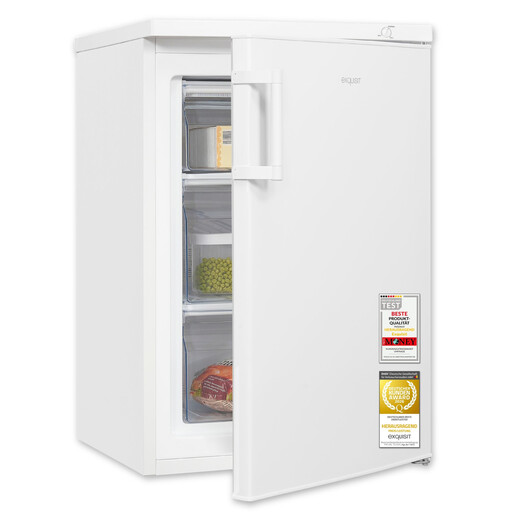
Exquisit GS581-H-010E upright freezer, 85 l, 3 drawers
An upright alternative if you’d like to keep portions of carrots separate in drawers.
85 l usable capacity; 3 drawers; 4-star freezer compartment. Manual defrosting required.
View at Joybuy
 No image available
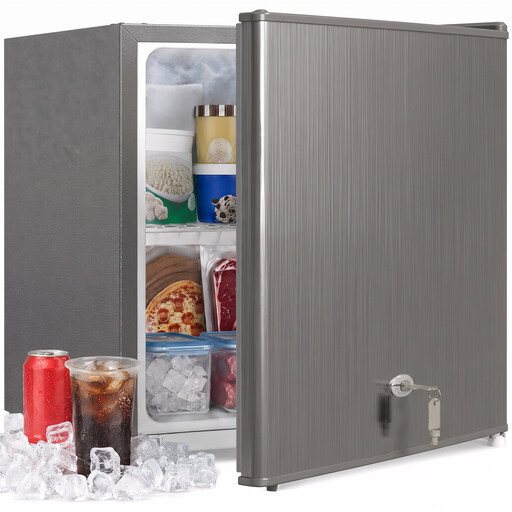
Mini chest freezer, 35 l
A small chest freezer for individual portions when you need extra freezer space.
35 l capacity; external dimensions 47 × 44,2 × 48,8 cm; stated power 161 W.
View at Joybuy
 No image available
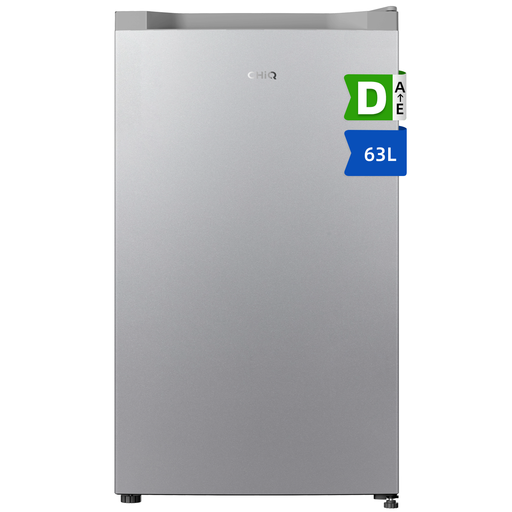
CHiQ JR63DSD upright freezer, 63 l
An upright option if you’d like to store portions of carrots separately and save space.
63 l; 4-star freezer compartment; 47 cm wide; energy rating D. Manual defrosting is specified.
View at Joybuy
 No image available
CHiQ chest freezer, 99 l
A compact chest freezer for extra storage, provided there’s enough room where you plan to put it.
99 l usable capacity; energy rating E; 4-star freezing; wire basket.
View at Joybuy
 No image available
COMFEE’ RCU60WH2(E) upright freezer, 60 l
An upright option with several separate storage compartments for portions of carrots.
60 l usable capacity; 3 compartments; reversible door.
View at Joybuy
Frequently asked questions
How should I prepare carrots for individual portions to freeze?
Wash and prepare the vegetables, blanch them briefly, then cool them in iced water. Pack the portions in suitable containers or bags, removing as much air as possible, and note the contents, quantity and date. Try not to place fresh food directly on top of food that’s already frozen. The Bundeszentrum für Ernährung recommends clear, easy-to-read labels.
What temperature and storage time are suitable for carrots?
The Verbraucherzentrale recommends −18 °C for freezers. It suggests six to twelve months as a guide for vegetables. Label portions with the date they were frozen and check their condition before use.
Can I work out the electricity costs from the energy efficiency rating?
No, the efficiency rating alone isn’t enough to estimate your personal costs. Use the annual energy consumption in kWh shown on the specific energy label and multiply it by your electricity price per kWh. The label figure is calculated under standardised conditions, so use at home may differ.


