What should you consider when choosing one?
Use your existing freezer compartment
Best if: you only freeze small weekly portions and there’s genuinely enough space in a suitable compartment.
The trade-off: You won’t need another appliance running all the time, but you’ll have less spare capacity for other food. The Federal Centre for Nutrition distinguishes between a four-star compartment, which is suitable for freezing food, and a three-star compartment, which is for storing food that has already been frozen.
Compact chest freezer
Best if: your existing compartment is regularly full, but you only need a modest amount of extra storage.
The trade-off: Extra storage takes up space and uses electricity over time. A small chest freezer isn’t automatically energy-efficient just because it’s small.
Larger chest freezer
Best if: you regularly freeze larger amounts of prepared food or other supplies as well as cheese, and you’ll make use of the capacity.
The trade-off: More capacity takes up more floor space. Energy consumption and permitted installation conditions vary by model.
The consumer advice centre points out that an appliance larger than you need can use electricity unnecessarily. So, before choosing a chest freezer, compare your total storage needs with the space you have available.
| Priority |
What to check when buying |
Who is this important to? |
| Extra freezer space |
Check how much free space you have in a suitable compartment and how much extra food you need to store; then choose the usable capacity you need. |
If I only freeze weekly portions, I don’t want to buy a second appliance unless my existing compartment isn’t big enough. For around 28% of consumers who need extra space, this is the most important consideration. |
| Portioning and keeping food cool |
Check for a four-star freezer function, pack portions in freezer-safe packaging and label them with the date; plan separately for transporting food that needs to be kept chilled. |
If I freeze cheese to take with me for lunch, I want to keep storage and cooling on the go separate. Portioning and safe cooling are the main priorities for around 22% of consumers. |
| Energy consumption |
Compare the stated annual energy consumption of appliances that are the right size for you; don’t look at the energy efficiency rating in isolation. |
I want to weigh up the cost of running a second appliance all the time against how much food I actually need to store. Around 22% of consumers prioritise energy consumption. |
| Access to portions |
Check the baskets and usable interior layout; label small packs with their contents and the date. |
I don’t want to spend ages searching through the freezer for small packs of cheese. Around 17% of consumers prioritise quick access to portions. |
| Space and access route |
Check the appliance dimensions, required clearances and the route to its final position for the specific model. |
I need to check in advance whether the chest freezer will fit where I plan to put it. Available space is the main consideration for around 11% of consumers. |
Chest freezers at Joybuy
This selection includes chest freezers for small portions of cheese and extra supplies. For each model, check that its freezer function is suitable for freezing fresh food.
 No image available
CHiQ chest freezer, 99 l, 4 stars, wire basket
Could be a compact option for storing a modest amount of food. Check that its usable capacity meets your overall needs.
99 l usable capacity; four-star freezer function; wire basket.
View at Joybuy
 No image available
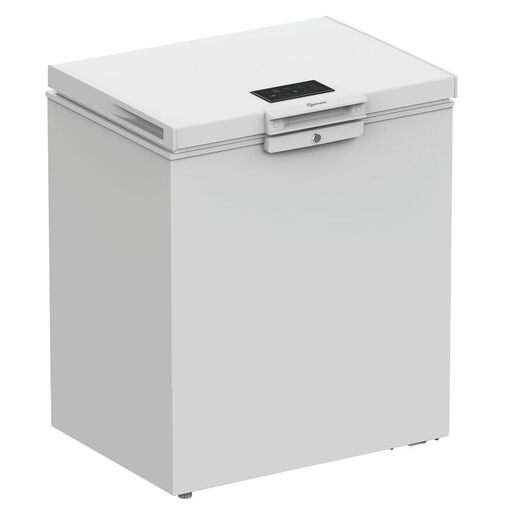
Bauknecht GTE 150MD, 142 l
An option if you regularly need extra space for other supplies as well as cheese. Make sure its capacity matches your overall needs.
142 l; Multi-Zone function; WinterProof, according to the product name, for ambient temperatures as low as −15 °C.
View at Joybuy
 No image available
Exquisit chest freezer, 142 l, 4 stars
The removable basket can help keep smaller packs separate. Check that the capacity is right for the amount you need to store.
142 l usable capacity; four-star freezer compartment; removable basket. Manual defrosting is required, and a drain for this is specified.
View at Joybuy
 No image available
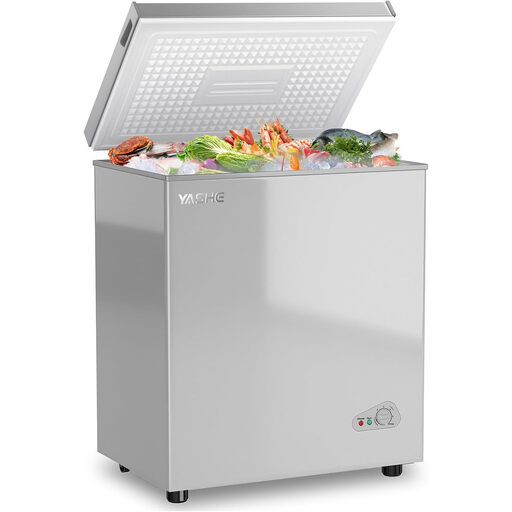
YASHE BC-150Q-EU, 150 l
The two removable baskets give you separate storage for smaller packs and other supplies.
150 l; two removable baskets; six temperature settings. Before freezing fresh food, check that the freezer function is suitable.
View at Joybuy
 No image available
AUCMA chest freezer, 141 l, convertible
Could be an option for extra storage. Compare its capacity with your actual needs and check that it is suitable for freezing fresh food.
141 l; removable basket; switches between fridge and freezer modes, according to the product name; energy class E.
View at Joybuy
Frequently asked questions
Is frozen grated cheese still suitable for a cold sandwich?
Not necessarily. The Lower Saxony consumer advice centre points out that hard cheese can lose flavour or change in texture when frozen, and may become crumbly. If you plan to eat it cold, try freezing a small portion first. Frozen cheese may still be suitable for cooking or melting on top of a dish.
How should I prepare small portions of cheese for freezing?
Pack the cheese in individual portions using freezer-safe packaging, and note the contents and date. The Federal Centre for Nutrition recommends labelling food to help you keep track of it, while the consumer advice centre recommends defrosting it slowly in the fridge. Also follow the instructions on the cheese packaging.
Will a chest freezer keep my lunchbox safely chilled until lunchtime?
No. Once you’ve taken it out, you’ll need to plan separately for keeping it cool during transport and until you eat it. The Federal Institute for Risk Assessment warns that inadequate temperatures during transport and storage can allow harmful bacteria to multiply.
How do I compare the energy consumption of chest freezers?
Compare the stated annual energy consumption in kWh/year for models with a capacity that suits your needs. The European Commission says the EU energy label also includes information such as freezer capacity and noise emissions. Energy consumption can also depend on how and where the appliance is used.
What information is shown on the energy label for a household chest freezer?
The EU energy label for household freezers shows the efficiency class from A to G, along with information including annual energy consumption and freezer capacity. The European Commission describes this product labelling as a useful guide when comparing specific appliances.


