
Lieferung heute & morgen

Qualitätsgarantie

Willkommens-Angebote freischalten: KOSTENLOSE Lieferung | Bis zu 80 % RABATT | Kostenlose 30-Tage-JoyPlus-Testphase
App herunterladen
A chest freezer with a cooling function can provide extra storage space without the need to keep two separate appliances permanently. Depending on the setting, it can store frozen food or cool drinks, fresh ingredients and prepared meals. This switchable function is practical for flats, garages, cellars, small cafés and kiosks – provided the technical specifications suit the intended location.
Before buying, it is worth taking a close look at the specifications. Terms such as “quiet”, “energy-efficient” or “compact” are only meaningful when specific figures, such as decibels, annual energy consumption and external dimensions, are provided.
A convertible chest freezer is not automatically a fridge freezer with separate compartments. With switchable chest freezers, the entire interior is generally set to one operating mode. If you want to chill drinks and deep-freeze meat at the same time, you will therefore need an appliance with separate zones or two different appliances.
A 95-litre chest freezer nominally offers 95 litres of internal capacity. However, without a basket or storage system, smaller packs can quickly disappear beneath larger supplies. A chest freezer with a basket makes it easier to access food you use frequently. When choosing a model, you should also check whether the basket can be removed.
A chest freezer with energy efficiency class E is not among the highest efficiency ratings on the current A to G scale. However, this alone does not indicate the actual running costs. The stated annual energy consumption in kilowatt hours is more useful. For a rough calculation, multiply this figure by your electricity price per kilowatt hour.
The location where the appliance is installed also affects consumption. A chest freezer for a garage or cellar must be suitable for the ambient temperatures found there. Information about the climate class and permitted temperature range can be found in the product description or operating instructions.
For small households or flats, a mini chest freezer with around 95 to 100 litres may be sufficient. Families who regularly do large shops often need more capacity. The following details are important, not just the stated litre capacity:
For example, a 141-litre model can hold more supplies, but it also requires more floor space. With larger appliances, you should additionally check whether they have castors, carrying handles or adjustable feet.
A quiet chest freezer is particularly important if it is placed in a flat, utility room or near workspaces. For the AUCMA models mentioned, a figure of 38 dB indicates the stated operating noise level. To compare different offers, manufacturer specifications should be considered under the same conditions. Sounds made when the compressor starts up may nevertheless be more noticeable at times.
A 4-star freezer compartment, or a 4-star chest freezer, is designed to store frozen food at around −18 °C or below. The star rating refers to freezing performance and storage, not to noise levels or energy consumption.
For the cooling function, the operating instructions should clearly state the available temperature ranges. A mechanical or digital thermostat allows adjustments, but does not replace separate cooling zones. Other practical features include a drain outlet for defrost water, a removable basket and a lid that stays open while you load the appliance.

Why this product suits the profile: Compared with larger chest freezers, the 95-litre version takes up less floor space and supports both cooling and freezing. This makes it suitable for smaller households, flats or as additional food storage.
The product specifications state annual energy consumption of 165 kWh, operating noise of 38 dB, a removable basket and a drain outlet. This makes it easier to assess electricity consumption, noise levels and maintenance requirements before buying.
95 litres of usable space, 7-stage mechanical temperature control, energy efficiency class E and a 4-star freezer rating.
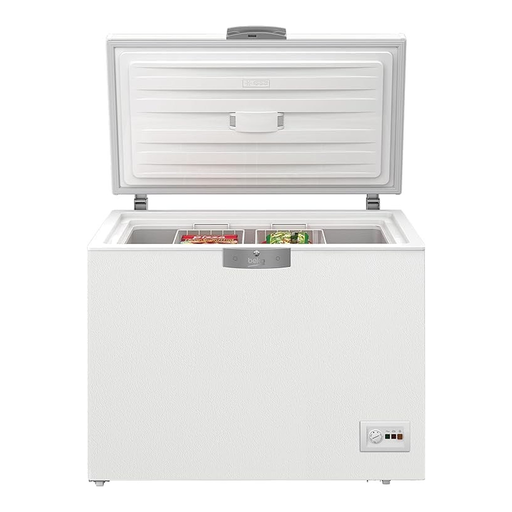
Why this product suits the profile: If you store larger quantities and value easy monitoring and organisation, you get 230 litres of usable capacity, two baskets, interior lighting and a temperature alarm.
The temperature alarm can indicate rising internal temperatures. Two baskets and the interior light make it easier to check the contents, so food does not remain hidden beneath larger packs.
230 litres of usable capacity, a noise level of 35 dB, energy efficiency class D, a lockable lid and suitability for unheated rooms down to −15 °C according to the product specifications.
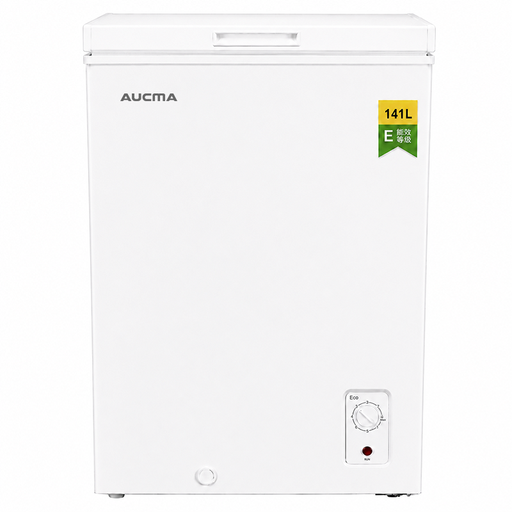
Why this product suits the profile: The 141-litre version offers more space for families, small cafés, kiosks or households whose needs vary between cooling and deep-freezing.
The switchable function is specifically stated as supporting both cooling and freezing. The basket, drain outlet and adjustable feet address common issues with organisation, cleaning and uneven installation surfaces.
141 litres of capacity, operating noise of 38 dB, annual energy consumption of 179 kWh, 7-stage temperature control and a 4-star freezer rating.
We have put together a complete, regularly updated list of products that fully meet these strict selection criteria and the safety regulations applicable in the EU.
A chest freezer should be placed on a stable, level and dry surface. The ventilation clearance specified by the manufacturer must be maintained around the appliance. After transport, it may be necessary to wait before switching the appliance on; the relevant operating instructions should always be followed.
Manual-defrost appliances should be defrosted regularly as soon as a noticeable layer of ice forms. Unplug the appliance before cleaning it. A drain outlet makes it easier to remove defrost water, but does not replace the need to dry the interior thoroughly.
Annual electricity costs can be estimated as follows:
Annual consumption in kWh × your electricity price per kWh = estimated annual cost
The actual figure may vary depending on room temperature, ventilation, how full the appliance is, the seal and how often the lid is opened.
With the AUCMA models mentioned, the interior is switched between cooling and freezing modes. The product specifications do not indicate that both temperatures can be used simultaneously. Separate compartments or two appliances would be required for this.
This depends on the stated climate class and permitted ambient temperature range. An unheated room can become very cold in winter. According to the product specifications, models such as the Beko appliances mentioned are designed for certain low ambient temperatures. Before buying, you must compare these specifications with the conditions in your own garage.
It is not possible to give a reliable general lifespan. Regular defrosting, a clean lid seal, sufficient ventilation and avoiding overloading can help ensure trouble-free operation. For a realistic expectation, warranty terms, spare-parts availability and the manufacturer’s guidance are more important than general advertising claims.