Regular batch cooks
If you freeze several cooled portions at once for meals later on, check the freezing capacity of the specific model as well as its storage space. The Verbraucherzentrale lists these as relevant buying criteria.


Choose a chest freezer based on how much you want to freeze at once and how much space you need for the food you plan to store. For the occasional small batch, your existing freezer compartment may be enough. A larger chest freezer is not automatically the right choice: the Verbraucherzentrale warns that oversized appliances can use electricity unnecessarily. Compare freezing capacity, usable capacity, annual energy consumption and dimensions separately.
If you freeze several cooled portions at once for meals later on, check the freezing capacity of the specific model as well as its storage space. The Verbraucherzentrale lists these as relevant buying criteria.
If you need extra freezer space but have limited room, the external dimensions and access to the lid matter just as much as usable capacity. For example, Exquisit gives the dimensions of its GT100-050E black model as 54,5 × 83,5 × 48 cm.
If you plan to store curry portions and other supplies for longer, consider annual energy consumption, access to containers and the permitted ambient temperature for the location. Liebherr specifies FrostProtect down to −15 °C for the CFe 1870 Pure; this rating applies to this model only.
First, estimate how much you want to freeze at once. Then work out how much room you need for the food you already have and any supplies you plan to store in future.
| Buying priority | What to check | Who it matters to |
|---|---|---|
| Freezing several portions at once | Check freezing capacity in kg/24 h separately from the space available for the planned batch. | If I freeze several cooled curry portions at the same time, the amount the appliance can freeze per day is key; around 33 % of consumers put this first. |
| Usable capacity to suit your supplies | Estimate the space needed for containers and existing supplies, then compare usable capacity in litres. | If you store curry portions alongside other food, you won’t want interior space that stays unused; around 27 % of consumers prioritise usable capacity that suits their needs. |
| Ongoing electricity use | Compare annual energy consumption in kWh and usable capacity on the EU energy label. | If low running costs matter more to me than extra capacity I’ll rarely use, I pay particular attention to the annual figure; around 20 % of consumers prioritise this. |
| Location and access | Check the appliance and transport dimensions, the space needed to open the lid and the permitted ambient temperatures. | If you’re putting a chest freezer in a cramped or cold utility room and want to reach individual portions easily, you’ll need suitable dimensions and an appropriate temperature range; around 20 % of consumers prioritise space and access. |
The percentages give an approximate indication of how often each priority might feature in the choices shown here; they are not survey results. For comparing energy use, the EU energy label shows, among other things, the efficiency class and annual consumption. Since 1 March 2021, the European Commission has used an A to G scale for household freezers.
Litres indicate the available storage space. Freezing capacity in kg/24 h is a separate figure showing how much food can be frozen within a day.
Compare both figures separately with the batch of portions you plan to freeze and the supplies you want to store long term.
An oversized chest freezer can use electricity even if you don’t use the extra storage space. The Verbraucherzentrale warns about this.
Start by working out what you already have in storage and how much you regularly freeze, then choose a suitable usable capacity.
Extra storage space you don’t need can add to your ongoing electricity use without making everyday life any easier.
Since 1 March 2021, household freezers have been rated on a scale from A to G. Earlier labels with plus ratings are no longer a valid basis for comparison.
Check the energy label for the specific model, and look at its annual consumption in kWh as well as its rating.
Less frost build-up doesn’t mean you’ll never need to defrost the appliance. Suitability for low ambient temperatures only applies when it’s explicitly specified for the particular model.
Check the defrosting guidance and permitted temperature range in the documentation for the specific model. Liebherr specifies FrostProtect down to −15 °C for the CFe 1870 Pure.
The GT100-050E black is a compact chest freezer with 99 l of usable capacity.
Haier’s range includes chest freezers in various sizes; the manufacturer gives the HCE200C a usable capacity of 196 l.
With a capacity of 219 l, the GTE 220 is designed for larger stores of food.
According to the manufacturer, the CFe 1870 Pure has a total capacity of 281 l and is rated with FrostProtect for use in cold locations.
Beko’s range includes models such as the CF100EWN with 100 l and the CF200CWN with 198 l of capacity.
These chest freezers offer extra storage space in a range of sizes for portioned meals. Choose one with freezing capacity and dimensions that suit your needs.
 No image available
A compact option if you need extra freezer space but have limited room.
95 l usable capacity, energy efficiency class E and 165 kWh/year. Switch between fridge and freezer modes, with a removable basket and a 7-stage thermostat. Stated dimensions: 550 × 475 × 848 mm.
 No image available
This model could suit households with larger long-term storage needs, provided there’s enough space for its dimensions.
291 l usable capacity, energy efficiency class E and 226 kWh/year. Switch between fridge and freezer modes; features include a removable basket, interior lighting and digital temperature control. Stated dimensions: 1100 × 597 × 872 mm.
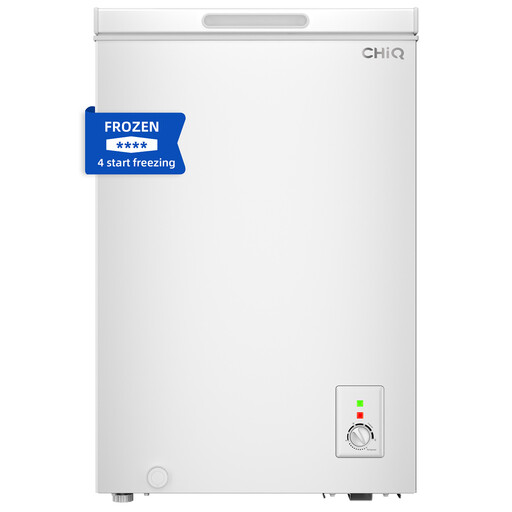 No image available
The stated freezing capacity can help you check whether this model can handle the amount in a new batch of portions.
99 l usable capacity, freezing capacity of 4,5 kg/24 h, energy efficiency class E and 39 dB. Includes a wire basket and wheels. Stated dimensions: 54,5 × 47,6 × 83,5 cm.
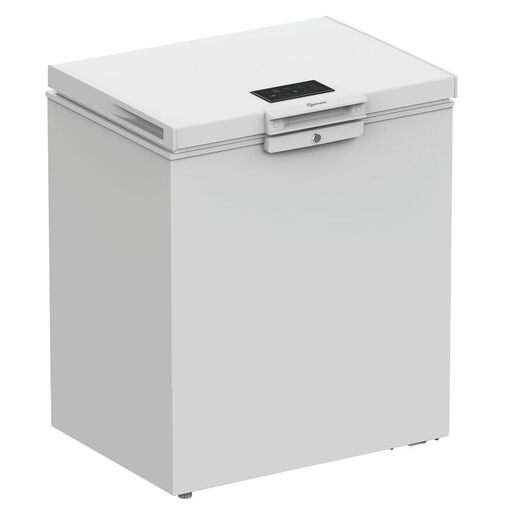 No image available
Compare the stated freezing capacity with the amount you regularly want to freeze at once.
142 l usable capacity, freezing capacity of 8 kg/24 h, energy efficiency class D and 146 kWh/year. Includes a basket and Super-Freezer function. WinterProof is specified down to −15 °C; check that the temperature at the installation location is within this range.
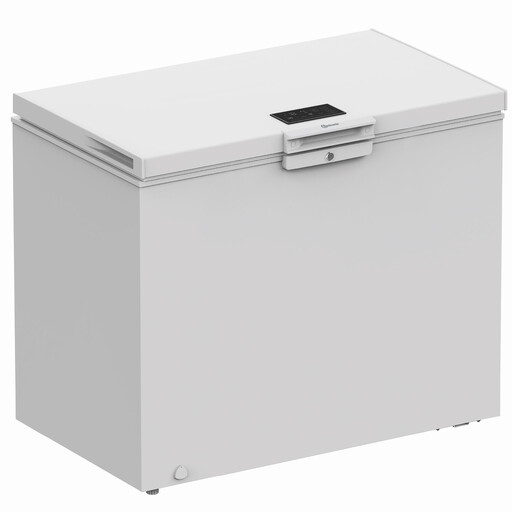 No image available
If you’re freezing several batches of portions, compare the stated freezing capacity with your needs; make sure you have enough room for the larger chest freezer.
198 l usable capacity, freezing capacity of 13 kg/24 h, energy efficiency class C and 126 kWh/year. Includes two baskets. WinterProof is specified down to −15 °C. Dimensions: 103,0 × 61,5 × 84,5 cm.
If you only freeze a few portions occasionally and have enough room in your existing freezer compartment, you don’t automatically need an additional chest freezer. If you regularly freeze larger quantities, the Verbraucherzentrale recommends checking how much extra freezer space you need.
For longer storage, cool cooked, perishable food quickly to below 7 °C and divide it into suitable containers. Label each container with its contents and the date it was stored; don’t fill containers of liquid right to the brim. The German Federal Institute for Risk Assessment recommends reheating food until it reaches at least 70 °C throughout for two minutes. Freezing won’t remove risks that arose beforehand.
No. The permitted ambient temperature must be suitable for the specific model and its location. Liebherr specifies FrostProtect down to −15 °C for the CFe 1870 Pure; this model-specific rating doesn’t apply to other chest freezers.
Compare the efficiency class and annual energy consumption in kWh on the EU energy label, and take usable capacity into account too. To estimate your own costs, you’ll also need your electricity price per kWh. The standardised label figure isn’t a guarantee of actual energy use at home.
Check the permitted ambient temperature range in the documentation for the specific model. A suitability rating such as FrostProtect down to −15 °C applies only to the model it’s specified for, and should be checked against the conditions at your intended location.