What should you consider when buying?
Existing freezer compartment
A good fit if: you only add a few portions occasionally and there’s still enough room.
The trade-off: You won’t need another appliance, but space may become limited if you regularly freeze larger quantities.
Compact chest freezer
A good fit if: you regularly prepare larger quantities and need extra storage space.
The trade-off: A chest freezer offers plenty of storage, but takes up floor space. Usable capacity alone won’t tell you whether a model suits your needs.
Small upright freezer
A good fit if: you need extra freezer space, but a chest freezer lid or access from above would be impractical where you plan to put it.
The trade-off: Compare the usable capacity and kWh/year of specific appliances rather than assuming one design is more efficient than another.
| What you’re looking for |
What to check |
Who particularly values this? |
| Suitable usable capacity |
Check the freezer space you already have and how much you plan to freeze at a time; then check the usable capacity of the specific model. |
If I only freeze a few portions occasionally, I want to know first whether my existing compartment is enough. Around 36% of consumers put having the right amount of extra space first. |
| Annual energy consumption |
Compare the kWh/year, usable capacity and noise rating on the EU energy label for specific models. Energy use at home may differ from the standardised label value. |
If you’re going to run an additional appliance all the time, you’ll want to compare its energy use before buying. Around 29% of consumers pay particular attention to running costs. |
| Individual portions |
Check whether the baskets or interior layout suit the containers you use. Let the broccoli cool, pack it in suitable portions and label it with the date. |
If I want to take out small packs individually, good organisation and suitable containers matter. Around 21% of consumers prioritise easy-to-handle portions. |
| Space and installation location |
Check the external dimensions, delivery route and lid clearance; make sure the ambient temperature at the location is within the limits for the specific model. |
If space is tight, I want to be sure the appliance will fit and work well where I plan to put it. For around 14% of consumers, finding a suitable spot is their top priority. |
The EU energy label for household freezers rates appliances on a scale from A to G and shows information including annual energy consumption, freezer volume and noise emissions. The European Commission explains the labelling scheme; the energy rating doesn’t replace comparing the kWh/year figures.
Freezers at Joybuy
The following Joybuy products include compact chest freezers and small upright freezers. They may suit you if you need extra freezer space; check the capacity and interior layout against the portions you plan to store and the space available.
 No image available
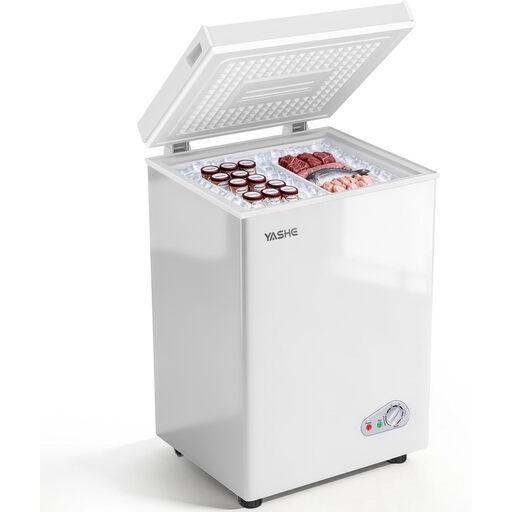
YASHE BC-100Q-EU chest freezer, 100 l, 2 removable baskets
A compact chest freezer with separate baskets may suit you if you need extra freezer space for prepared portions.
100 l; two removable baskets; freestanding.
Before buying, check the EU energy label and make sure the external dimensions fit the space you have in mind.
View at Joybuy
 No image available
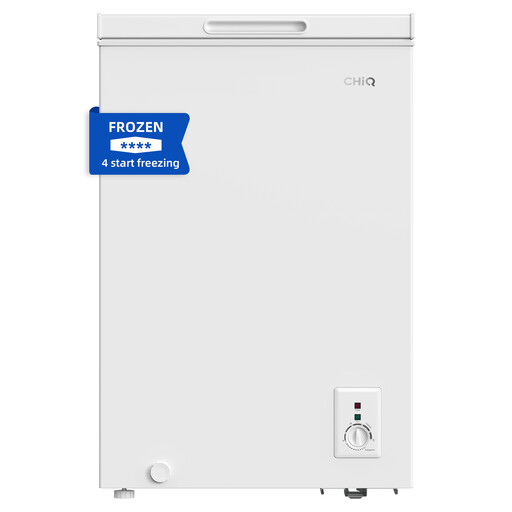
CHiQ chest freezer, 99 l, 4-star, energy class E
A 99-l chest freezer with a wire basket may be worth considering if you need extra storage and a separate place for smaller packs.
99 l; 4-star freezing performance; energy class E; wire basket.
Compare the annual energy consumption on the EU energy label and check whether the interior layout suits your containers.
View at Joybuy
 No image available
Exquisit GS581-H-010E upright freezer, 85 l, 3 drawers
An upright freezer may be a good alternative if you need extra freezer space and prefer drawers to a chest freezer lid.
85 l; 4-star freezing performance; three drawers; manual defrost.
Check the model’s defrosting details and make sure its external dimensions fit the space available.
View at Joybuy
 No image available
COMFEE' RCU40WH2(E) mini freezer, 31 l
The compact capacity may suit you if you only need a small amount of extra freezer space.
31 l; 4-star freezing performance; energy class E; 147 kWh/year; reversible door.
Compare the stated annual energy consumption with the usable capacity and check that it’s enough for the portions you plan to freeze.
View at Joybuy
 No image available
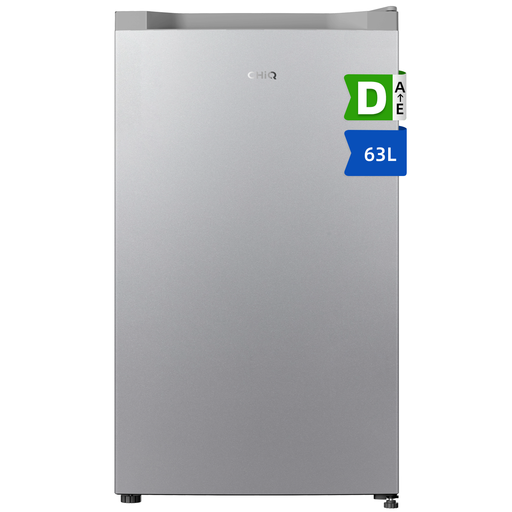
CHiQ JR63DSD upright freezer, 63 l, energy class D
An upright freezer with separate drawers may be worth considering if you want to store portions separately.
63 l; 4-star freezing performance; two drawers; 47 cm wide; 38 dB; manual defrost; reversible door.
Check the annual energy consumption on the EU energy label and bear in mind that this model needs to be defrosted manually.
View at Joybuy
Frequently asked questions
How should I prepare blanched broccoli for freezing in individual portions?
Wash and chop the broccoli, blanch it briefly, then cool it in iced water. Pack the portions you need in suitable freezer bags or containers, leaving as little air inside as possible, and note the contents, quantity and date. The Federal Centre for Nutrition recommends this method of preparation and storage; it isn’t a special appliance feature.
What temperature should I set for storing frozen food?
The Verbraucherzentrale gives −18 °C as the optimum temperature for freezers. Check the actual setting and your appliance’s instruction manual.
Can a chest freezer be kept in an unheated cellar or garage?
There’s no single answer that applies to every model. Check the permitted ambient temperature for the specific appliance; Liebherr states that suitably equipped chest freezers with FrostProtect can operate down to −15 °C. This doesn’t automatically apply to chest freezers from other manufacturers.
What information should a freezer’s energy label show?
The EU energy label for this product group uses a scale from A to G and includes information such as annual energy consumption, freezer volume and noise emissions. According to the European Union, the label must also be clearly visible when shopping online. Labelling rules don’t require you to choose a particular energy class.
What should I do with a freezer I’m replacing?
In Germany, electrical appliances must not be put in household rubbish. The Federal Environment Agency lists free drop-off at a recycling centre and explains how to return a large old appliance when buying a similar new one, including for online orders with delivery. Check the arrangements with the retailer in advance.


