If you’re only freezing berries for a meal you’re sharing today, buying an extra chest freezer may not make sense. Its main benefit is storing regular surplus harvests. If you harvest regularly, consider usable capacity, freezing capacity for each batch, floor space and annual energy consumption together. The Verbraucherzentrale recommends washing home-grown berries and leaving them to drain before freezing. The German Federal Institute for Risk Assessment advises thoroughly heating frozen berries before eating, particularly for people in vulnerable groups.
Who would benefit from a chest freezer?
People with regular berry harvests
If you regularly harvest larger quantities, extra freezer space can help you store supplies for future meals. The Verbraucherzentrale recommends considering whether a freezer can handle the quantity you need to freeze, as well as how much storage space it offers.
Households with limited floor space
If you have limited floor space, compare the dimensions of the specific appliance with its usable freezer capacity. The manufacturer's dimensions and capacity details can help you plan realistically for the space available.
Households with space in a cellar
If you plan to put a chest freezer in an unheated room, check the permitted ambient temperature for the specific model. Liebherr states that the CFd 2505 Plus FrostProtect can operate at ambient temperatures down to −15 °C.
What should you consider when choosing one?
Use your existing freezer compartment
A good fit if: you only have portions for a meal you’re sharing today, or there’s room for an occasional surplus.
The trade-off: larger harvests may exceed the storage space and freezing capacity of your existing appliance.
Compact chest freezer
A good fit if: regular but modest harvests call for extra freezer space, and you need to keep the footprint small.
The trade-off: you’ll have less spare capacity for particularly large harvests than with an appliance offering more usable space.
Larger chest freezer
A good fit if: you regularly store other supplies as well as berries, and have enough space.
The trade-off: more freezer space takes up more floor space. Compare the annual energy consumption of the specific model, too.
| What you need |
What to look for when buying |
Who will find this especially important? |
| Freezing larger harvests |
Work out the weight of a typical harvest batch and check the model's freezing capacity in kg/24 h, along with the instructions for any quick-freeze function. |
If I have several harvests to freeze, I want to know how much the appliance can freeze in a day. Around 36% of consumers prioritise freezing larger harvests. |
| Capacity and floor space |
Plan for berries and other supplies together; compare the usable capacity and external dimensions of the same appliance. |
If space is limited, I want extra freezer capacity without needing more floor space than I have available. Around 29% of consumers prioritise finding the right balance between capacity and floor space. |
| Ongoing energy consumption |
Compare the annual consumption in kWh on the EU energy label with similarly suitable appliances. You can calculate your own electricity costs using your personal price per kWh. |
If the freezer will be running regularly, I want to factor its annual consumption into my ongoing costs. Around 21% of consumers prioritise energy consumption. |
| Location and access |
Check the access route, floor space, room to open the lid, permitted ambient temperature and baskets of the specific model. |
If I only have one possible place for it, or want to reach portions quickly, the location and interior layout need to work for me. Around 14% of consumers prioritise location and access. |
Avoiding common chest freezer buying mistakes
-
Buying a chest freezer just for tonight's dinner
An extra freezer is most useful for storing or freezing larger quantities on a regular basis. A quick-freeze function alone doesn’t tell you how long it will take to freeze berries before a meal.
First, consider how much you plan to freeze in future and whether your existing freezer compartment can handle it.
-
Confusing capacity in litres with freezing capacity
Usable capacity tells you how much storage space is available. Freezing capacity is a separate figure for new batches of produce.
Compare the figures for the specific model, and check the unit given for freezing capacity, such as kg/24 h.
-
Looking only at the energy class or product heading
As well as the efficiency class, the EU energy label shows annual consumption and capacity. The product heading for the Beko CF316EWN gives a different capacity in litres from the stated freezer capacity of 308 l.
Use the stated freezer capacity when planning for space, and compare annual consumption in kWh using the technical details or the EU product data sheet.
-
Assuming a cold cellar or garage will work without checking the model
Whether an appliance can operate at low ambient temperatures depends on the model; this isn’t a feature of all chest freezers.
Compare the permitted ambient temperature for the appliance you’re considering with the conditions at its intended location.
Brands and suitable model examples
Haier
The HCE200C is an example of a more compact 196 l chest freezer for when space is limited.
- Haier lists Fast Freeze and an interior light for this model.
- The feature description doesn’t specify how long a particular batch of berries will take to freeze. Check the model's manual for more information.
Beko
The CF316EWN is an example of a model for larger stocks; Beko lists 308 l as its freezer capacity.
- Beko lists external dimensions of 112 × 70 cm (width × depth) and energy efficiency class E.
- The product heading gives a capacity of 316 l, while the technical details list a freezer capacity of 308 l. Use the figure specifically stated as freezer capacity for your planning.
Liebherr
The CFd 2505 Plus is an example of a model for storing larger quantities in an unheated location.
- Liebherr lists 359 l and FrostProtect for ambient temperatures down to −15 °C.
- The external dimensions are 167 × 71 cm (width × depth). According to the manufacturer, SmartFrost means you need to defrost less often, not that defrosting is no longer necessary.
Bauknecht
The GT 219 A3+ is a documented mid-sized model with a capacity of 219 l.
- Bauknecht lists two baskets, a freezing capacity of 16.0 and energy consumption of 132 kWh/year.
- Check the units and details for the specific appliance before comparing freezing capacity or annual consumption with other models.
Chest freezers at Joybuy
This Joybuy selection includes compact chest freezers for extra portions of your harvest, as well as models with more freezer space for larger stocks.
 No image available
Exquisit chest freezer, 142 l
Listed as extra freezer space for harvest portions.
142 l net capacity, a 4-star compartment and a freezing capacity of 7 kg/24 h. Electronic temperature control, a quick-freeze function and a removable basket are listed; manual defrosting is required.
View at Joybuy
 No image available
AUCMA chest freezer, 141 l
A compact option for extra freezer space when you have regular harvests.
141 l capacity and a 4-star freezer compartment. A seven-setting thermostat, removable basket and defrost drain are listed.
View at Joybuy
 No image available
AUCMA chest freezer, 95 l
For extra freezer space when floor space is particularly limited.
95 l capacity and a 4-star freezer compartment. The dimensions are 550 × 475 × 848 mm; a removable basket and defrost drain are listed.
View at Joybuy
 No image available
AUCMA chest freezer, 197 l
More freezer space for surplus harvests and other supplies.
197 l capacity and a 4-star freezer compartment. The dimensions are 816 × 554 × 848 mm; digital temperature control and a removable basket are listed.
View at Joybuy
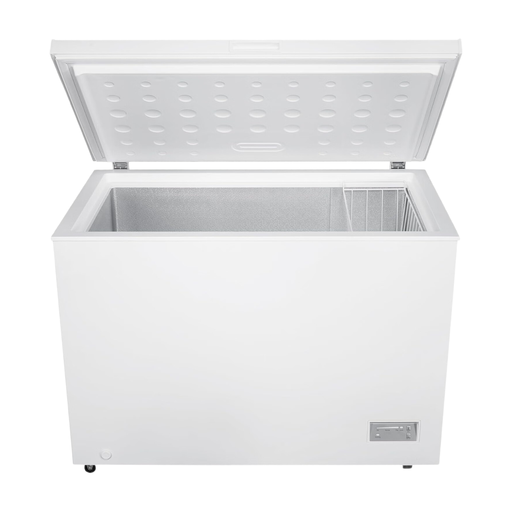 No image available
Beko CF316EWN, 308 l
For larger harvests and other supplies, provided you have enough space and the right conditions for installation.
308 l net capacity and a freezing capacity of 16 kg/24 h. One basket, a temperature alarm and four wheels are listed; manual defrosting is required.
View at Joybuy
Frequently asked questions
Can I count on freshly picked berries being frozen by this evening?
No. A quick-freeze function alone doesn’t tell you how long your quantity of berries will take to freeze. If you don’t need to freeze them for tonight’s meal, you can prepare a fresh portion and save the rest for future meals.
How should I prepare berries from my garden for freezing?
The Verbraucherzentrale recommends washing the berries thoroughly and leaving them to drain before freezing. For storage, the German Environment Agency recommends using suitable packaging and defrosting the appliance if ice builds up.
Does freezing make berries safe for all guests to eat?
No. The German Federal Institute for Risk Assessment has documented outbreaks caused by frozen berries contaminated with viruses. It recommends thoroughly heating frozen berries before eating, particularly for people in vulnerable groups. These outbreaks don’t show that your own garden berries are contaminated, but if you’re serving guests who may be vulnerable, don’t assume that freezing alone removes the risk.
What temperature and care does the German Environment Agency recommend?
The German Environment Agency recommends setting your freezer to −18 °C and defrosting it if ice builds up. This is usage advice, not a minimum legal temperature claimed here.
How do I compare capacity and energy consumption?
Compare the usable capacity and annual consumption in kWh on the EU energy labels of appliances that suit your harvest quantities and intended location. To estimate your own costs, multiply the annual consumption by your personal price per kWh.


