Lunchbox preppers with limited freezer space
You regularly portion out herbs and other ingredients for workdays, and want to check whether your existing freezer compartment has enough room.


For the occasional small portions of herbs, an extra chest freezer usually isn’t worth it if they fit in your existing freezer compartment. If you regularly run short of space, choose a size that suits everything you plan to store. Measure the available floor space and clearance for the lid, and compare annual energy consumption in kWh. For individual lunchbox portions, well-organised containers that are easy to reach matter more than having as much capacity as possible.
You regularly portion out herbs and other ingredients for workdays, and want to check whether your existing freezer compartment has enough room.
You need extra freezer space, but also have to consider the floor area available and the clearance needed to open the lid.
You want to freeze other foods regularly as well as herbs, and need to weigh up storage space, organisation and electricity consumption.
First, check whether your existing freezer compartment is regularly too small. Only then is it worth comparing an additional appliance.
| Consideration | What to look for | Who it matters most to |
|---|---|---|
| Do you need an extra appliance? | Check how much space your planned portions will need and how often your existing freezer compartment is full. | If I’m only freezing a few portions of herbs, I want to know first whether my existing compartment is big enough. Around 33% of consumers say their main concern is whether they need an extra appliance at all. |
| Size and floor space | Compare the external dimensions, required clearances and space needed to open the lid with the space available at the intended location. | When space is limited, the delivery route, floor area and access to the lid all need to work together. Around 27% of consumers prioritise floor space and finding the right size. |
| Finding individual portions | Check that the interior can accommodate your freezer-safe containers, and label each one with its contents and date. | For my lunchbox, I want to find individual portions of herbs quickly on weekdays, rather than having to break up one large frozen block. Around 20% of consumers prioritise being able to access individual portions. |
| Annual energy consumption | Compare annual consumption in kWh for a suitable size, and take the conditions at the installation location into account. | If I need extra freezer space, its ongoing energy use should also factor into my decision. Around 20% of consumers say annual energy consumption is a main concern. |
The EU energy label provides information including the energy-efficiency class, energy consumption and usable capacity. The European Commission recommends comparing the figures for specific appliances. The energy-efficiency class alone doesn’t replace checking the annual consumption in kWh and choosing the right size.
Small quantities of herbs can be frozen in portions. An extra appliance takes up floor space and uses electricity, even when there’s very little inside.
First, check how much free space you have in your existing freezer compartment. When choosing a size, only allow for food you genuinely plan to freeze.
The depth of the appliance alone won’t tell you how much space it needs at the intended location, including the required gap from the wall and room to open the lid.
Measure the delivery route and installation location, then check the clearances and lid clearance for the specific model.
Freezing herbs won’t automatically keep a prepared lunch chilled while you’re out and about.
Make separate arrangements for food that needs to stay chilled during transport. The German Federal Centre for Nutrition suggests using a cool bag with enough ice packs.
The GT100-050E weiss is an example of a compact chest freezer to consider if you need extra freezer space.
The CF100EWN and CF200CWN show the range of sizes available in the manufacturer’s chest freezer line-up.
The GT 311 105 W is an example of a compact chest freezer from this manufacturer.
The HCE200C is an example of a larger chest freezer for households that regularly freeze other foods as well as herbs.
If you’re thinking about maintenance or installing your freezer in a cool room, the specifications of the particular model are key.
This selection at Joybuy includes compact and larger chest freezers for extra freezer space, from portions of herbs to other food supplies.
 No image available
A good fit if you need extra freezer space for other supplies as well as portions of herbs.
142 l usable capacity; 4-star freezer compartment.
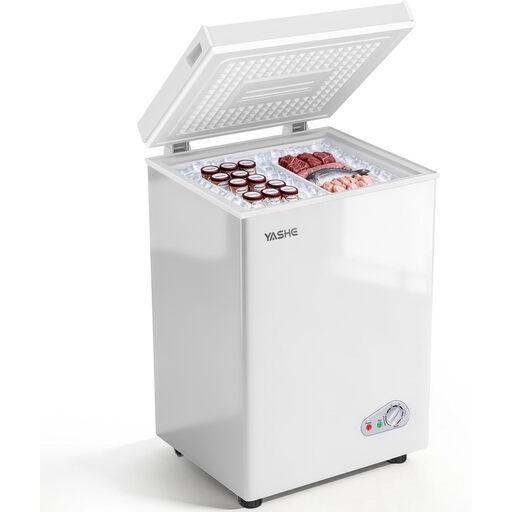 No image available
A compact option if you need extra freezer space for portions of herbs and other food.
100 l; freestanding; with two removable baskets.
 No image available
A compact size for households that regularly need extra freezer space.
98 l; energy-efficiency class E; with storage basket.
 No image available
A compact option if you regularly freeze other foods as well as herbs.
99 l; 4-star freezing; energy-efficiency class E; with wire basket.
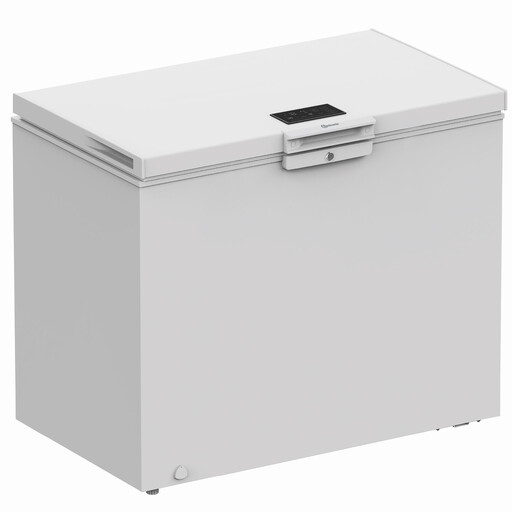 No image available
A good fit if you regularly freeze larger quantities as well as herbs.
198 l; 4-star freezer compartment; Multi-Zone function.
The German Federal Centre for Nutrition recommends finely chopping fresh herbs and freezing them with a little water in ice-cube trays. Portion them into freezer-safe containers and note the contents and date, so it’s easier to find the right amount.
No. Food that needs to stay chilled also requires suitable cooling during transport. The German Federal Centre for Nutrition suggests using a cool bag with enough ice packs. How long a particular lunchbox stays cold doesn’t depend on the chest freezer alone.
If the portions fit in your existing freezer compartment, you probably don’t need a separate chest freezer for them. If you regularly run short of space, choose a size that suits all the food you plan to freeze, not just the herbs.
The EU energy label shows, among other things, the energy-efficiency class, annual consumption in kWh and usable capacity. The European Commission lists classes A to G for the current label. Also compare the appliance size with your needs.
Old electrical appliances mustn’t go in household rubbish. They must be taken to an authorised collection point or handed over through an approved take-back scheme. The German Federal Ministry for the Environment lists local collection points and retailers, provided the legal requirements for take-back are met. Check the collection arrangements for your particular appliance in advance.