Families who regularly batch cook
If you often freeze portions of stew, you’ll need space for them as well as your other supplies. The Federal Centre for Nutrition recommends dividing food into the quantities you’ll need later before freezing it.


An additional chest freezer makes most sense if cooled, portioned and packaged leftovers of lentil stew regularly take up more room than your existing freezer compartment has to offer. If you only freeze the occasional portion and it fits alongside your other supplies, your current compartment may be enough. The Verbraucherzentrale (German consumer advice centre) lists regularly freezing larger quantities as one possible reason to buy a separate freezer, while the Federal Centre for Nutrition recommends freezing food in the portions you’ll need. Choose a size based on how much you’ll be freezing at once and the storage space you need long term. Also check the annual energy consumption, external dimensions and the ambient temperature range permitted for the specific model. A larger capacity alone doesn’t tell you how much you can freeze at once, nor does it replace the need to cool hot food quickly.
If you often freeze portions of stew, you’ll need space for them as well as your other supplies. The Federal Centre for Nutrition recommends dividing food into the quantities you’ll need later before freezing it.
If you need extra freezer space but have limited room to put an appliance, check the external dimensions and usable interior space of the specific model together.
If you’re considering a cellar or another unheated room, check the ambient temperature specified by the manufacturer for that exact model. The permitted range can vary from one model to another.
A good fit if: occasional portions, once cooled and packaged, fit alongside your other supplies.
The trade-off: You won’t need another appliance, but space may be tight when you’re freezing larger batches.
A good fit if: you want to store extra family portions regularly and have limited space.
The trade-off: Extra storage takes up room and adds to your ongoing energy use. Also check how much fresh food the model can freeze.
A good fit if: you want room for other larger supplies as well as the portions you freeze regularly.
The trade-off: Allow for more floor space and compare energy use and freezing capacity for each model individually.
| Buying priority | What to check before buying | Who it matters most to |
|---|---|---|
| Space for supplies | Check usable or total capacity separately from the external dimensions. The stated capacity doesn’t tell you how many of your own containers will fit. | If I want to store family portions alongside other supplies long term, the usable space inside the appliance matters. Around 36% of consumers would prioritise storage space above all else. |
| Fresh batches and portions | Decide on your containers and portion sizes, then check how much fresh food the specific model can freeze. | If I freeze several portions on a batch-cooking day, I need suitable containers and a freezing capacity to match. Around 29% of consumers would focus first on the quantity they can freeze and portioning. |
| Energy use | Compare the stated annual energy consumption in kWh and the energy label of suitable models. | If I run an additional appliance long term, I want to take its energy use into account. Around 21% of consumers would focus above all on ongoing energy consumption. |
| Where to put it | Check the floor space, the route for moving it into place and the lid clearance. The permitted ambient temperature must apply to the specific model. | If the space I have in mind is cool or difficult to access, the appliance needs to suit those conditions. Around 14% of consumers would first check that they have a suitable place for it. |
The stated storage capacity and the amount of fresh food a freezer can freeze answer different questions. A chest freezer may offer plenty of storage without necessarily being suitable for freezing an entire freshly cooked batch at once.
Estimate the size of a typical batch separately from the storage space you need long term, and check both figures for the specific model.
Portions are easier to take out later if you divide them into the quantities you’ll need before freezing. The German Federal Institute for Risk Assessment recommends cooling hot food quickly to below 7 °C.
Allow for suitable containers or bags labelled as freezer-safe, and treat cooling the food as a separate step.
The permitted ambient temperature depends on the model. Exquisit specifies a minimum temperature of 10 °C for the chest freezers considered here; Liebherr states that the CFe 1870 Pure FrostProtect model can be used at temperatures as low as −15 °C. These specifications don’t automatically apply to other models.
Compare the temperature range at your planned location with the permitted range for the exact appliance on offer.
Compact chest freezers that could be a useful addition for portioned supplies; the GT100-010E weiss is one specific example.
Chest freezers in a range of sizes; the GT 313 105 W is an example of a larger model.
The range includes chest freezers with different capacities; the HCE200C is an example of a 196-l model.
Beko’s German product range includes small and medium-sized models, including the 100-l CF100EWN and the 198-l CF200CWN.
Options for larger supplies or cooler locations vary by model; the CFe 1870 Pure is an example of a larger model.
This selection includes compact and larger chest freezers, offering extra space for family portions and other supplies.
 No image available
For extra family portions and other supplies, if you have enough space to accommodate it.
291 l capacity; switches between fridge and freezer modes; E energy rating; 5-level digital temperature control, LED interior light and removable basket. Allow at least 10 cm of ventilation space around the appliance when positioning it.
 No image available
An option for extra space for family portions if you’re looking for an appliance that switches between modes.
197 l capacity; switches between fridge and freezer modes; E energy rating; 5-level digital temperature control and removable basket.
 No image available
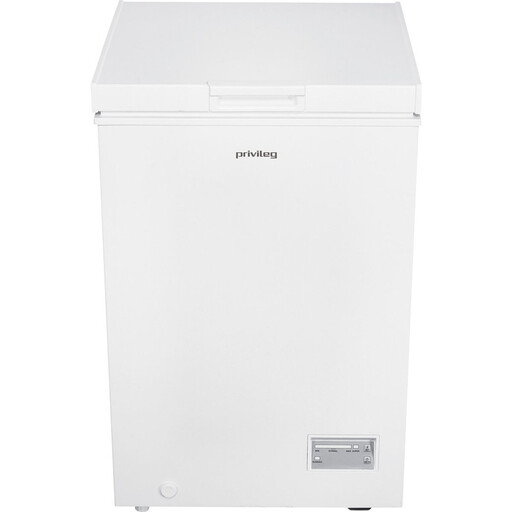
For a smaller amount of extra storage, if you’re looking for a compact chest freezer with a top-opening lid.
98 l usable capacity; super-freeze function, visual temperature alarm, electronic controls and height-adjustable front feet; E energy rating. This model needs to be defrosted manually.
 No image available
For a few extra portions, if you’re looking for a chest freezer that takes up little space.
99 l capacity; 4-star freezing; E energy rating; thermostat control and wire basket.
 No image available
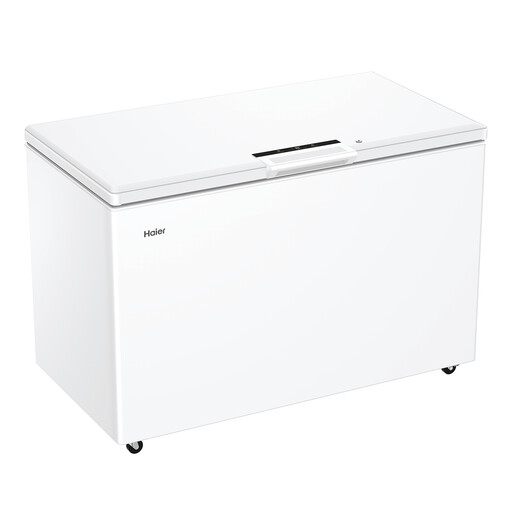
For regularly storing larger quantities alongside family portions, provided there’s enough room at the installation location.
418 l capacity; freestanding chest freezer with static cooling; D energy rating. Its stated external dimensions of 1320 × 895 × 755 mm mean you’ll need plenty of floor space.
Yes. The Federal Centre for Nutrition specifically lists stew as a suitable leftover to freeze, and recommends freezing the quantities you’ll need in portions, using packaging labelled as suitable for freezing. The German Federal Institute for Risk Assessment recommends cooling hot food quickly to below 7 °C first; a chest freezer doesn’t replace this step.
Divide the stew into the quantities you’ll need later before freezing, and use suitable freezer containers or bags. The Federal Centre for Nutrition points out that large frozen quantities can be difficult to divide up.
Compare the temperature at your planned location with the permitted range for the exact model. For the range considered here, Exquisit specifies a minimum installation temperature of 10 °C; Liebherr states that the CFe 1870 Pure FrostProtect model can be used at ambient temperatures as low as −15 °C. These figures can’t be applied to other models.
For models that meet your space requirements, compare the stated annual energy consumption in kWh and the energy label. The German Environment Agency recommends keeping an eye on a freezer’s energy consumption when buying one; your actual electricity costs will also depend on your tariff.
Don’t put old electrical appliances in household waste or bulky waste. The German Environment Agency lists recycling centres and suitable retailer take-back points as free disposal options.