Batch cooks with a small kitchen
If you regularly freeze portions of cooled mashed potato, you’ll need extra freezer space. You’ll also need to plan for the footprint, clearance from the wall and room for the lid to open.


For a few occasional portions, a suitable four-star freezer compartment will do, if there’s room in it; you won’t necessarily need an additional chest freezer. If you regularly freeze larger quantities, compare the space needed, including clearance from the wall and room for the lid to open, with the model’s usable capacity, freezing capacity and annual energy consumption. The German Federal Institute for Risk Assessment recommends cooling hot food quickly to below 7 °C before storing it for longer; divide the mash into portions before freezing.
If you regularly freeze portions of cooled mashed potato, you’ll need extra freezer space. You’ll also need to plan for the footprint, clearance from the wall and room for the lid to open.
If you only want to keep leftovers from time to time, first check whether your existing four-star freezer compartment is suitable for initially freezing food and has enough room. The German Federal Centre for Nutrition explains that a four-star compartment can also be used to freeze food.
If you need extra freezer space, choose a usable capacity that suits your needs and compare the annual energy consumption of the specific models you’re considering. The German consumer advice centre recommends choosing an appliance that meets your actual needs, rather than one that is larger than necessary.
A good fit if: You only freeze small portions occasionally and have room in the compartment.
Consider: You won’t need another appliance or a separate spot for it, but the freezer space may be limited if you regularly freeze larger quantities.
A good fit if: You regularly have more cooled portions and other food to store than your existing compartment can hold.
Consider: Extra freezer space takes up room and uses electricity. Make sure there’s enough clearance around the appliance and room for the lid to open.
A good fit if: You want individual portions to be easy to find and reach, or a top-opening chest freezer wouldn’t be practical where you plan to put it.
Consider: The upright design can make it easier to access food, but check that it will fit in the space you have.
In a small kitchen, the key considerations are where to put the freezer, how much you’ll freeze regularly, energy consumption and how easy it is to reach individual portions. The German consumer advice centre recommends choosing an appliance size that matches your actual needs.
| Priority | What to check before buying | Who should pay particular attention? |
|---|---|---|
| Fitting it in your kitchen | Measure the width, depth and height, the required clearance from the wall, the space needed to open the lid and the route for delivery. | If I need to fit a chest freezer into a small kitchen, I need to allow for the space it takes up with the lid open, not just the depth of the appliance. Around 33% of consumers prioritise whether it will fit in the space available. |
| Freezer space and freezing capacity | Compare your usual portion size and how often you freeze food with the model’s usable capacity in litres and freezing capacity in kg/24 h. Check that it has a four-star function for initially freezing food. | If I regularly freeze several portions at once, I need enough storage space and a suitable freezing capacity. Around 27% of consumers prioritise their storage needs. |
| Annual energy consumption | Compare the annual energy consumption in kWh on the energy label for the exact model. You can estimate the cost using your own electricity tariff. | If I’m adding an appliance that will be running all the time, I want to understand its energy use based on the specific model. Around 20% of consumers prioritise energy consumption. |
| Access to portions | Check the interior layout and basket. Freeze the mash in suitable containers in individual portions, and label each one with its contents and date. | If I often take out individual portions, I want to be able to find and reach them quickly. Around 20% of consumers prioritise easy access to portions. |
For the Exquisit GT100-050E weiss, the manufacturer gives a depth of 48 cm for the appliance, or 58 cm including clearance from the wall. The appliance depth alone therefore won’t tell you whether the freezer will fit in the space you have in mind.
Before ordering, check the space available, the clearance above the lid and the delivery route.
Poor planning could mean extra hassle with delivery or a return.
Litres tell you how much storage space there is; kg/24 h is the manufacturer’s figure for how much food the appliance can freeze from fresh. These figures answer different questions.
If you regularly freeze larger quantities, compare both figures for the specific model.
The German consumer advice centre recommends choosing an appliance size that matches your actual needs. If you only need a little extra space, your existing freezer compartment may be enough, provided it is suitable for initially freezing food and has room.
First, check the capacity and star rating of your existing freezer compartment.
The German Federal Institute for Risk Assessment recommends cooling hot food quickly to below 7 °C before storing it for longer. Larger frozen quantities can also be harder to divide up.
Cool the mash quickly and divide it into suitable portions in freezer-safe containers before freezing.
The GT100-050E weiss is a freestanding 99-litre chest freezer, and its dimensions may make it worth considering if space is tight.
According to the manufacturer, the GT 7355 has a usable capacity of 100 litres and a removable basket for smaller items.
The GT 311 105 W is a 99-litre chest freezer with stated external dimensions of 54.5 × 83.5 × 47.6 cm (W × H × D).
According to Beko, the CF100EWN is a freestanding chest freezer with 98 litres of freezer space.
This selection includes freestanding chest freezers with different usable capacities, as well as an upright freezer as an alternative design. To initially freeze fresh food, the freezer compartment must be suitable for the task. The German Federal Centre for Nutrition explains that a four-star compartment can be used for freezing food.
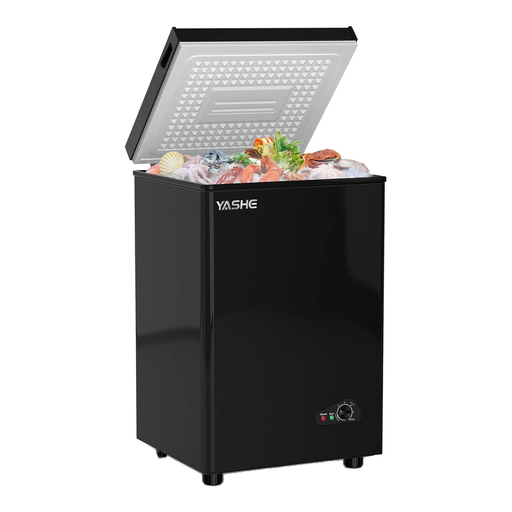 No image available
A freestanding chest freezer for extra storage, if 100 litres and separate baskets suit your needs.
100-litre capacity, two removable baskets and six temperature settings.
 No image available
A chest freezer for when you need more storage, provided the model fits the space you have available.
Described as a convertible fridge and freezer, with a removable basket, seven temperature settings, an E energy rating and a defrost drain. Before initially freezing fresh food, check whether a four-star freezer function is specified.
 No image available
A chest freezer for extra storage, if 95 litres and a removable basket suit the portions you plan to keep.
Described as a convertible fridge and freezer, with seven temperature settings, an E energy rating and a defrost drain. Before initially freezing fresh food, check whether a four-star freezer function is specified.
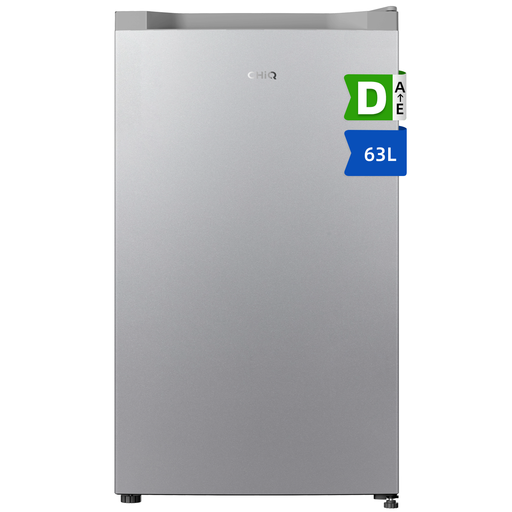 No image available
An upright freezer instead of a chest freezer, if its design and access suit the space you have in mind.
63-litre capacity, four-star freezer function and a stated width of 47 cm.
 No image available
A chest freezer for larger storage needs. Compare the usable capacity with the amount you plan to store regularly.
Described as a convertible fridge and freezer, with an E energy rating, digital temperature control and a removable basket. Check the space available and the required freezer function before choosing.
Cooked food can generally be frozen; guidance about raw potatoes doesn’t mean you can’t freeze cooked mashed potato. The German Federal Institute for Risk Assessment recommends cooling hot food quickly to below 7 °C before storing it for longer. Use a suitable four-star freezer compartment to freeze it initially. This doesn’t guarantee that every mashed potato recipe will retain its original texture.
Put the mash into freezer-safe containers and divide it into portions you’ll want to use later. Label each container with its contents and the date. The German Federal Centre for Nutrition points out that larger frozen quantities can be difficult to divide up; a basket can make frequently used portions easier to reach.
Compare the annual energy consumption in kWh for the specific model. To estimate the cost, multiply it by your own electricity price per kWh; the label figure is based on standardised conditions. The German consumer advice centre distinguishes between statutory consumer rights and a voluntary guarantee.
EU energy-labelling rules apply to certain household refrigeration appliances, so check the label for the specific model. An old freezer must not go in your general household rubbish. The German Foundation for the Register of Waste Electrical Equipment explains that retailers obliged to take back old appliances offer free one-for-one take-back when you buy a new appliance of the same type and with essentially the same function. Arrange the handover with the retailer before delivery.