If you prepare sauces every week
You regularly freeze several cooled portions for lunch and need to balance the space for fresh batches against the rest of your frozen food.


You only need a separate chest freezer for pasta sauce to take to work if your portions and other frozen food won’t fit in your existing freezer, or if you regularly freeze larger batches at once. The consumer advice centre recommends weighing up your actual storage needs against energy consumption. You’ll also need to consider the space available, the freezer’s capacity for freezing fresh batches and keeping your lunch safely chilled in transit.
You regularly freeze several cooled portions for lunch and need to balance the space for fresh batches against the rest of your frozen food.
You need extra freezer space, but also have to allow room for the appliance, a clear route to move it into place and enough space to open the lid.
You want to find individual containers among your other supplies and could benefit from an organised interior. The consumer advice centre recommends labelling frozen food.
A good fit if: Your sauce portions and other supplies fit, and you don’t need to freeze larger quantities at the same time.
The trade-off: You won’t need another freestanding appliance, but the available space and capacity for new portions will remain limited.
A good fit if: You regularly need extra space but only have a small area available.
The trade-off: Check that your containers will fit and that the freezer can handle fresh batches. A compact exterior doesn’t tell you how much electricity it uses.
A good fit if: You need permanent space for other supplies or larger batches of cooled food as well as your lunch portions.
The trade-off: More storage means more floor space. Compare the annual energy consumption and freezing capacity of the models you’re considering, rather than relying on the litre capacity alone.
The consumer advice centre recommends choosing a freezer to suit the amount of food you actually store, rather than buying a larger one than you need. For energy comparisons, the German Environment Agency highlights the annual consumption in kWh shown on the EU energy label.
| What matters | What to check before buying | Who should pay particular attention |
|---|---|---|
| Capacity | Check the free space in your existing freezer and how many containers you store at once. Look at the usable capacity and interior layout of the model you’re considering. | If new sauce portions need to fit alongside your other frozen food, what matters is the space available at the same time. Around 31% of consumers prioritise having enough capacity. |
| Available space | Measure the appliance, the route for moving it into place and the room needed to open the lid. If it’s going in a cold cellar or garage, check the model’s permitted ambient temperature. | If you need more freezer space but have a limited area to put it, make sure it will fit before you buy. Around 25% of consumers prioritise the space available. |
| Energy consumption | Compare the annual consumption in kWh on the EU labels for the models you’re considering. Calculate running costs using your own tariff. | If the freezer will be running all the time, its stated annual consumption could help you choose between suitable models. Around 19% of consumers put ongoing electricity costs first. |
| Access to portions | Check the baskets and interior layout. Label freezer-safe containers with their contents and the date they were frozen. | If you want to find individual sauce containers quickly among other supplies, pay particular attention to how well organised the interior is. Around 13% of consumers prioritise access to individual portions. |
| Freezing capacity | If you freeze larger batches, compare the quantity with the model’s stated freezing capacity in kg/24 h. Consider this separately from its usable capacity. | If you regularly freeze larger quantities at once, the stated freezing performance is another key point to check. Around 12% of consumers prioritise their batch-freezing needs. |
The consumer advice centre points out that an appliance bigger than you need can use electricity unnecessarily.
First check how much space is free in your existing freezer and how many portions you’ll need to store at once. Then choose an appliance size to suit your actual needs.
The GT100-010E weiss is a compact chest freezer designed for smaller spaces.
The manufacturer describes the GT 8849 as a chest freezer with 200 l of usable capacity.
The HCE200C is a medium-sized chest freezer with an electronic display and a stated fast-freeze function.
The CFe 1870 Pure is a larger option. Its location may matter if the ambient temperature is low.
The HSA29540N is an example of a larger chest freezer for extra supplies.
These models are for households looking to store other frozen food alongside pasta sauce, or keep individual containers neatly organised.
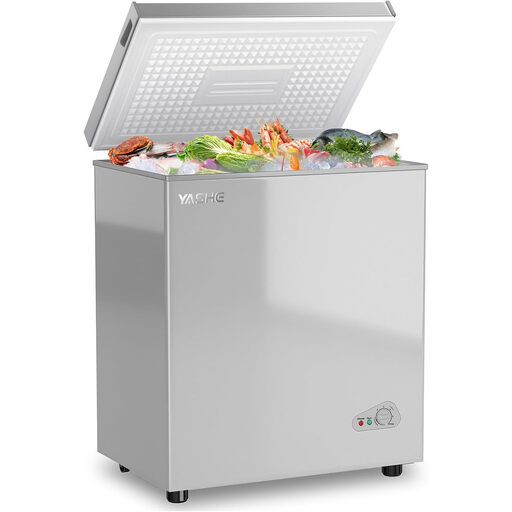 No image available
The stated capacity gives you extra freezer space alongside your existing supplies.
150 l capacity, two removable baskets and six temperature settings.
 No image available
A capacity of 141 l can provide extra space for sauce portions and other supplies.
Features listed in the product name: energy class E, 7-level temperature control and a removable basket.
 No image available
The stated capacity is suited to households looking to store sauce portions alongside other supplies.
291 l capacity, energy class E, removable basket and 5-level digital temperature control.
 No image available
The stated capacity leaves room for fresh batches as well as food you’ve already stored.
197 l capacity, energy class E, removable basket and 5-level digital temperature control.
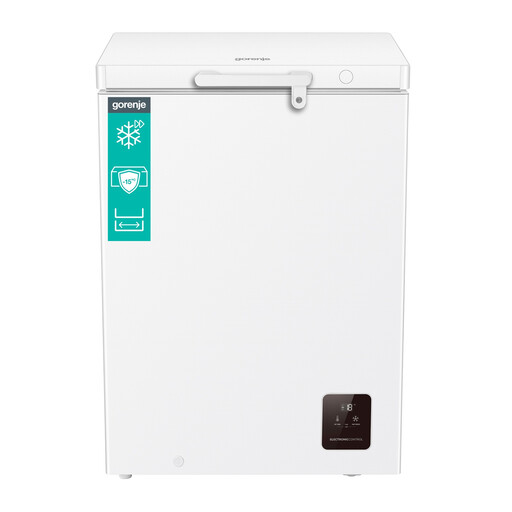 No image available
The stated freezing capacity is worth comparing if you regularly add fresh batches.
141 l usable capacity, freezing capacity of 8 kg per 24 hours, FastFreeze, FreezeProtect down to −15 °C and flexible baskets.
Not necessarily. First check whether the portions and your other supplies will fit in your existing freezer. An extra chest freezer is mainly worth considering if you regularly freeze or store larger quantities at the same time. The consumer advice centre warns that oversized appliances can use electricity unnecessarily.
Cool the sauce quickly, divide it into suitable containers and label them with the contents and the date they were frozen. The consumer advice centre recommends labelling frozen food, while the German Federal Institute for Risk Assessment warns that inadequate temperatures during transport and storage can cause problems. So make sure you can keep it properly chilled on the way and until you eat it.
No. The permitted ambient temperature depends on the model. Liebherr states that the CFe 1870 Pure has FrostProtect down to −15 °C, but this doesn’t apply to other chest freezers. Check the requirements for the specific appliance and where you plan to put it.
Compare the annual consumption in kWh on the EU energy labels for the models you’re considering, and factor in how much storage space you need. Use your own electricity tariff to work out the cost. The German Environment Agency identifies the annual consumption on the energy label as a useful comparison figure.