Weekly dough preppers
If you regularly freeze individual portions for the working week, keeping them organised makes it easier to find the right one. Labelling each portion with its contents, quantity and date frozen can help you identify it.


If you’re freezing a few portions of pizza dough for the following working week, an additional chest freezer isn’t automatically worth it if your existing freezer has enough room. It’s more likely to make sense if you regularly store larger quantities or other provisions at the same time. Choose based on the usable capacity you need, the floor space available (including room to open the lid) and the specific model’s annual energy consumption. You’ll need to plan separately for keeping lunch ingredients chilled when transporting them later.
If you regularly freeze individual portions for the working week, keeping them organised makes it easier to find the right one. Labelling each portion with its contents, quantity and date frozen can help you identify it.
If you freeze other foods alongside pizza dough, or often freeze larger quantities at once, factor the usable capacity you need and the freezing capacity into your choice.
Any extra freezer space needs to fit where you plan to put it. Consider the appliance’s width and depth, as well as the clearance needed to open the lid.
Best suited to: When you only need to add a few portions for the week and there’s still room in your existing freezer.
The trade-off: You won’t need another appliance, but you’ll have less spare capacity for freezing larger quantities at once.
Best suited to: When you regularly store extra portions and provisions but need to keep the space it takes up to a minimum.
The trade-off: It gives you separate storage space, but takes up room and adds to your electricity consumption.
Best suited to: When you regularly store substantial quantities of food alongside dough, or often freeze larger amounts at once.
The trade-off: More capacity takes up more floor space. An appliance that’s bigger than you need could use electricity unnecessarily.
| Priority | What to check when buying | Who it matters most to |
|---|---|---|
| Suitable usable capacity | Allow for containers and other provisions; check the freezing capacity in kg/24 h if you plan to freeze lots of fresh portions at once. | If I store other foods alongside portions of dough, I want to choose a capacity that matches the amount I actually keep, rather than buying more space than I need. Around 30% of consumers prioritise suitable usable capacity. |
| Energy consumption | Once you’ve chosen a suitable size, compare the annual consumption in kWh on the EU energy label. Household consumption also depends on how and where you use the appliance. The German Environment Agency explains the annual consumption figure shown on the label. | When adding a chest freezer, what matters to me is how much electricity it uses over the year, not just its energy efficiency class. Around 30% of consumers pay closest attention to ongoing electricity costs. |
| Location and surroundings | Check the external dimensions and the clearance above the lid; if you’ll keep it in a cold cellar or garage, check the specific model’s permitted ambient temperature range. | If space is limited or the location is unheated, the appliance needs to fit and be suitable for the conditions. Around 20% of consumers prioritise a suitable location and installation conditions. |
| Access to individual portions | Check the number and layout of the baskets; treat information about ice build-up as a convenience feature that varies by model. | If I take out individual portions repeatedly on working days, I want to find them quickly and account for the maintenance involved. Around 20% of consumers focus mainly on being able to access individual portions easily. |
If your existing freezer has enough room for the extra food, you may not need another appliance. The Verbraucherzentrale notes that a freezer that’s too large for your needs could use electricity unnecessarily.
First work out how many portions and other provisions you’ll need to freeze at the same time, then check how much space is available in your existing freezer.
The EU energy label scale for freezers runs from A to G. A designation in a model name such as “A3+” is no substitute for checking the current label and the annual consumption of the specific model.
Compare the current energy label and the kWh/year figure for the full model name. The European Commission Representation in Germany explains the introduction of the new label scale; Bauknecht currently lists the GT 219 A3+ as energy class C.
Whether an appliance is suitable for low ambient temperatures depends on the model. You can’t tell from the type of appliance alone.
Check the specific model’s stated ambient temperature range to make sure it’s suitable for the location you have in mind.
A chest freezer won’t keep ingredients that need to be chilled cold once they’ve been taken out. The Verbraucherzentrale recommends using suitable insulation and ice packs when transporting these foods.
Plan thawing, preparation and transport separately from buying the appliance, and follow the storage instructions for the foods you use.
The GT100-E-040E is an example of a compact chest freezer.
The HS210530N is an example of a compact chest freezer.
The CFd 2085 is an example of a chest freezer with a larger usable capacity.
The HCE200C is a chest freezer with a usable capacity of 196 l.
The GT 219 A3+ is an example of a medium-sized chest freezer.
The selection below includes compact and larger chest freezers, offering extra space for portions of dough and other provisions.
 No image available
An option if you need space for other provisions as well as portions of dough, and a removable basket would help you stay organised.
197 l; switchable fridge or freezer mode; removable basket.
Energy class E is listed in the product name. Also compare the annual consumption in kWh.
 No image available
An option if you’re looking for extra freezer space and baskets to organise frequently used portions.
141 l; FastFreeze; flexible baskets.
FreezeProtect −15 °C is listed in the product name. Check the model specifications to make sure it’s suitable for your chosen location.
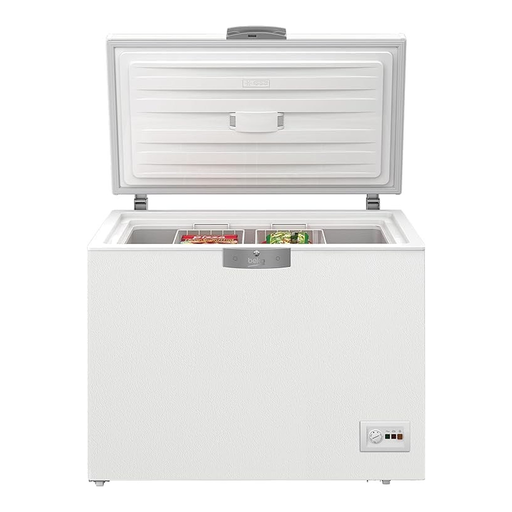 No image available
An option if you want to store portions of dough alongside other provisions and find several baskets useful for keeping things organised.
230 l usable capacity; two freezer baskets; interior light.
Compare the space it takes up and the specific model’s annual consumption with your needs.
 No image available
A compact option if you need extra freezer space but have limited room to put it.
99 l; energy class E; wire basket.
Before buying, check the external dimensions and allow enough space to open the lid.
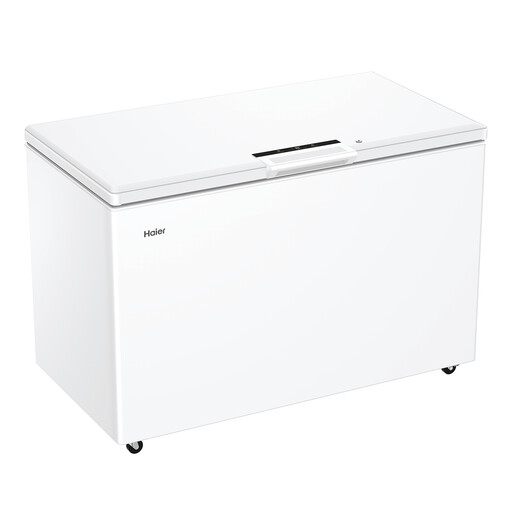 No image available
An option if you regularly need space for substantial provisions alongside dough.
418 l; energy class D.
Measure the space carefully and check the annual consumption before choosing an appliance of this size.
The Verbraucherzentrale recommends −18 °C as the optimum temperature for a chest freezer or upright freezer. The storage-life guidance from the Federal Office for Agriculture and Food also assumes food is kept continuously at −18 °C and that good kitchen hygiene is followed. It doesn’t provide a single shelf life that applies to every pizza dough recipe.
Use freezer-safe containers and label them with the contents, quantity and date frozen. The Verbraucherzentrale recommends including this information; a basket can make frequently used portions easier to reach. Whether a basket is included depends on the model.
No, a chest freezer won’t keep food chilled once it’s been taken out. Follow the storage instructions for the ingredients, and use suitable insulation and ice packs when transporting foods that need to be kept chilled.
For freezers, compare the current EU energy label, which runs from A to G, and pay particular attention to the specific model’s annual consumption in kWh. Old electrical appliances must not be put in household waste. When buying a similar large appliance, free take-back of the old one is provided for under statutory take-back conditions, including for online purchases with delivery. Check how this will be handled before placing your order.