What should you look for when buying?
Start by checking the available space and how much food you actually need to store. Then compare how well the freezer can be organised for multiple users, its freezing capacity for your batches and its stated annual energy consumption.
Compact chest freezer
A good fit if: a small household freezes modest amounts and floor space is limited.
Consider: There will be less spare capacity for larger batches stored at once; a smaller appliance is not automatically more energy-efficient.
Medium-sized chest freezer
A good fit if: several people regularly store their own portions and baskets would make it easier to keep them separate.
Consider: Baskets help keep things organised, but take up space. Check that there is enough room left for your containers.
Larger freezer for batch cooking
A good fit if: you regularly add larger amounts at once. Compare the model’s freezing capacity in kg/24 h and, if applicable, its fast-freeze function.
Consider: More capacity and extra features are no substitute for cooling food quickly or choosing a size that suits your actual needs.
| Priority |
What to check when buying |
Who it matters most to |
| Size and available space |
Compare the number of portions stored at once, usable capacity, external dimensions and clearance needed to open the lid. |
If space is limited, I want enough room for realistic batch sizes without having to make space for an unnecessarily large freezer. Around 31% of consumers prioritise a suitable size and available space. |
| Organisation and separation |
Check for removable baskets, access to supplies stored deeper inside and enough room for sealed, labelled containers. |
If several people use the freezer, I want to identify whose portions are whose and when they were stored at a glance. Around 25% of consumers prioritise organisation and separation. |
| Larger batches |
Check the model’s freezing capacity in kg/24 h and whether it has a fast-freeze function; cool food quickly beforehand. |
If I often freeze a larger batch that has already cooled, I want to know how much the model can freeze in 24 hours. Around 25% of consumers prioritise larger batches. |
| Energy consumption |
Compare the annual energy consumption in kWh/a and usable capacity of suitable models on the EU energy label. |
If the freezer is running all the time, I want to factor its stated energy consumption into my decision and assess it against my own electricity tariff. Around 19% of consumers prioritise ongoing energy consumption. |
Each percentage refers to consumers whose top buying priority falls into the category shown; these are not survey results. The Verbraucherzentrale and the European Commission identify usable capacity and energy consumption as relevant details when comparing models. The German Environment Agency notes that annual energy consumption is shown on the energy label in kilowatt-hours.
Chest freezers at Joybuy
This selection includes compact to medium-sized chest freezers for storing curry portions together; baskets or features for regular freezing are listed for several models.
 No image available
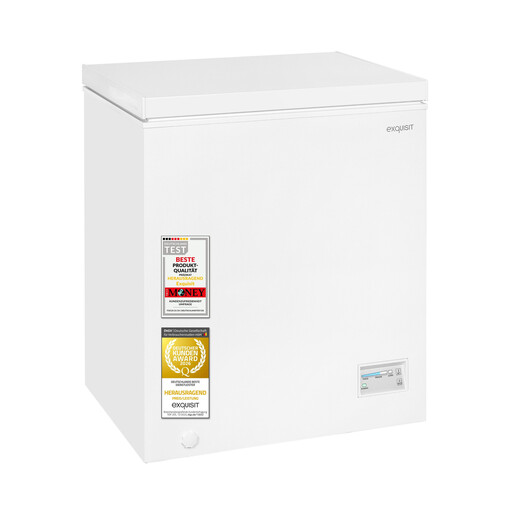
Exquisit chest freezer, 142 l, 4-star freezer compartment
The removable basket makes it easier to access portions stored together.
142 l usable capacity; freezing capacity of up to 7 kg/24 h; fast-freeze function; 182 kWh/year. Manual defrosting is required.
View at Joybuy
 No image available
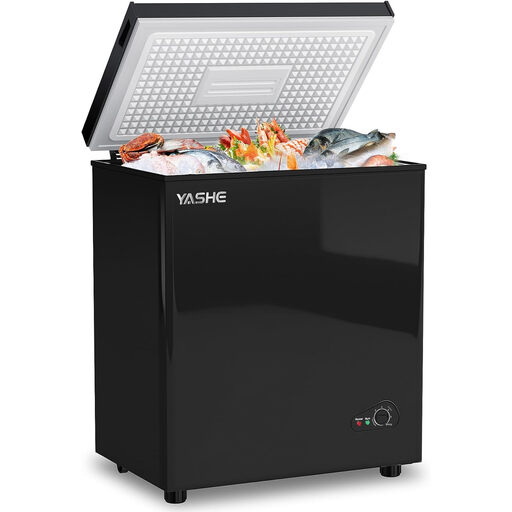
YASHE BC-150Q-EU, 150 l chest freezer
The two removable baskets can help keep shared supplies organised.
150 l usable capacity; two removable baskets; six temperature settings; fast-freeze function.
View at Joybuy
 No image available
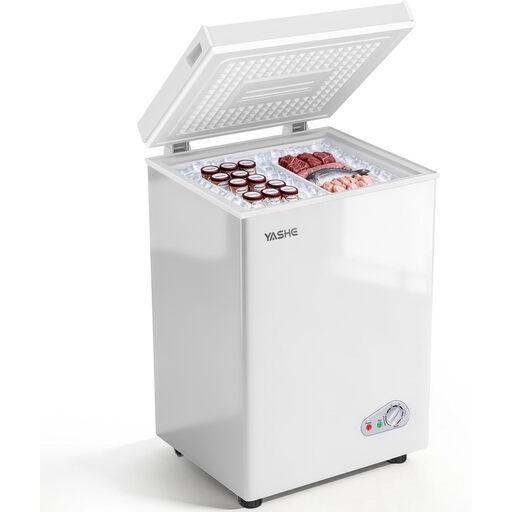
YASHE BC-100Q-EU, 100 l chest freezer
The stated capacity and two removable baskets suit a modest amount of shared supplies.
100 l capacity; two removable baskets; six temperature settings.
View at Joybuy
 No image available
AUCMA chest freezer, 197 l
The removable basket offers a way to organise portions stored together.
197 l capacity; removable basket; switchable fridge and freezer modes; energy class E; 197 kWh/year.
View at Joybuy
 No image available
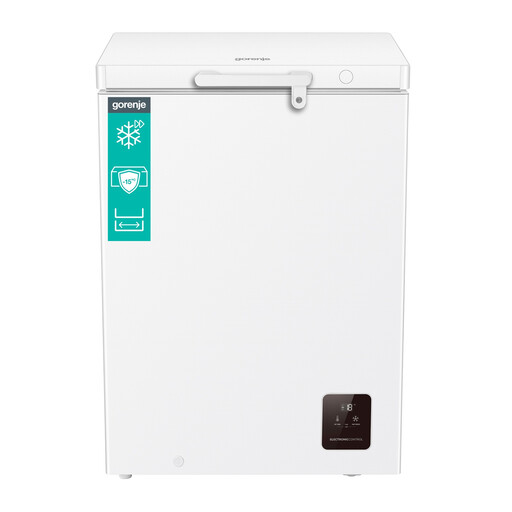
Gorenje FH15E6W5, 141 l chest freezer
FastFreeze and the stated freezing capacity are worth considering if you regularly freeze larger batches that have already cooled.
141 l usable capacity; freezing capacity of up to 8 kg/24 h; FastFreeze; 182 kWh/year; flexible wire baskets. Defrosting is required once ice has built up.
View at Joybuy
Frequently asked questions
How should I prepare cooked curry before freezing it?
For longer-term storage, cool hot food quickly to below 7 °C. The German Federal Institute for Risk Assessment recommends dividing larger quantities between several shallow dishes. Transfer the cooled portions to suitable, sealed containers and label them with the contents and date of freezing.
How long can I store home-cooked portions?
The Verbraucherzentrale gives up to three months as a general guide for prepared meals in a freezer. Label each portion with the date it was stored; this is not a guarantee for every recipe or for food that has previously been stored incorrectly.
What should I check before installing a freezer in a shared kitchen?
Measure the space available and the route into the room, as well as the clearance above the lid. The German Environment Agency advises against placing a freezer next to a cooker or other heat-producing appliances. Also follow the installation and ventilation instructions from the manufacturer of your model.
How can I compare the models’ energy consumption?
Compare the annual energy consumption in kWh/year on the EU energy labels of models that suit your space and capacity needs. To estimate your own costs, you can calculate the consumption using your electricity tariff; label figures are based on standardised conditions.
How do I dispose of an old chest freezer in Germany?
Waste electrical appliances should be taken to authorised collection points; the German Federal Ministry for the Environment lists municipal collection points among the options. Retailers have take-back obligations under certain legal conditions. The return options available with a specific purchase depend, among other things, on the retailer and, where applicable, whether you are buying an equivalent new appliance.


