For the occasional leftover portion of crumble, suitable freezer space you already have is usually enough. An extra chest freezer is mainly worth considering if you regularly make larger batches and are consistently short of space. Choose a size that suits your available floor space and the number of portions you need to store at once, and check the freezing capacity, storage options and annual energy consumption of the specific model. For longer-term storage, the German Federal Institute for Risk Assessment recommends cooling hot food quickly to below 7 °C. Extra freezer capacity is no substitute for cooling and packaging food carefully.
Who would benefit from a chest freezer?
Shared kitchens with lots of individual portions
If several people share food supplies, clearly labelled containers make it easier to identify and find portions of crumble. The Verbraucherzentrale recommends labelling freezer containers with their contents, quantity and date of storage.
People who bake crumble regularly
If you regularly make larger batches, check that there is enough room for each batch as well as other food stored in the freezer. The specific model’s freezing capacity should be considered separately from its usable capacity.
Small kitchens with the occasional leftovers
If you only have a few portions to store, first weigh up the freezer space you already have against the extra floor space a separate appliance would need. The Verbraucherzentrale points out that an appliance larger than you need can use electricity unnecessarily.
What should you look for when buying?
When choosing a freezer for a shared kitchen, consider how many portions you’ll store at once, how much freshly prepared food you’ll freeze and how much space you have available.
| Buying priority |
What to look for |
Who is it most important for? |
| Keeping portions organised |
Look for suitable freezer-safe containers and a practical basket layout; label the contents, quantity and date. |
If I’m freezing food for several people, I want to be able to identify and find portions quickly. Around 25% of consumers put easy-to-follow organisation first. |
| Room for batches |
Compare usable capacity in litres and freezing capacity in kg/24 h separately; check that your containers will fit inside. |
If larger batches of crumble need to be stored alongside other supplies regularly, available space is key. Around 25% of consumers prioritise room for larger batches. |
| Freezing fresh food |
Check that the appliance is suitable for fresh food and, for longer-term storage, cool hot food quickly. The German Federal Institute for Risk Assessment recommends cooling it to below 7 °C. |
If I’m storing freshly baked crumble, I want to plan the cooling, packaging and freezing stages appropriately. Around 19% of consumers focus primarily on this process. |
| Energy consumption |
Compare the annual consumption in kWh on the specific model’s energy label with the size of appliance you need. |
If the freezer will be running between baking days too, I want to keep an eye on the extra energy it uses. Around 19% of consumers put energy consumption first. |
| Space and access |
Check the external dimensions, access to the installation area and the space needed to open the lid; follow the model’s installation instructions. |
If there’s limited room in the kitchen and on the worktops, the freezer needs to fit and be easy to open. Around 12% of consumers prioritise finding a suitable spot. |
Avoiding buying and usage mistakes
-
Choosing a large freezer based on its litre capacity alone
An appliance larger than you need can use electricity unnecessarily and take up valuable floor space. The Verbraucherzentrale advises choosing an appliance size that suits your needs.
Work out how many portions and other supplies you’ll store at once, and measure your containers and the space where you plan to put the freezer.
-
Confusing storage capacity with freezing capacity
Usable capacity in litres tells you how much space is available; kg/24 h refers to the model’s freezing capacity. These figures answer different questions.
If you’re freezing larger batches of fresh food, check both figures for the specific model.
-
Storing unlabelled portions among shared supplies
Without labels, it’s harder to identify the contents and date of storage. The Verbraucherzentrale recommends labelling frozen food with its contents, quantity and date.
Use suitable, sealed containers and organise portions by person or intended use.
Portions that are hard to find or get mixed up can lead to food waste.
-
Applying comparison figures to a model without checking them
A comparison article lists 215 l and 20 kg/24 h for the Bauknecht GT 219 A3+; Bauknecht itself gives figures of 219 l and 16 kg/24 h for this model.
Check the specifications against the full model name and compare figures only under like-for-like conditions. Older A++ ratings are not directly comparable with the current EU scale from A to G.
Chest freezer brands to consider
Exquisit
Compact chest freezers, including the GT100-E-040E white model.
- Exquisit lists a usable capacity of 98 l, annual energy consumption of 168 kWh and a removable basket for this model.
- This particular model needs to be defrosted manually.
Beko
The CF100EWN is an example of a freestanding chest freezer.
- The German product page lists a 98 l freezer capacity and a width of 54.5 cm for the CF100EWN.
- Specifications for this model do not confirm that other Beko freezers have the same features.
Severin
The GT 8849 is a larger freezer for supplies that are regularly shared.
- Severin lists a capacity of 200 l, a freezing capacity of 9 kg/24 h and a freezer basket for this model.
- At 200 l, it is not the same size as the 98-l models mentioned.
Bauknecht
The GT 219 A3+ is a medium-sized model with two baskets.
- Bauknecht lists a capacity of 219 l, a freezing capacity of 16 kg/24 h and a lockable door for the GT 219 A3+.
- These specifications apply to this model only and cannot be assumed to apply to other Bauknecht freezers.
Liebherr
The CFd 2085 Plus is a larger freezer for storing more supplies.
- Liebherr lists a total capacity of 248 l for this model and describes SmartFrost as technology that reduces frost build-up.
- SmartFrost does not mean the appliance never needs defrosting; this model is 125 cm wide.
Chest freezers at Joybuy
The range includes freestanding chest freezers, from compact to larger models. Compare the available space and usable capacity with the number of portions you plan to store at once.
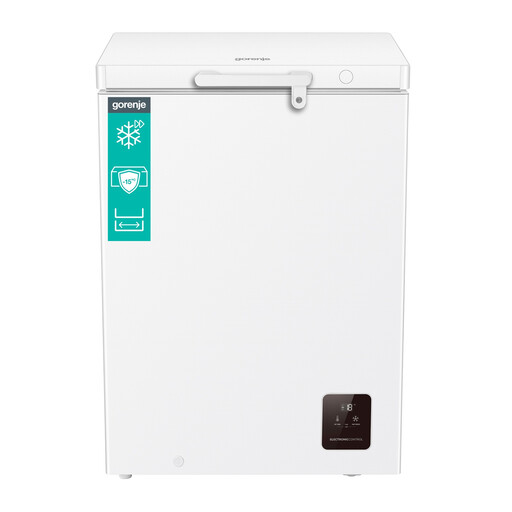 Image unavailable
Gorenje FH15E6W5 chest freezer, 141 l
With a usable capacity of 141 l, this model has room for portions of crumble and other supplies.
The product name mentions FastFreeze, flexible baskets and a lock.
View at Joybuy
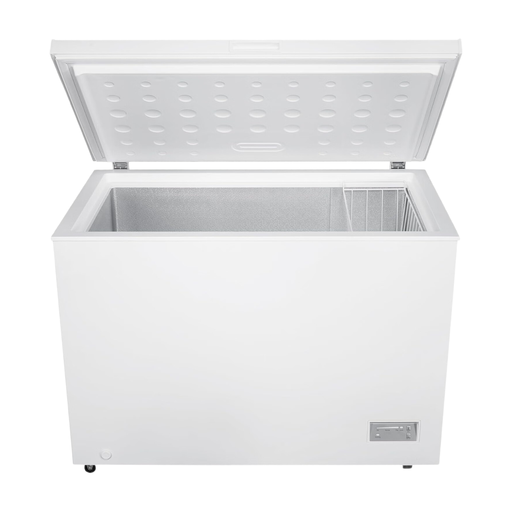 Image unavailable
Beko CF316EWN chest freezer, 308 l
The product name mentions a basket that can keep smaller containers separate.
Other features listed in the product name include a temperature alarm, castors, an LED display and energy class E.
View at Joybuy
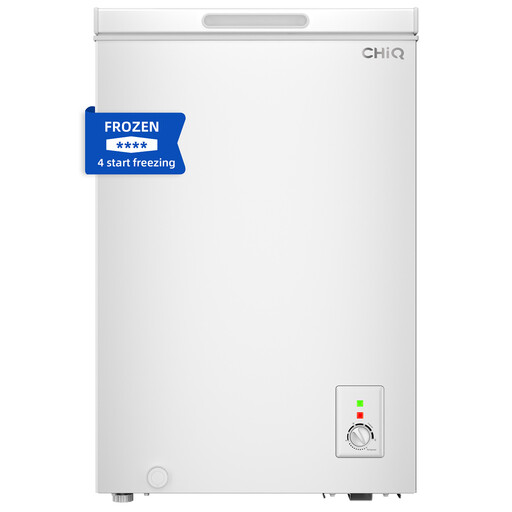 Image unavailable
CHiQ FCF98DE chest freezer, 99 l
This 99-l model could suit smaller quantities of supplies, provided you have a suitable spot for it.
The product name mentions 4-star freezing and a wire shelf.
View at Joybuy
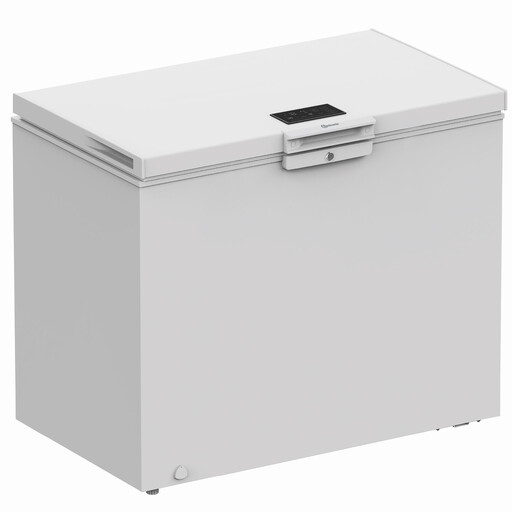 Image unavailable
Bauknecht BGTE 250MC chest freezer, 198 l
The product name describes a lockable 198-l chest freezer for shared supplies.
Other listed features include a Multi-Zone function and WinterProof down to −15 °C.
View at Joybuy
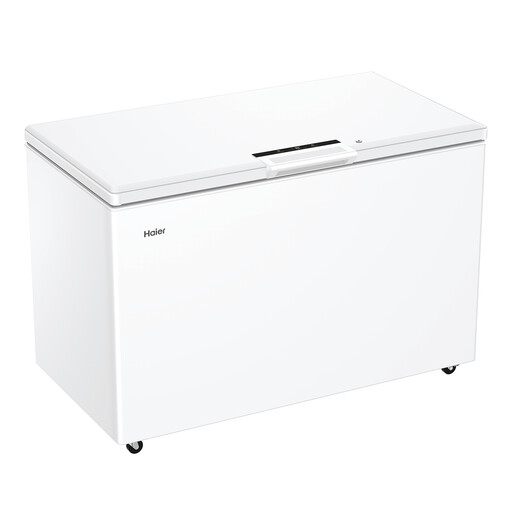 Image unavailable
Haier HCE420D chest freezer, 418 l
With a capacity of 418 l, this model is designed for larger shared supplies, so make sure you have enough room for it.
The product name mentions three freezer baskets, static cooling and energy class D.
View at Joybuy
Frequently asked questions
Should fruit crumble be left at room temperature for a long time before freezing?
No, leaving it at room temperature for a long time is not recommended. The German Federal Institute for Risk Assessment recommends cooling hot food quickly to below 7 °C for longer-term storage. Divide the crumble into portions hygienically, and take the quantity of fresh portions into account when freezing.
How can you tell portions of crumble apart in a shared freezer?
Use freezer-safe containers and label the contents, quantity and date of storage. Baskets can keep smaller containers within easy reach; whether they work for organising your supplies depends on the specific model and the containers you use.
What information helps you compare energy consumption and ongoing costs?
Compare the annual consumption in kWh on the energy label, choosing a model size that suits your needs. The location and how you use the freezer affect its actual consumption. Also check the manual to see how to defrost and clean the specific model.
Which energy label and disposal rules apply in Germany?
Since 2021, the EU energy label for freezers has used a scale from A to G; older A-plus ratings are no longer the current basis for comparison. Electrical appliances must not be put in household waste and should instead be disposed of separately. The German Environment Agency lists local collection points and returning the old appliance to a retailer when buying a new one as options.


