Who would benefit from a chest freezer?

Keeping a supply of bread when space is limited

You regularly need room for frozen slices of bread, but only have a small amount of free space in your kitchen. Check the external dimensions, clearance around the appliance and space above the lid before considering its capacity.

Households with an existing freezer compartment

You want to freeze bread to keep in stock and first need to check whether the portions will fit in your existing freezer compartment. The consumer advice centre says you can freeze bread in portions and defrost it as needed.

If you often take out individual slices

You regularly reach for small portions of bread and want to find them easily. Freezer-safe, labelled portions and a basket for frequently used supplies can help you stay organised. The Federal Centre for Nutrition lists suitable foil, bags and freezer containers as packaging options.

What should you look for when buying?

Use your existing freezer compartment

A good fit if: Your wrapped slices of bread fit in it regularly and you’re not planning to store any other frozen food.

The trade-off: You won’t need another appliance, but you’ll be limited by the capacity of your existing freezer compartment.

Compact chest freezer

A good fit if: You need more freezer space long-term and have enough room for the appliance as well as above the lid.

The trade-off: The appliance takes up extra space and uses electricity. Portions stored at the bottom may also be harder to reach.

Small upright freezer

A good fit if: A front-opening design with separate compartments better suits your kitchen layout or makes it easier to reach individual packs.

The trade-off: The design alone doesn’t mean it will use less electricity. Compare the annual energy consumption and the capacity you need across the specific models.

What matters What to check when buying Who it’s especially relevant for
Space Measure the external dimensions, required clearance from the wall, route for moving the appliance and the space needed above the lid when open. If I only have a small amount of free space in my kitchen, I also measure the room needed to open the lid; around 28% of consumers say the space actually available is their main concern.
Second appliance Check how many portions of bread you regularly need to freeze and whether they’ll fit in your existing freezer compartment. If I mainly want to freeze bread, I first check whether the portions will fit in my existing freezer; around 22% of consumers put the question of whether they need another appliance first.
Access to portions Look for a removable basket and enough space for appropriately portioned, labelled packs. If I often take out individual slices, I want to find small packs quickly; around 22% of consumers prioritise easy access to their portions.
Energy consumption Once you’ve found a model with enough capacity, compare its kWh/year figure and calculate the cost using your own electricity unit rate. If the appliance will be running all the time, I want to estimate the annual energy consumption of the specific model; around 17% of consumers focus on ongoing electricity costs.
Noise Check the noise emissions on the label or in the product details. The model’s rating won’t tell you exactly how it will sound where you plan to put it. If the freezer will be near a living area, operating noise matters to me too; around 11% of consumers prioritise this when choosing where to put an appliance in the kitchen.

Common buying mistakes

  • Choosing a large chest freezer just for a few packs of bread

    A freezer that’s much bigger than you need takes up unnecessary space and uses electricity over time. The consumer advice centre recommends choosing an appliance size that suits your needs.

    First, estimate how many wrapped slices you regularly freeze and whether your existing freezer space is enough.

  • Measuring only the appliance itself

    The clearance from the wall and the room needed to open the lid can mean you need more space than the appliance’s dimensions alone suggest.

    Check the clearance, lid opening and route for moving the appliance before deciding where to put it.

    If the appliance isn’t positioned suitably, you may need to move things around or find another spot for it.

  • Assuming the energy rating tells you the total running cost

    As well as the energy efficiency class, the EU energy label gives details such as annual energy consumption and freezer volume. Consumption in your home may differ from the figures measured under standardised conditions.

    Compare suitable models using their kWh/year figures and work out the running costs using your electricity unit rate.

Brands and example models

Beko

Beko lists the CF100EWN as a compact, freestanding chest freezer.

  • According to the manufacturer, the CF100EWN has a 98 l freezer capacity, measures 54.5 cm wide and 54.5 cm deep, and has an energy efficiency class of E.
  • The energy efficiency class is no substitute for comparing the model’s annual energy consumption. Make sure you also leave enough room to open the lid.

Exquisit

The GT100-010E weiss is a compact chest freezer with a removable basket for frequently used supplies.

  • Exquisit lists a width of 54.6 cm, an appliance depth of 47.9 cm or 52.9 cm including wall clearance, one basket and 167.09 kWh/year.
  • The product page gives the capacity as both 95 and 96 l. If the exact volume matters, check the product data sheet before buying.

Medion

The MD 37376 is an example of a small chest freezer with a metal basket for keeping portions separate.

  • Medion lists a capacity of 99 l and a noise level of 41 dB. These are manufacturer specifications, not independent test results.
  • The manufacturer’s website marks this model as sold out. That doesn’t tell you whether it’s currently available from other retailers.

Joybuy products for extra freezer space

The Joybuy products below include compact chest freezers and an upright freezer. Compare the space required, internal layout and energy consumption against your needs. For each model, check whether it can maintain −18 °C in freezer mode.
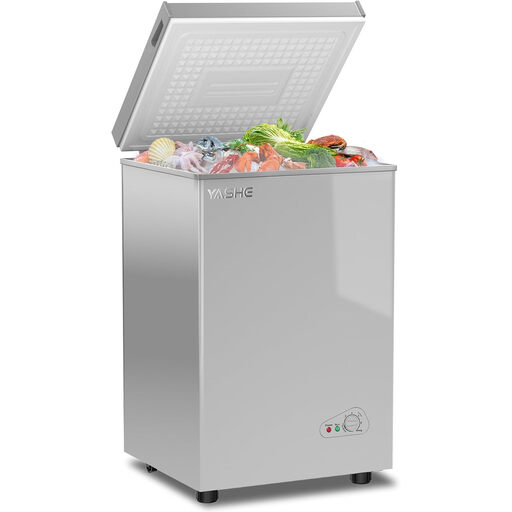
YASHE BC-100Q-EU chest freezer with two removable baskets

YASHE BC-100Q-EU chest freezer, 100 l, silver

Could be a good fit if you’re looking for extra freezer space and separate storage for frequently used portions. Check whether the model can maintain −18 °C in freezer mode.

The product name specifies a capacity of 100 l and two removable baskets.

The product name lists six temperature settings.

View at Joybuy
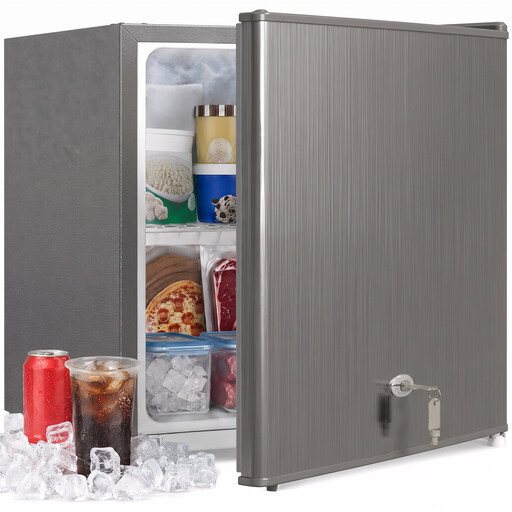
Freestanding 35 l chest freezer

Chest freezer, 35 l

Could be an option if space is very limited. Before buying, check whether the model can maintain −18 °C in freezer mode.

The product name lists a capacity of 35 l and external dimensions of 47 × 44.2 × 48.8 cm.

The product name specifies a removable compartment.

View at Joybuy
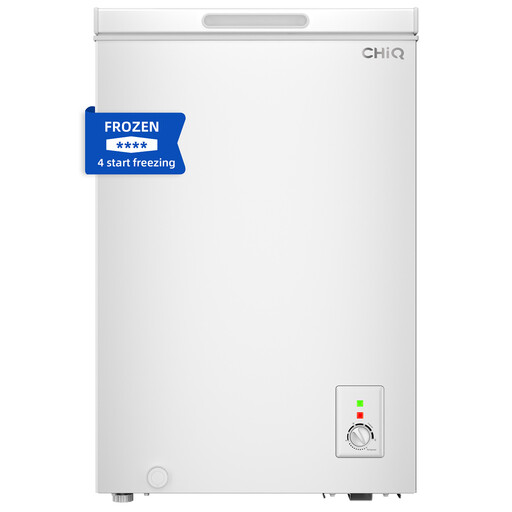
CHiQ FCF98DE chest freezer, 99 l, with wire basket

CHiQ FCF98DE chest freezer, 99 l

Could be a good fit if you’re looking for a chest freezer with a basket for frequently used packs. Check whether it can maintain −18 °C in freezer mode.

The product name lists a capacity of 99 l, energy efficiency class E and a 4-star freezer compartment.

The product name lists a wire basket and thermostat control.

View at Joybuy

AUCMA chest freezer, 197 l, with removable basket

AUCMA chest freezer, 197 l

Could be an option if you regularly freeze other supplies as well as bread. Check whether the model can maintain −18 °C in freezer mode.

The product name lists a capacity of 197 l and energy efficiency class E.

According to the product name, the model can switch between fridge and freezer modes and has a removable basket.

View at Joybuy
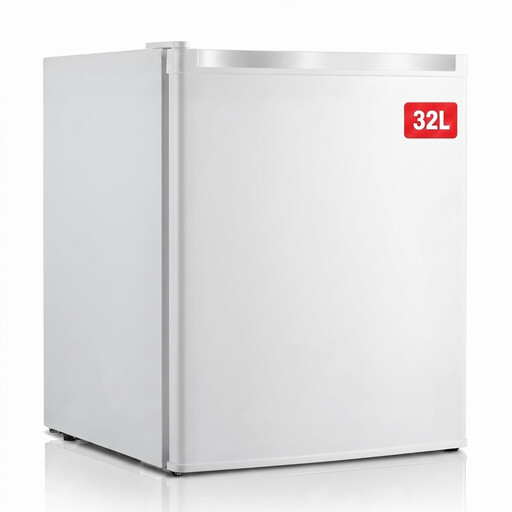
Compact 32 l upright freezer

Upright freezer, 32 l

Could be a good fit if an upright design suits your kitchen layout better than a chest freezer. Check whether the appliance can maintain −18 °C in freezer mode.

The product name lists a capacity of 32 l, seven temperature settings and a noise level of 43 dB.

The product name specifies a reversible door and removable glass shelves.

View at Joybuy

Frequently asked questions

How should I freeze sliced bread in portions?

Pack the slices you need into suitable portions with as little air as possible, and label the packs. The consumer advice centre says you can defrost bread in portions as needed. Bread with visible mould should be thrown away in its entirety and not frozen.

What temperature should a chest freezer be able to reach?

The consumer advice centre recommends −18 °C for freezers. If you have an appliance that switches between fridge and freezer modes, check that it’s actually set to freezer mode.

What information helps you compare energy consumption and noise?

The EU energy label includes details such as the energy efficiency class, annual consumption in kWh, freezer volume and noise emissions. Compare the figures for the specific model variant; actual energy consumption at home may differ from figures measured under standardised conditions.

What should I do if a newly bought freezer is faulty?

When you buy goods as a consumer in the EU, you’re entitled to a minimum two-year legal guarantee from the date you receive them. Your claims should be made to the retailer. Any additional manufacturer’s guarantee has its own terms and conditions and must not limit your statutory rights.

How can I dispose of an old chest freezer?

Electrical and electronic waste must be collected separately; local authority collection points generally accept it free of charge. Under the conditions set out in § 17 ElektroG, retailers who are required to do so must take back an old appliance free of charge when you buy a new one of the same type. Before placing your order, check with the retailer how the take-back will be arranged.