Who would benefit from a chest freezer?

People who batch-cook for the week

If you make vegetable soup for several working days, you’ll need room for your largest new batch as well as the food already in the freezer. The German Federal Centre for Nutrition lists soup as a suitable dish to batch-cook and freeze.

Households short on space

If you’re looking for extra freezer space for lunch portions, check the external dimensions, the route for getting it into place and the clearance needed to open the lid against the space available at your chosen location.

People keeping an eye on energy costs

If you regularly freeze food, weigh the usable capacity and annual energy consumption against how much extra storage space you need. The Verbraucherzentrale warns that oversized freezers can use more electricity than necessary.

What should you look for when buying?

Existing freezer compartment

A good fit if: Your portions and other frozen food already fit, and you only make extra soup occasionally.

Trade-off: You won’t have another appliance running all the time, but there’ll be less room for other frozen food.

Compact chest freezer

A good fit if: You regularly need extra space for portions but don’t have much room to spare.

Trade-off: The smaller interior may not leave enough room for other supplies or a larger batch to freeze. Annual energy consumption matters here too.

Larger chest freezer

A good fit if: You regularly freeze or store larger quantities of soup alongside other food.

Trade-off: You’ll need enough floor space and clearance to open the lid. Unused storage space can mean wasted electricity.

Priority What to check when buying Who is this especially important to?
Room for your largest batch of soup Plan for your largest batch alongside your other frozen food; check container dimensions, usable capacity and basket layout. If I batch-cook for several working days, my largest batch needs to fit alongside the food already in the freezer. That’s why around 40% of consumers put having enough room for their biggest batch of soup first.
Energy consumption Compare the kWh/year figure and usable capacity of specific models together. If the freezer will be running regularly, I want to weigh the extra electricity it uses against the space I actually need. Around 30% of consumers prioritise the energy consumption of an additional appliance that runs all the time.
Floor space and access Check the external dimensions, route for delivery, clearance above the lid and basket layout. If space is limited, I need to be able to position the freezer and open the lid; individual portions should also be easy to organise. For around 20% of consumers, floor space and access to portions are the main considerations.
Cold location Check the expected ambient temperature against the specifications for that particular model. If I’m planning to put the freezer in an unheated room, I want to check that it’s suitable for that location first. Around 10% of consumers prioritise suitability for a cold location.

Avoid common buying mistakes

  • Assuming the litre capacity alone proves there’s enough room

    The shape of your containers, the food already in the freezer and the basket layout all affect how easily you can fit in and find your lunch portions. A freezer that’s too large can also use more electricity than necessary.

    Plan for your largest batch to be frozen at one time alongside your other supplies, and compare your container dimensions with the usable interior space.

    Poorly arranged containers can make it harder to reach individual portions.

  • Comparing energy ratings alone

    For ongoing energy use, the specific annual consumption of each model matters too.

    For suitable models, compare the energy rating, kWh/year and usable capacity together.

  • Assuming it will work in a cold cellar or garage without checking the model

    Information about suitability for low ambient temperatures applies to the specific model and shouldn’t automatically be taken to apply to other appliances.

    Check the temperatures at your chosen location against the specifications and installation guidance for the model you’re considering.

  • Relying on the chest freezer to keep soup chilled on your commute

    Storing soup at home won’t automatically keep it cold enough during transport and until you eat it. The German Federal Institute for Risk Assessment warns of the risk of inadequate temperatures during transport and storage.

    Plan separately for keeping it chilled on the way and until mealtime, and heat the soup thoroughly before eating.

Brands to consider

Bauknecht

According to Bauknecht, the GTE 150MD offers 142 l of freezer capacity, making it a potential mid-sized option for extra storage.

  • Bauknecht lists a freezing capacity of 8 kg/24 h, annual energy consumption of 146 kWh and WinterProof for ambient temperatures down to −15 °C.
  • Cooling mode won’t keep frozen soup supplies frozen; the performance figures quoted are from the manufacturer.

Exquisit

According to Exquisit, the black GT100-050E is a compact chest freezer with 99 l of usable capacity.

  • Exquisit lists a freezer basket and external dimensions of 54.5 × 83.5 × 48 cm (W × H × D).
  • Even with a modest amount of extra food, the appliance will use electricity continuously; Exquisit lists consumption of 169 kWh/year.

SEVERIN

According to SEVERIN, the GT 8849 has 200 l of usable capacity, making it an option for households that regularly store larger quantities.

  • SEVERIN lists a freezing capacity of 9 kg/24 h, annual energy consumption of 128 kWh and a freezer basket.
  • At 98 cm wide, this freezer needs plenty of floor space. Check delivery arrangements and any additional charges for delivery by a haulage company before buying.

Liebherr

According to Liebherr, the CFe 1870 Pure has a total capacity of 281 l and is designed for households with larger food supplies and enough space for it.

  • Liebherr lists external dimensions of 104 × 82 × 71 cm (W × H × D) and FrostProtect for ambient temperatures down to −15 °C.
  • Liebherr says SmartFrost reduces frost build-up, but it doesn’t eliminate the need to defrost altogether. Its capacity may be more than you need for a few weeks’ worth of portions.

Amica

According to Amica, the GT 311 105 W is a compact chest freezer with a total capacity of 99 l.

  • Amica lists external dimensions of 54.5 × 83.5 × 47.6 cm and energy rating E.
  • For energy consumption, also check the specific kWh/year figure in the product data sheet; the energy rating alone isn’t enough for this comparison.

Chest freezers at Joybuy

This selection includes chest freezers for individual soup portions, regular extra supplies and larger quantities of frozen food.
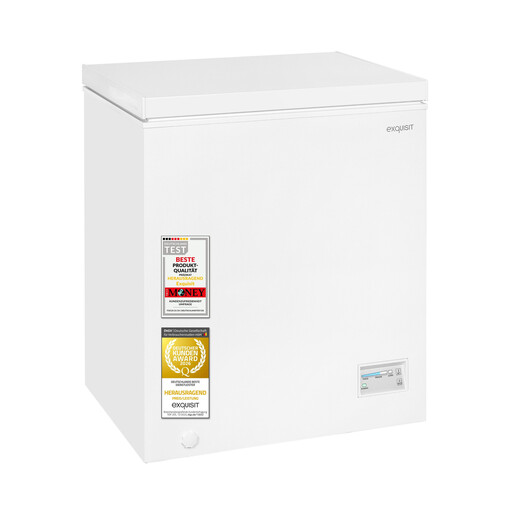
Exquisit chest freezer with a capacity of 142 l

Exquisit chest freezer 142 l

For extra soup portions when you regularly need more freezer space.

142 l; 4-star freezer compartment; removable basket.

The appliance must be in freezer mode to store frozen soup.

View at Joybuy

AUCMA convertible chest freezer with a capacity of 141 l

AUCMA chest freezer 141 l

For extra soup portions and supplies if a medium-sized freezer fits the space you have available.

141 l; switches between fridge and freezer modes; removable basket.

The appliance must be in freezer mode to store frozen soup.

View at Joybuy

AUCMA convertible chest freezer with a capacity of 95 l

AUCMA chest freezer 95 l

For extra portions when space is limited and you don’t need a large amount of freezer storage.

95 l; switches between fridge and freezer modes; removable basket.

The appliance must be in freezer mode to store frozen soup.

View at Joybuy

AUCMA convertible chest freezer with a capacity of 291 l

AUCMA chest freezer 291 l

For larger quantities of soup alongside plenty of other frozen food.

291 l; switches between fridge and freezer modes; removable basket; integrated lighting.

The appliance must be in freezer mode to store frozen soup.

View at Joybuy
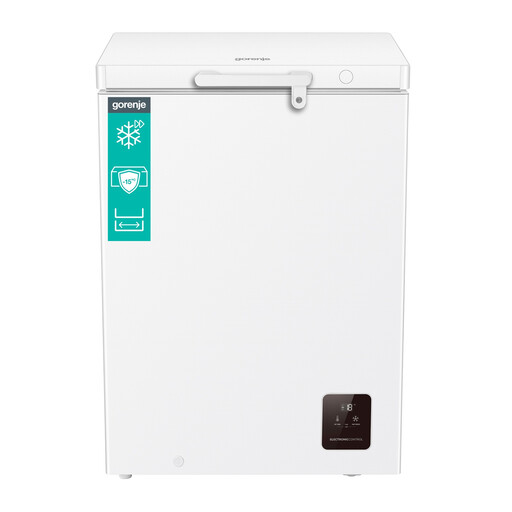
Gorenje FH15E6W5 chest freezer with a capacity of 141 l

Gorenje FH15E6W5 chest freezer 141 l

For a fresh batch of soup and other supplies, if the freezer and its external dimensions fit your available space.

141 l; FastFreeze; FreezeProtect −15 ℃; flexible basket.

Manual defrosting is required.

View at Joybuy

Frequently asked questions

Do I need a separate chest freezer for a few portions of soup?

No, not if your existing freezer has enough room for the portions and your other food. An extra chest freezer is more likely to be useful if you regularly freeze larger quantities.

How should I pack cooled vegetable soup for freezing?

Use freezer-safe containers and don’t fill them right to the top. The Verbraucherzentrale recommends filling containers with liquid foods such as soup to three-quarters full. Cooked food should be cooled promptly and heated thoroughly before eating.

Will a chest freezer keep soup cold on the way to work?

No. A chest freezer stores soup at home, but it won’t keep it chilled while you’re travelling. Make separate plans for transport and storage until mealtime. The German Federal Institute for Risk Assessment warns that inadequate temperatures during transport and storage can allow harmful bacteria to multiply.

Which ongoing costs should I compare when choosing a chest freezer?

Compare the annual energy consumption in kWh and the usable capacity of specific models. Also check whether delivery to your chosen location, installation or removal of your old appliance is included in the offer.

Which energy label applies to chest freezers in Germany?

The EU energy label applies to household refrigeration appliances, including chest freezers. The current label uses a scale from A to G and includes the annual energy consumption. The Verbraucherzentrale explains that older A++ ratings aren’t directly comparable with the current classes.