For a few portions of stock left after a meal with family or friends, your existing freezer compartment will often be enough. An additional chest freezer is worth considering if you regularly freeze larger quantities and other supplies. If you do, choose one based on the usable capacity you actually need, its freezing capacity for fresh batches, the space available and its annual energy consumption – not simply the largest volume. For later storage, cool freshly made stock quickly. Freezing isn’t intended for stock you plan to serve that same evening.
Who would benefit from a chest freezer?
Regular batch cooks
If you often make large quantities of vegetable stock and freeze other supplies as well, usable space and the capacity to freeze fresh batches are key. The consumer advice centre recommends choosing an appliance size to suit your actual needs.
Occasional leftover savers
If you only have a few portions of stock left after the occasional meal with family or friends, first check whether your existing freezer compartment is big enough. This will help you decide whether you really need a second appliance that runs all the time.
Homes with limited space
If you need extra freezer space but room is limited, consider the external dimensions and whether you can open the lid fully. Manufacturer specifications for models such as the Beko CF100EWN and Severin GT 8849 make it easy to compare their dimensions.
What should you look for when buying?
Keep using your existing freezer compartment
A good fit if: you only occasionally freeze a few portions of cooled stock and have room for them.
The trade-off: you won’t be adding a second appliance that runs all the time, but space for other frozen food will remain limited.
Compact chest freezer
A good fit if: you regularly have extra portions to freeze but have limited floor space. According to the manufacturer, the Beko CF100EWN offers 98 l of freezer space and is 54.5 cm wide.
The trade-off: usable capacity is more limited; check the freezing capacity and annual energy consumption of the specific model.
Larger chest freezer
A good fit if: you regularly freeze other food or larger batches as well as stock, and have enough space for the appliance.
The trade-off: more usable capacity takes up more space; an appliance that’s too large for your needs may use more electricity than necessary.
The consumer advice centre notes that a freezer that’s too large can use more electricity than necessary. Compare your needs with the usable capacity and annual energy consumption of the specific models.
| Criterion |
What to check before buying |
Who should pay particular attention? |
| Usable capacity |
Estimate how much space you’ll need for stock portions and other frozen food; compare the capacity in litres. |
If I regularly store stock and other supplies, I need enough room for them. Around 33% of consumers prioritise the storage space available. |
| Freezing capacity |
Compare the figure in kg/24 h for the specific model with the amount in your new batch. |
If I often freeze a larger quantity of stock at once, I want to know how well the appliance can handle fresh batches. Around 27% of consumers prioritise this batch-freezing capacity. |
| Available space and lid |
Measure the width, depth and height; allow room to open the lid and reach inside. |
If space is tight, the freezer needs to fit in its intended spot and be easy to open day to day. Around 20% of consumers base their choice mainly on the floor space available. |
| Energy consumption |
Compare annual energy consumption in kWh and usable capacity on the current EU energy label; use your own tariff to estimate the cost. |
If I’m going to run another appliance all the time, I want to take its energy use into account. Around 20% of consumers prioritise ongoing electricity consumption. |
The energy label for household freezers rates efficiency on a scale from A to G. The European Commission also gives the annual energy consumption. The kWh figure and usable capacity are useful for comparing models, although actual household consumption may vary.
Avoid common buying mistakes
-
Choosing a chest freezer that’s too large for occasional stock leftovers
An appliance with much more usable capacity than you need may use more electricity than necessary and take up more floor space.
First work out how often you make larger batches and how much room is available in your existing freezer compartment.
An extra appliance also takes up space permanently and uses electricity while running.
-
Confusing usable capacity with freezing capacity
Litres tell you how much you can store; kg/24 h tells you how much a model can freeze from fresh in a day. Both figures matter when you’re freezing larger batches of stock.
Compare the stated freezing capacity of the specific model with the batch you plan to freeze.
-
Comparing only the efficiency rating or an old A+ rating
The current EU energy label for freezers uses a scale from A to G and also shows annual energy consumption in kWh.
On the current label, compare annual energy consumption alongside usable capacity.
An appliance continues to use electricity for as long as it’s running.
-
Choosing a freezer for a cold outbuilding without checking first
Suitability for low ambient temperatures applies only to the specific model. Liebherr states that the CFe 1870 Pure is suitable for temperatures down to −15 °C; this doesn’t mean other chest freezers are suitable too.
Check the documentation for the specific appliance to find the permitted ambient temperature at your intended location.
Brands to consider
Beko
The manufacturer’s specifications for the CF100EWN and CF200CWN show chest freezers in different sizes.
- Beko lists 98 l of freezer space and a width of 54.5 cm for the CF100EWN, and 198 l and a width of 102.6 cm for the CF200CWN.
- Beko gives these models energy ratings of E and C respectively. This doesn’t support a general judgement about other Beko appliances or actual household energy consumption.
Severin
According to Severin, the GT 8849 is a chest freezer with 200 l of usable capacity and a basket for organising smaller items.
- Severin states that this model has a freezing capacity of 9 kg/24 h and annual energy consumption of 128 kWh.
- These are manufacturer specifications, not the results of an independent performance test. Check that the usable capacity, freezing capacity and dimensions suit your needs.
Haier
Haier describes the HCE200C as a freestanding chest freezer with 196 l of usable capacity.
- The manufacturer’s website lists a width of 915 mm and a Fast-Freeze function.
- The manufacturer’s claims about temperature distribution or seal performance aren’t independently verified performance figures.
Liebherr
According to Liebherr, the CFe 1870 Pure is designed for larger stores, with a total capacity of 281 l.
- Liebherr lists FrostProtect for this model and says it’s suitable for ambient temperatures down to −15 °C.
- This specification applies to the CFe 1870 Pure. It doesn’t show that other chest freezers are suitable for unheated rooms or maintenance-free.
Chest freezers at Joybuy
The Joybuy options below are chest freezers offering extra storage space, from compact models to larger appliances. Compare usable capacity, freezing capacity and external dimensions with the amount of stock you make and the space available.
 No image available
AUCMA 291L Convertible chest freezer
The stated usable capacity of 291 l provides extra room for regular, larger quantities of stock and other supplies.
Specifications include an E energy rating, annual energy consumption of 226 kWh and external dimensions of 1100 × 597 × 872 mm.
The product description lists a 4-star freezer rating, a removable basket and switchable fridge and freezer modes.
Joybuy
 No image available
AUCMA 197L Convertible chest freezer
With 197 l of usable capacity, this freezer is an option for extra freezer space and regular supplies.
Specifications include an E energy rating, annual energy consumption of 197 kWh and external dimensions of 816 × 554 × 848 mm.
The product description lists a 4-star freezer rating, a removable basket and switchable fridge and freezer modes.
Joybuy
 No image available
Gorenje FH15E6W5 chest freezer
The stated freezing capacity of 8 kg/24 h can help you decide whether this model can handle your next batch of stock.
Specifications include 141 l of usable capacity, an E energy rating, annual energy consumption of 182 kWh and external dimensions of 606 × 559 × 858 mm.
The product description lists FastFreeze, a wire basket and FreezeProtect for ambient temperatures down to −15 °C. The stated freezing capacity is 8 kg in 24 hours; compare this with the amount you plan to freeze in a day.
Joybuy
 No image available
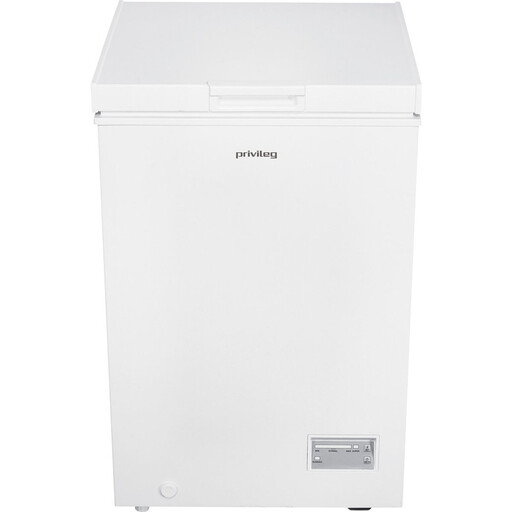
Privileg PRCF 984 E chest freezer
With 98 l of usable capacity and a stated freezing capacity of 6 kg/24 h, this model is a compact option for extra freezer space.
Specifications include an E energy rating, annual energy consumption of 168 kWh and external dimensions of 55 × 54 × 85 cm.
The product description lists two storage baskets and a Super-Freeze function. The stated freezing capacity is 6 kg in 24 hours; compare this with the amount you plan to freeze in a day.
Joybuy
Frequently asked questions
Will my existing freezer compartment be enough for the stock I make tonight?
If you’re planning to serve the stock that same evening, don’t plan on storing it in the freezer first. Your existing freezer compartment may be enough for occasional portions to enjoy later; the consumer advice centre suggests considering a separate chest freezer mainly if you regularly freeze larger quantities.
How should I cool freshly made vegetable stock before freezing it?
Cool the stock quickly rather than leaving a large pan to stand while warm. The German Federal Institute for Risk Assessment recommends quickly cooling warm food to below 7 °C for longer-term storage. For frozen storage, the consumer advice centre recommends a temperature of −18 °C; the Federal Centre for Nutrition recommends labelling suitable containers.
What should I consider when choosing a location and maintaining the freezer?
Check the external dimensions and leave enough room to open the lid. If you’re placing it in a cold outbuilding, check the suitability of the specific model: Liebherr states that the CFe 1870 Pure has FrostProtect for ambient temperatures down to −15 °C. A feature that reduces frost build-up doesn’t mean you’ll never need to defrost the appliance.
What running costs should I consider for a chest freezer?
Compare annual energy consumption in kWh and use your own electricity tariff to calculate the cost. Actual consumption can depend on how and where you use the appliance. If you’re buying a large appliance, also check the delivery terms for the specific offer.
What label applies to new purchases in Germany, and what should I do with my old freezer?
The EU energy label, with its A to G scale, applies to new cooling and freezing appliances covered by the rules. The European Commission says it must also be visible when an appliance is sold online. Old electrical appliances shouldn’t go in household rubbish. The German Environment Agency advises taking them to a recycling centre. It also says that, when buying a new appliance, an equivalent large old appliance can be returned, including with online purchases delivered to your home.


