If your existing freezer compartment can hold the cooled sauce portions and your other supplies, you don’t need an extra appliance just for the sauce. If not, choose a chest freezer with enough room for everything you need to store at once, as well as the amount you’ll be freezing from each cooking session. Also check the external dimensions, whether the model is suitable for your intended location and its annual energy consumption. The German Federal Institute for Risk Assessment recommends cooling hot food quickly to below 7 °C if it is to be stored for longer.
Who should consider this buying decision?
Batch cooks
If you make several portions of sauce at once, work out how much you’ll be freezing that day and how much room your other supplies already take up. The German consumer advice centre recommends choosing a suitably large capacity if you regularly freeze larger quantities.
Households with different mealtimes
If you eat at different times, individually portioned and labelled supplies make it easier to take out just the amount you need. The German Federal Centre for Nutrition recommends measuring out the amount you’ll need later and freezing it in portions.
Households short on space
If space is limited or you plan to keep the freezer in a cold room, check the dimensions and the specific model’s installation requirements. The German consumer advice centre points out that a chest freezer can take up a lot of floor space.
What should you look for when buying?
Keep using your existing freezer compartment
A good fit if: Your usual sauce portions and other supplies fit, and you can take them out individually.
The trade-off: There may not be enough room for larger batch-cooking sessions. The German consumer advice centre recommends taking into account the amount you need to store at any one time.
Compact chest freezer
A good fit if: You regularly need extra freezer space, but have limited floor space and a modest amount to store.
The trade-off: Less storage space may limit how many batches you can keep at once. The freezing capacity needs to suit the amount you add at each cooking session. Beko lists the CF100EWN as having a 98 l usable capacity and a width of 54.5 cm.
Larger chest freezer with baskets
A good fit if: You need to store several batches of sauce and other supplies at once, or freeze a large amount in one cooking session.
The trade-off: More storage space usually takes up more floor space and needs to be organised sensibly. Usable capacity in litres and freezing capacity are different measurements. Severin lists the GT 8849 as having a 200 l capacity and a freezing capacity of 9 kg in 24 hours.
| Criteria |
What to check before buying |
Who it matters most to |
| Freezing new batches |
Compare the amount you’ll be adding with the freezing capacity in kg/24 h, and allow for the usable capacity already taken up by existing supplies. |
If I’m freezing a large batch of sauce after cooking together, I check both the batch size and the room needed for existing supplies; around 33% of consumers put the amount to be frozen first. |
| Finding individual portions |
Check the baskets and internal layout, as well as the space available for suitable, labelled containers. |
If we eat at different times, I want to take out my labelled portion without having to break up a large frozen supply; around 27% of consumers prioritise easy access to individual portions. |
| Installation location and surroundings |
Compare the external dimensions, the route for moving it into place, clearance to open the lid and the model’s approved ambient temperature range. |
If the freezer is going in a cramped or unheated room, I need to check the dimensions, lid clearance and permitted ambient temperature together; around 20% of consumers prioritise finding a suitable location. |
| Ongoing energy consumption |
Compare the annual consumption in kWh on the energy label for the specific models you’re considering. |
If I’m going to run an extra appliance all the time, I want to compare its annual consumption beforehand; around 20% of consumers focus on ongoing energy use. |
Avoid common buying mistakes
-
Confusing usable capacity with freezing capacity
Usable capacity tells you how much storage space is available, but not how much food the freezer can freeze in a day.
Work out your storage needs in litres and the amount of new sauce you’ll freeze per cooking session in kilograms. Check both figures for the exact model.
-
Choosing an especially large freezer just for the occasional leftovers
A chest freezer takes up floor space and runs all the time. A larger usable capacity doesn’t automatically mean the appliance is right for the amount you usually store.
First estimate how much storage space you regularly need at any one time, then compare the annual consumption of specific models.
-
Taking figures from older comparison tables at face value
A Chefkoch comparison table dated 4 August 2026 lists the Bauknecht GT 219 A3+ as having a capacity of 215 l and a freezing capacity of 20 kg/24 h. Bauknecht lists this model as having a capacity of 219 l and a freezing capacity of 16 kg.
Consider the table ranking separately from the technical specifications, and check the latest manufacturer information and the energy label for the exact appliance.
-
Not checking delivery to the installation location
The delivery route and services included can vary from one offer to another.
Before ordering, check whether the freezer will be brought to your chosen installation location and which services are included in the offer.
Brands and model examples to help you choose
Beko
The CF100EWN and CF200CWN offer different sizes for households weighing up floor space against storage capacity.
- Beko lists the CF100EWN as having a 98 l usable capacity and a width of 54.5 cm. For the CF200CWN, the manufacturer lists a capacity of 198 l and a width of 102.6 cm.
- A larger capacity doesn’t indicate a specific freezing speed or mean the freezer will suit every batch of food.
Severin
The GT 8849 is an example of a model with a 200 l usable capacity and a basket for smaller supplies.
- Severin gives the GT 8849 a freezing capacity of 9 kg in 24 hours.
- Compare the amount you’ll be adding at each cooking session with this manufacturer’s figure. It applies to this model and is not an independent measurement.
Bauknecht
The GT 219 A3+ is an example of a larger chest freezer with baskets and a manufacturer-specified Super Freeze function.
- Bauknecht lists the model as having a capacity of 219 l, two baskets and a freezing capacity of 16 kg for its four-star compartment.
- Usable capacity alone doesn’t tell you how much new food can be frozen per cooking session. Also compare the annual consumption for the specific model.
Liebherr
The CFe 1870 is an example of a chest freezer specifically described as suitable for cold locations.
- Liebherr lists the CFe 1870 as having a capacity of 281 l and FrostProtect, which allows it to operate at ambient temperatures down to −15 °C.
- This specification applies to this particular model and shouldn’t be assumed to apply to other chest freezers. Liebherr describes SmartFrost as a way to reduce frost build-up.
Haier
The HCE200C and HCE420D are examples of models with different storage capacities.
- Haier lists the HCE200C as having a usable capacity of 196 l and the HCE420D as having a usable capacity of 418 l.
- The capacity figure doesn’t replace checking the freezing capacity or comparing the model’s annual consumption.
Chest freezers at Joybuy
The range includes compact and larger chest freezers for batches of sauce and supplies you want to access separately.
 Image unavailable
Exquisit chest freezer, 142 l, four-star compartment
A compact option if you want to compare a new batch with the stated freezing capacity and organise smaller supplies in the basket.
The product description lists a usable capacity of 142 l and a freezing capacity of 7 kg in 24 hours. It also specifies a removable basket, 182 kWh/year and external dimensions of 70.5 × 84.5 × 55 cm.
Compare the actual amount you’ll be freezing per cooking session with the freezing capacity.
View at Joybuy
 Image unavailable
Gorenje FH15E6W5, 141 l
The stated 24-hour capacity and flexible baskets make it easier to compare the freezer with new batches and separately organised supplies.
The product description lists a usable capacity of 141 l, a freezing capacity of 8 kg in 24 hours, flexible baskets and 182 kWh/year. It also specifies dimensions of 606 × 559 × 858 mm and an approved ambient temperature down to −15 °C.
Check that the dimensions and temperature rating suit your chosen location.
View at Joybuy
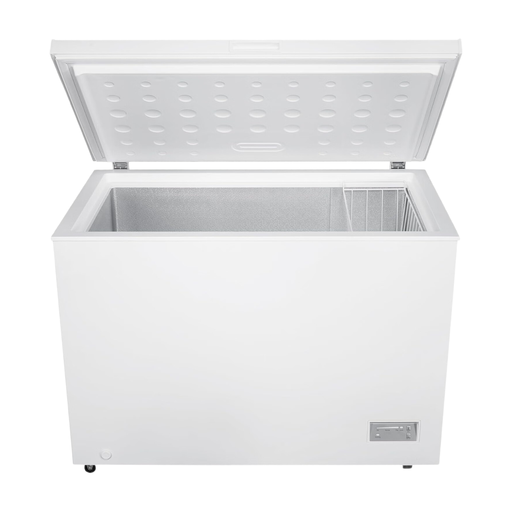 Image unavailable
Beko CF316EWN, 308 l
The larger usable capacity is useful for households storing several supplies at once. The basket is designed for smaller items.
The product description lists a usable capacity of 308 l, a freezing capacity of 16 kg in 24 hours, a freezer basket and energy efficiency class E. Four wheels are also listed.
Compare the amount you’ll be adding at each cooking session with the stated freezing capacity.
View at Joybuy
 Image unavailable
CHiQ chest freezer, 99 l, four-star freezer compartment
A compact option if you’re short on space and want to compare the amount of new sauce with the freezing capacity.
The product description lists a usable capacity of 99 l, a freezing capacity of 4.5 kg in 24 hours, a wire shelf and energy efficiency class E. The external dimensions are 54.5 × 47.6 × 83.5 cm.
Before buying, check that the external dimensions and lid clearance work in your chosen location.
View at Joybuy
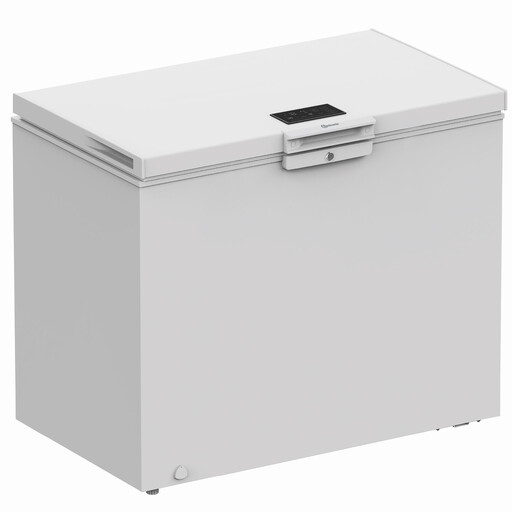 Image unavailable
Bauknecht BGTE 250MC, 198 l
Two baskets can help you organise different supplies. For new batches, you’ll also need to take the freezing capacity into account.
The product description lists a usable capacity of 198 l, a freezing capacity of 13 kg in 24 hours, two baskets and 126 kWh/year. A Multi-Zone function and WinterProof down to −15 °C are also listed.
Check that the dimensions and temperature rating suit your planned location.
View at Joybuy
Frequently asked questions
Does tomato sauce need to cool completely to room temperature before freezing?
No. The German Federal Institute for Risk Assessment recommends cooling hot food quickly to below 7 °C if it is to be stored for longer. Then freeze the sauce in suitable, labelled containers, in the portions you’ll need later, and follow your appliance’s instructions.
How can I tell if a chest freezer can handle a large batch of sauce?
Check two figures: the usable capacity in litres for all the supplies you’ll be storing at once, and the freezing capacity in kg/24 h for the amount you’ll be adding. A high usable capacity alone doesn’t tell you how much you can freeze in one cooking session.
How can I keep portions easy to identify when we eat at different times?
Freeze the amounts you’ll need later separately in suitable containers, and label them with the contents, quantity and date. Check that the baskets and internal layout keep individual portions easy to reach. The German Federal Centre for Nutrition recommends measuring out the amount you’ll need later and freezing it in portions.
What should I check about delivery, faults and my old appliance?
Before ordering, check whether delivery includes taking the appliance to your chosen location and what services are covered. If there’s a fault, your statutory rights are against the seller; a guarantee is different and voluntary, as the German consumer advice centre explains. Don’t put an old appliance in household rubbish. The German Environment Agency lists local collection points and the option to return a large, similar old appliance when buying a new one, including online purchases with delivery.
Which energy label applies to chest freezers in Germany?
Household refrigerating appliances covered by EU regulations must meet requirements for energy labels and product information. For the specific model, compare the current A to G label and its stated annual consumption. An older rating such as A++ isn’t equivalent to the current scale, and the label doesn’t require households to buy a particular efficiency class.


