Regular batch cooks
If you make vegetable stock in batches, the capacity and footprint should suit the containers you plan to use. Remember to allow room for other frozen food when choosing a size.


For cooled vegetable stock that you take out in portions at different mealtimes, choose a freezer with enough capacity for your containers and other frozen food. The layout inside also affects how easily you can reach individual portions. Compare the external dimensions and annual energy consumption of suitable models. If you plan to keep it in an unheated space, check that the specific appliance is approved for the ambient temperature there. The German Federal Institute for Risk Assessment recommends cooling hot food quickly to below 7 °C before storing it for longer periods.
If you make vegetable stock in batches, the capacity and footprint should suit the containers you plan to use. Remember to allow room for other frozen food when choosing a size.
When mealtimes vary, it matters whether you can reach individual labelled containers without having to rearrange everything else.
If the freezer will be kept in an unheated room, compare the temperatures there with the operating conditions approved for the specific model.
Decide whether capacity, quick access, energy use or suitability for its location matters most in your day-to-day life.
| Buying criterion | What to check | Who it matters most to |
|---|---|---|
| Suitable freezer capacity | Check the capacity in litres and external dimensions against your containers, other frozen food and available space. | If I want to store several batches of stock alongside other frozen food, the capacity needs to suit my containers without the freezer being too large for the space; around 33% of consumers therefore prioritise ample storage space. |
| Finding individual portions | Check how many baskets there are and how easily you can reach containers at the bottom. The German Federal Centre for Nutrition recommends labelling frozen food with its contents, quantity and freezing date. | If I eat at different times, I want to reach individual labelled portions without restacking everything; around 27% of consumers prioritise quick access to portions. |
| Energy consumption | For appliances of a suitable size, compare annual energy consumption in kWh. The German consumer advice centre explains that the former A+ to A+++ efficiency ratings for fridges and freezers have been phased out. | If the freezer runs all the time, I want to compare the energy use of similar appliances; around 20% of consumers prioritise energy consumption. |
| Suitability for the location | Compare the approval for the complete model with the temperatures at the planned location, and check the external dimensions. | If the freezer is going in a room that may be unheated, I need approval that covers the temperature there; around 20% of consumers prioritise suitability for the installation location. |
The capacity in litres alone won’t tell you how easy it is to reach individual portions of stock when you take them out regularly.
Check how many baskets there are, and label containers with their contents, quantity and freezing date.
If small containers are stacked on top of each other, searching and rearranging them takes time.
If appliances offer different amounts of freezer space, the rating alone doesn’t provide a direct comparison of their annual energy use.
First narrow down the right size, then compare the stated annual consumption in kWh.
Claims such as suitability down to −15 °C apply to specific models, not automatically to every appliance from the same brand.
Compare the approval for the complete model with the temperature at the intended location.
The details below relate to the models named and are not a general assessment of every appliance made by each brand.
Beko offers, among other models, a compact 98 l chest freezer and a model with 230 l of freezer space. The manufacturer’s specifications help you compare the capacity and space requirements of these two models.
The GTE 150MD is a chest freezer with a capacity of 142 l and one basket. Bauknecht states that this model is suitable for ambient temperatures down to −15 °C.
The CFc 1875 Plus is listed with 192 l of freezer space and is stated to be suitable for ambient temperatures down to −15 °C.
The Joybuy products below are chest freezers for storing different quantities of food. Check whether the stated capacity, features and available dimensions suit your stock containers and other frozen food.
 No image available
For vegetable stock and other frozen food, if the stated capacity and convertible use suit your needs.
Features listed in the product name: 141 L, energy class E, seven temperature settings, removable basket and defrost drain.
 No image available
For smaller stocks of vegetable stock, if the stated capacity and convertible use meet your needs.
Features listed in the product name: 95 L, energy class E, seven temperature settings, removable basket and defrost drain.
 No image available
For larger stocks, if 291 L of capacity and convertible use suit your needs.
Features listed in the product name: energy class E, LED lighting, five-stage digital temperature control, removable basket and defrost drain.
 No image available
For stock and other frozen food, if the stated capacity suits the amount you plan to store.
Features listed in the product name: energy class E, five-stage digital temperature control, removable basket and defrost drain.
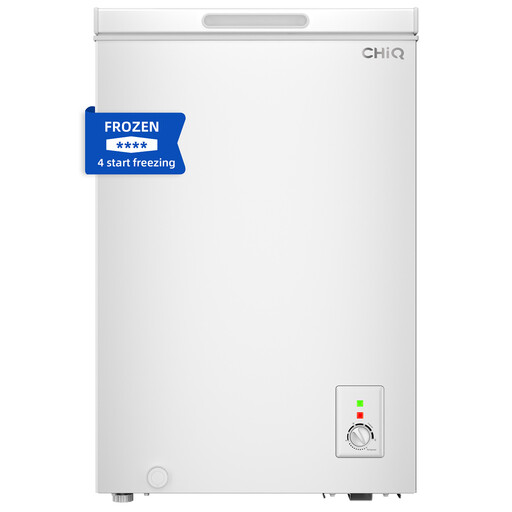 No image available
For a compact extra supply of stock, if 99 L suits the portions you plan to store and the space available.
Features listed in the product name: 4-star freezing, energy class E and wire basket.
Yes. The German Federal Institute for Risk Assessment recommends cooling hot food quickly to below 7 °C before storing it for longer periods. So don’t leave stock at room temperature for too long.
Put the cooled stock into suitable containers and label them. The German Federal Centre for Nutrition recommends noting the contents, quantity and freezing date.
No, you can’t assume this is true of every model. Compare the approval for the specific appliance with the temperatures where it will be kept. Bauknecht states that the GTE 150MD is suitable for ambient temperatures down to −15 °C, as does Liebherr for the CFc 1875 Plus.
Compare the annual consumption in kWh of appliances that are the right size, then multiply the difference in consumption by your own electricity price per kWh. This takes your actual tariff into account, rather than using the efficiency class alone to estimate a cost in euros.
No. The German Environment Agency explains that waste electrical appliances must be collected separately and that municipal collection points generally accept them free of charge. If you want to arrange collection of an old appliance, check the applicable terms first.