
Lieferung heute & morgen

Qualitätsgarantie

Willkommens-Angebote freischalten: KOSTENLOSE Lieferung | Bis zu 80 % RABATT | Kostenlose 30-Tage-JoyPlus-Testphase
App herunterladen
A chest freezer provides additional storage space for frozen food, meal prep, seasonal ingredients or larger quantities of provisions. However, capacity alone does not determine whether an appliance is practical and economical in everyday use. Before buying, households should pay particular attention to available space, energy consumption, ease of use and suitability for basements or garages.
A large chest freezer can hold a substantial amount of food, but it is also more difficult to organise. Without several baskets or a clear storage system, smaller packages can quickly disappear beneath larger items. For singles or couples, a small chest freezer or upright freezer may therefore be more practical than a model offering several hundred litres of capacity.
The EU energy efficiency scale ranges from A to G. A chest freezer with energy efficiency class E is not automatically particularly economical. The specific annual energy consumption in kilowatt-hours is more meaningful. Despite having the same efficiency class, a larger appliance may use more electricity than a smaller model. Running costs therefore depend on the combination of capacity, annual consumption and actual utilisation.
An unheated garage or basement presents particular requirements in terms of ambient temperature. The stated climate class and permitted temperature range are crucial. An appliance designed for unheated rooms may operate differently at low temperatures than a model intended for heated interiors. Before installation, sufficient clearance from the wall should also be provided so that heat can dissipate properly.
The usable capacity should match your shopping habits:
A chest freezer requires overhead clearance when opened. An upright freezer often makes more efficient use of floor space and provides drawers, while a chest freezer generally offers greater capacity for the footprint it occupies.
The 4-star (****) rating on freezers indicates storage at approximately –18 °C or below. It is intended for the long-term storage of suitable frozen food. You should also check the freezing capacity in kilograms per 24 hours. This indicates how much fresh food can be frozen within a single day.
If you frequently freeze larger quantities of fresh food, also check the storage time during a power cut. This figure indicates how long food is expected to remain frozen under the stated conditions. It does not replace a proper safety check of the food after a prolonged outage.
Depending on the model, a quiet chest freezer may operate at around 36 to 40 dB(A). This can be relevant in basements, utility rooms or living areas. Useful features include:
Many chest freezers require manual defrosting. An ice layer of approximately 5 to 10 millimetres can impair operation. The appliance must be disconnected from the mains before defrosting; sharp objects should not be used during the process.
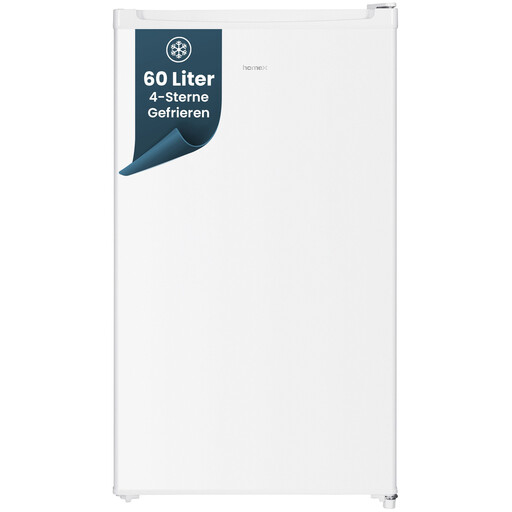
Why This Fits Their Persona: With 60 litres of usable capacity, this upright freezer is well suited to singles, small households, offices or holiday homes with limited space.
Two transparent drawers and a compartment reduce the need to search through a deep interior. The 4-star classification and freezing capacity of 2.8 kg per 24 hours are clearly specified.
60 litres of usable capacity, 40 dB(A), reversible door hinge and adjustable feet, measuring 47.5 × 45 × 85 cm.
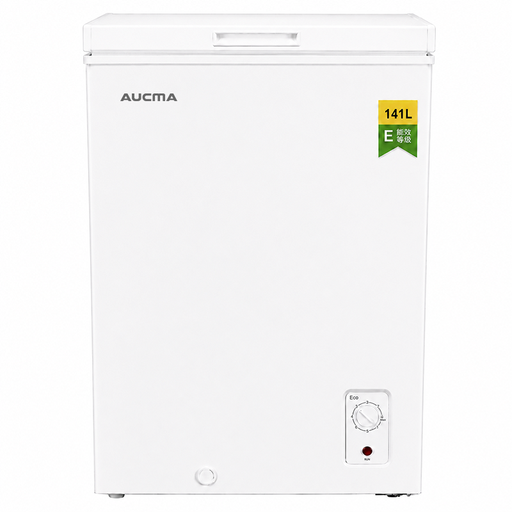
Why This Fits Their Persona: This convertible chest freezer is ideal for apartments, smaller households and garages where refrigeration or freezer space is required depending on the season.
The operating mode can be adjusted instead of paying for unused freezer capacity year-round. A basket and defrost water drain support convenient everyday use.
141 litres, 38 dB, seven-stage thermostat and energy efficiency class E with annual consumption of 179 kWh.
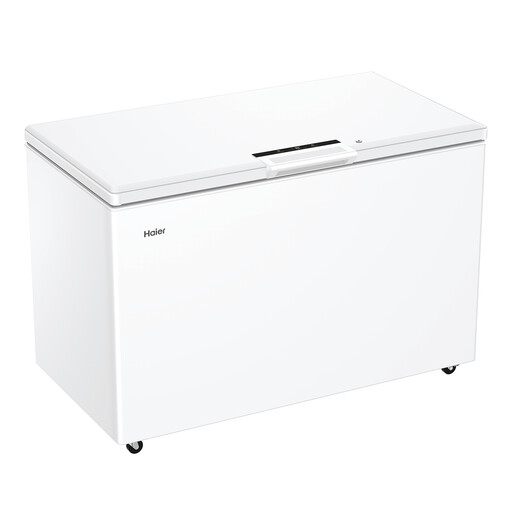
Why This Fits Their Persona: For households with substantial storage needs, this 418-litre chest freezer offers ample room for bulk packs and seasonal food.
Low-frost technology can extend the intervals between defrosting compared with conventional systems. Three baskets and interior lighting make it easier to organise the spacious interior.
Energy efficiency class D, approximately 215 kWh annual consumption, 39 dB and up to 43 hours of storage time during a power cut, according to the product specifications.
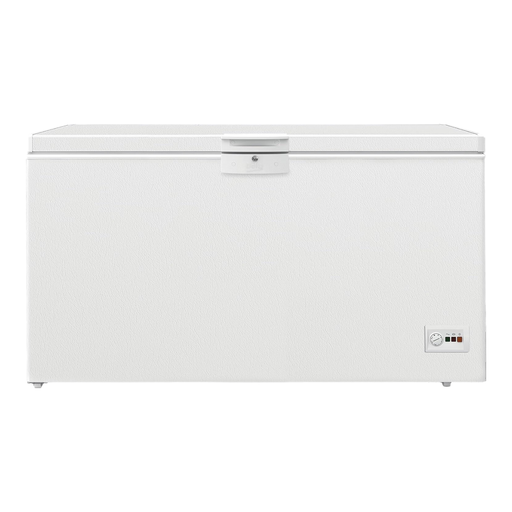
Why This Fits Their Persona: This large chest freezer is designed for families and users who want to store substantial provisions in a basement, utility room or suitable garage.
Three baskets, LED interior lighting and a temperature alarm counter poor visibility and unnoticed temperature rises. The manufacturer states that the appliance can operate at ambient temperatures down to –15 °C.
451 litres, freezing capacity of 20.5 kg per 24 hours, 36 dB and lockable lid; dimensions: 155.5 × 67.5 × 86 cm.
Our selection includes additional models with different capacities, energy efficiency classes and features for households in Germany.
Before ordering, measure the route to the intended installation site. Doors, staircases, lifts and narrow basement corridors can become practical obstacles when transporting a large chest freezer. The appliance must be placed level on a stable, dry surface. Ventilation clearances specified in the operating instructions must be observed; many models recommend at least approximately 10 centimetres.
After transport, the chest freezer should remain upright for several hours, in accordance with the manufacturer’s instructions, before it is connected to the power supply. Food should only be loaded once the appliance has reached the intended temperature. Hot food should not be placed directly inside, as it will raise the internal temperature.
The following simple formula can be used to estimate electricity costs:
Annual consumption in kWh × personal electricity price per kWh = estimated annual electricity costs
Actual consumption depends, among other factors, on ambient temperature, loading, door seal condition, defrosting status and frequency of use.
This depends on the model, capacity and usage. In the available product specifications, figures range from 165 kWh per year for a compact 95-litre AUCMA chest freezer to approximately 279 kWh per year for the 451-litre Beko HSM46740. For a fair comparison, annual consumption and usable capacity should always be considered together.
This is possible if the appliance is designed for the temperature range found there. The climate class and manufacturer’s specifications must be suitable for the garage. The chest freezer also requires a dry, level installation site with sufficient ventilation. Extremely low temperatures or high humidity can impair operation if the location is unsuitable.
There is no universally applicable service life. Regular defrosting, a clean door seal, adequate ventilation and avoiding overfilling can help ensure reliable operation. When making a purchase decision, consider not only the price but also warranty terms, spare-parts availability and the manufacturer’s specifications.