
Lieferung heute & morgen

Qualitätsgarantie

Willkommens-Angebote freischalten: KOSTENLOSE Lieferung | Bis zu 80 % RABATT | Kostenlose 30-Tage-JoyPlus-Testphase
App herunterladen
A new chest of drawers should create storage space and blend harmoniously into your room. However, the selection is vast, and not every product lives up to its promise. Certain weak points in construction and materials often cause a piece of furniture to lose stability or functionality after a short time. This guide highlights the crucial details and shows you how to make an informed purchasing decision.
When choosing new storage furniture, there are typical defects that often only become apparent after assembly or during daily use. If you know what to look for, you can specifically check for quality features.
To avoid the problems mentioned above, you should check three core parameters before buying. These provide insight into the durability and functionality of your new chest of drawers.
The material used is the foundation for stability. Common options include:
Regardless of the material, a screwed-in back panel is a clear sign of quality, as it provides crucial stability to the body.
Good storage furniture must stand securely. Look for solid stability, ensured by sturdy feet or a continuous base. A critical safety feature is the anti-tip kit. This is a device used to anchor the furniture to the wall. This is especially important in households with children to prevent accidents from tipping over. Reputable manufacturers include this component as standard.
The mechanics determine everyday user comfort.
Depending on your living situation and intended use, different models are suitable. Here are some recommendations tailored to specific user profiles.
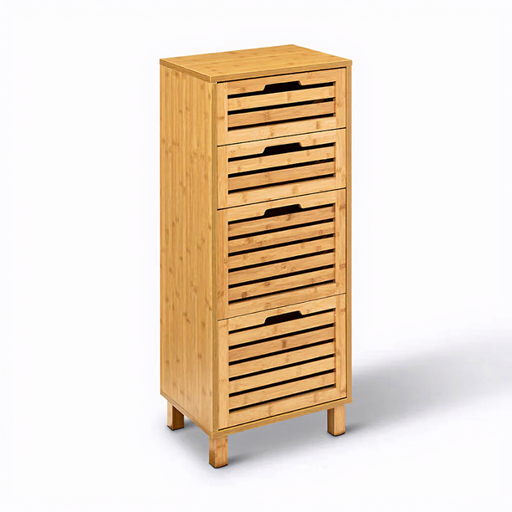
Why This Fits Their Persona: Ideal for those needing extra storage in narrow hallways, small bedrooms, or alcoves. With a width of just 40 cm and a depth of 30 cm, this tall, slim unit makes optimal use of vertical space.
The bamboo feet provide a solid base and are more durable than simple particle board feet, counteracting the instability common in narrow, tall furniture.
Compact dimensions for alcoves; use of FSC-certified materials.
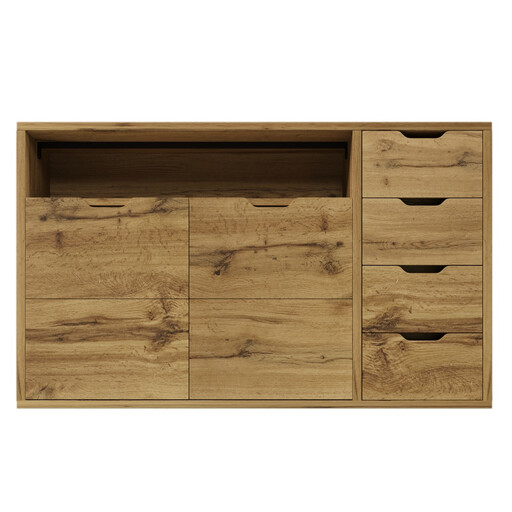
Why This Fits Their Persona: Suitable for users looking for a multifunctional piece for the living or dining room. The combination of drawers, doors, and an open compartment provides space for dishes, table linens, and decorative objects.
This sideboard features soft-close hinges made of metal and high-quality drawer slides, which prevents the problem of jamming or noisy drawers. An anti-tip kit is included in the delivery.
Height-adjustable shelves for flexible customisation; soft-close function for superior user comfort.
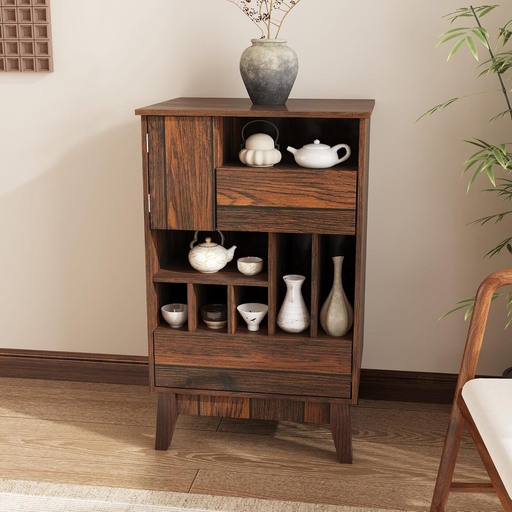
Why This Fits Their Persona: For buyers looking for a piece of furniture with character. The asymmetrical design and special compartments for bottles make this chest a focal point in the living room or hallway.
The MDF construction and sturdy feet are designed for the specific, asymmetrical shape to ensure good stability. The handleless design avoids problems with wobbly or poorly mounted handles.
Unique asymmetrical design; special compartments for bottles and other items.
We've curated a complete, up-to-date list of products that meet these strict selection criteria and safety standards.
Although the terms are often used interchangeably, there are functional differences. A classic chest of drawers or dresser is typically taller than it is wide and consists primarily of drawers. A sideboard is wider than it is tall and often combines drawers with doors and open compartments. A buffet (or credenza) is a specific type of sideboard, traditionally used in the dining room for storing dishes, and often features a generous top surface for serving.
An anti-tip kit is an essential safety feature. Tall and narrow furniture, or pieces with heavy, extended drawers, can shift their centre of gravity and tip over. This poses a significant danger, especially to children. Installing the provided anti-tip kit, which securely fastens the furniture to the wall, is therefore strongly recommended.
Wood-effect surfaces, usually made of foiled or coated particle board or MDF, are easy to care for. A dry or slightly damp, soft cloth is generally sufficient for cleaning. Avoid aggressive cleaning agents or soaking wet rags, as moisture can penetrate the joints and cause the material to swell. Small scratches on some surfaces can be concealed with special repair pens or wax.