
Lieferung heute & morgen

Qualitätsgarantie

Willkommens-Angebote freischalten: KOSTENLOSE Lieferung | Bis zu 80 % RABATT | Kostenlose 30-Tage-JoyPlus-Testphase
App herunterladen
A chest of drawers is a cornerstone of an organised home. However, the sheer number of options can be overwhelming, leading to decisions you might later regret. Before you invest, it's crucial to understand the common pitfalls that can turn a seemingly good deal into a short-lived disappointment.
Many buyers focus on appearance and price, overlooking critical design features. Here are the three most common problems that lead to a poor purchase:
A well-considered purchase involves more than just aesthetics. By paying attention to a few key parameters, you can ensure your new chest of drawers is a durable and functional addition to your home.
To make an informed decision, you should examine three technical aspects. These determine the longevity, functionality, and safety of your chest of drawers.
The material is critical for the lifespan and intended location of the furniture. For areas with high humidity, such as a bathroom, a narrow bathroom cabinet made from painted MDF (Medium-Density Fibreboard) is an excellent choice. The paint seals the surface and protects it from moisture penetration. For living rooms or bedrooms, models made from veneered or coated particle board are also suitable, provided the craftsmanship is high-quality. For instance, a white sideboard with a robust melamine resin coating is easy to clean and resistant to scratches.
The quality of the drawer runners is a direct indicator of user-friendliness. Look for metal telescopic runners or ball-bearing slides. These ensure smooth and quiet opening and closing, even when the drawers are fully loaded. Always check the manufacturer's specified maximum load capacity per drawer. A value of 5 kg per drawer is a good benchmark for storing clothes, while higher values are necessary for books or files.
For an office or flexible living spaces, a mobile pedestal with drawers is a practical solution. These mobile storage cabinets can be easily moved wherever they are needed. Lockable castors are important here, as they give the furniture a secure footing when required. Such a storage cabinet on wheels can also serve as a flexible nightstand or side table.
Instead of presenting an overwhelming list, we have matched specific models to distinct user profiles.
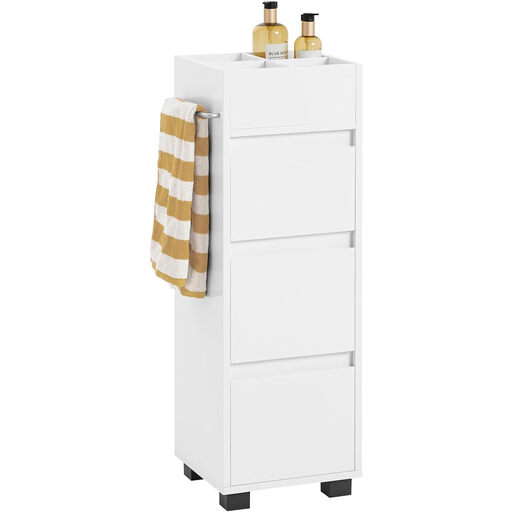
Why This Fits Their Persona: Ideal for those looking to make the most of unused corners or narrow gaps in the bathroom or hallway. This slim cabinet offers a smart combination of drawers and open shelves in a minimal footprint.
The material, painted MDF (E1), is explicitly designed for humid environments and prevents the swelling that would occur with basic particle board.
Combines closed and open storage. Its narrow dimensions of 30 x 90 x 30 cm make it a true niche-filler.
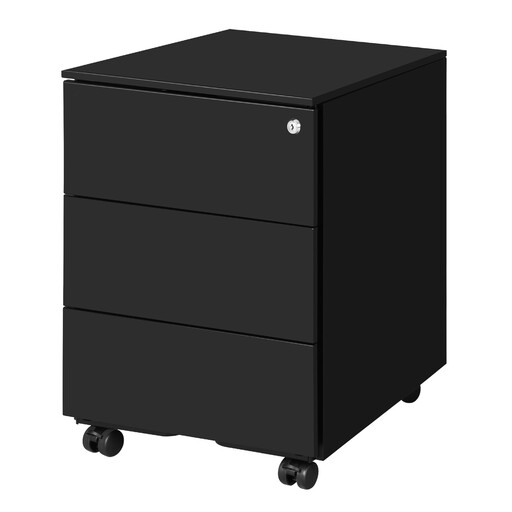
Why This Fits Their Persona: Perfect for home office users who need robust, mobile, and secure storage for documents and supplies right at their desk. The locking feature provides added privacy.
The steel construction and full-extension runners offer high stability and a load capacity of 15 kg per drawer, bypassing the problems of flimsy runners and low weight limits.
Arrives pre-assembled (only castors need to be attached). Two of the four castors are lockable, ensuring it stays securely in place.
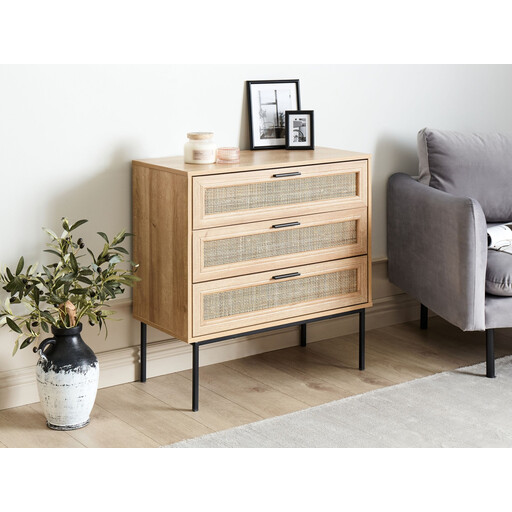
Why This Fits Their Persona: For anyone seeking a functional piece of furniture that also makes a visual statement. The design, with its rattan fronts and metal legs, fits perfectly into living rooms or bedrooms with a boho or natural aesthetic.
Despite its focus on design, functional aspects are not neglected. With an 80 cm width and three drawers, the chest provides practical storage space rather than being purely decorative.
The combination of a dark wood finish, natural rattan, and black metal legs creates a distinctive look. The tabletop's load capacity is 30 kg, according to the manufacturer.
We have compiled a complete, up-to-date list of products that fully meet these strict selection criteria and UK safety regulations.
1. How much weight can a chest of drawers hold? The load capacity varies greatly depending on the model and construction. Always check the manufacturer's specifications for the maximum load capacity. This is usually listed separately for the top surface and for each individual drawer. A solid chest should have a top that can support at least 20-30 kg and drawers that can hold 5-10 kg each.
2. Does a chest of drawers need to be anchored to the wall? For increased safety, especially in households with children, this is strongly recommended. Many manufacturers include an anti-tip kit with the product. Anchoring the chest to the wall prevents it from tipping over if, for example, several heavy drawers are opened at once or a child tries to climb on it.
3. Is every chest of drawers suitable for a bathroom? No. Standard chests made from uncoated particle board are not suitable for the high humidity in a bathroom. Look specifically for a bathroom cabinet made from moisture-resistant materials like painted MDF, solid plastic, or specially treated wood. This ensures the furniture will not swell or warp.