
Lieferung heute & morgen

Qualitätsgarantie

Willkommens-Angebote freischalten: KOSTENLOSE Lieferung | Bis zu 80 % RABATT | Kostenlose 30-Tage-JoyPlus-Testphase
App herunterladen
A chest of drawers can keep clothes, stationery and small items neatly organised. But not every design proves practical in everyday use. It’s easy to choose a piece of furniture based on looks alone, while overlooking its dimensions, weight capacity or materials.
Before you buy, make sure you avoid these three common pitfalls:
Measure the space where you plan to put it at three points: width, depth and height. Also allow for skirting boards, doorways and the space needed to pull the drawers out.
A slim chest of drawers can work well in a hallway, next to a wardrobe or under certain desks. A taller drawer cabinet makes use of vertical space, but needs to be positioned securely and may need to be fixed to the wall to prevent it tipping over. In a bedroom, choose a depth that allows the drawers to open fully without hitting the bed or wall.
Specifications can differ between listings for the same product. For example, the Dolo model is listed as 78 × 73 × 48 cm in one description and 73 × 48 × 78 cm in its specifications. Before you buy, check the product listing and compare the measurements with the space available.
A traditional chest of drawers is often made from MDF or other wood-based materials. According to its product details, the Dolo model has an MDF frame, steel components and steel runners. The stated maximum total load is 80 kg. It is also FSC-certified and intended for indoor use. These figures are based on the manufacturer’s specifications, and the load still needs to be distributed evenly.
A fabric-drawer unit often combines a metal frame with non-woven fabric drawers. It’s lightweight and easy to move when you’re changing rooms or moving house. However, that doesn’t automatically make it suitable for damp spaces. A plastic chest of drawers made from polypropylene can be wiped clean with a damp cloth and is resistant to everyday dirt. Keep it away from high heat and naked flames, and avoid using harsh cleaning products.
Look for specific details rather than broad marketing claims:
A 3-drawer chest of drawers usually offers convenient access to everyday essentials. It can be used in a bedroom, living room or home office. A 5-drawer chest of drawers is better suited to keeping smaller categories separate, such as socks, accessories, craft supplies or stationery.
Before you buy, think about what you plan to keep in the drawers. Folded clothes need different internal dimensions from cables, documents or toiletries. Castors or movable feet make mobile storage possible, but also make it more important to secure the furniture against tipping and place it on a level surface.
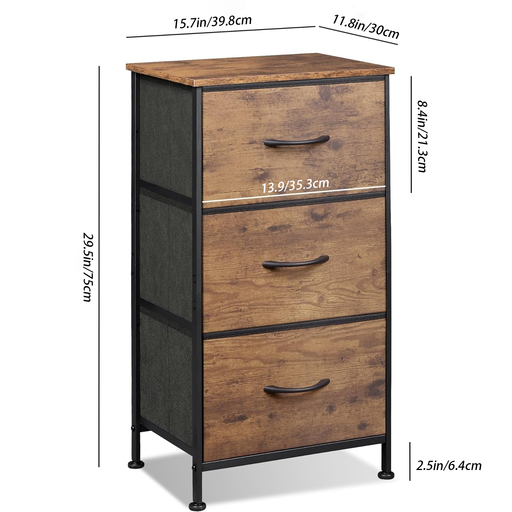
Why this product suits you: With three foldable fabric drawers and a low weight of 4,79 kg, this unit is a good fit for students, rented homes and rooms where you need furniture that’s easy to move.
Its dimensions of approximately 39,9 × 30 × 74,9 cm are clearly stated. The metal frame, adjustable plastic feet and care instructions make it easier to understand where and how the unit can be used.
Three removable fabric drawers, an MDF top and easy-to-reach handles.
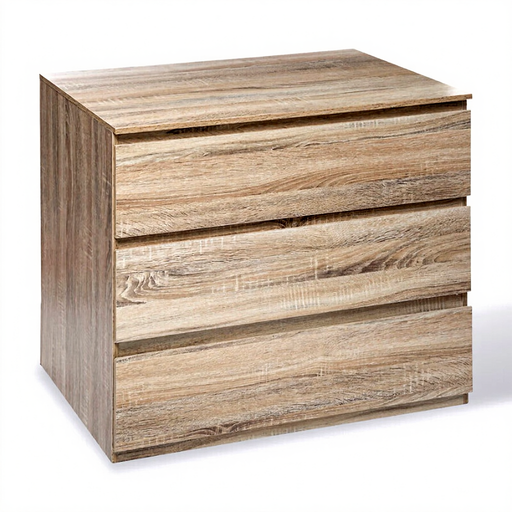
Why this product suits you: This three-drawer MDF unit is designed for long-term bedroom storage or as a living-room chest of drawers for indoor use.
The materials, steel runners, indoor-use recommendation and assembly requirement are all specified. Its stated maximum load of 80 kg makes it easier to plan what you’ll store in it.
Three drawers, steel fittings, FSC certification according to the product details, and a stated assembly time of approximately 30 minutes.
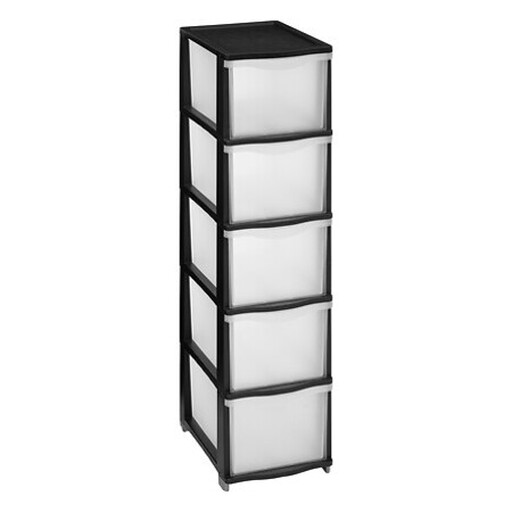
Why this product suits you: With five drawers and a slim profile measuring 37 × 26,8 × 98,5 cm, it can fit into alcoves, entranceways or the space next to a wardrobe.
The safety instructions recommend a level surface, even loading and wall fixing if needed. The castors are intended for careful repositioning only.
Five compartments, a polypropylene construction, no assembly required for the main body, and two castors on the removable feet.
We’ve put together a complete, regularly updated list of products that meet these strict selection criteria and the safety regulations in force in the EU.
If your chest of drawers needs assembling, lay out all the parts on a level surface and read the instructions all the way through. Tighten the screws lightly at first, then align the frame before tightening them fully. Incorrect assembly can make the drawers difficult to open and close.
Also keep in mind:
A slim chest of drawers or compact drawer tower can work well in a narrow alcove. It’s important to consider not just the overall dimensions, but also the space needed to open the drawers. Castors can make it easier to move the unit, but shouldn’t make it unstable.
Its lifespan depends on the materials, assembly, load and care. Distributing the load evenly, keeping it in a dry indoor space and avoiding pulling the drawers open forcefully can help protect the construction. Specific lifespan information isn’t available for every model.
A standard chest of drawers doesn’t use electricity. Ongoing costs mainly come from care, occasional replacement parts or additional wall fixings. If you have a mobile model, check the condition of the castors and feet regularly.