
Lieferung heute & morgen

Qualitätsgarantie

Willkommens-Angebote freischalten: KOSTENLOSE Lieferung | Bis zu 80 % RABATT | Kostenlose 30-Tage-JoyPlus-Testphase
App herunterladen
A child's first unsteady steps are an unforgettable milestone. A baby walker can be a valuable support during this phase, but the market is flooded with models whose utility and safety vary greatly. Many parents invest in products that either quickly lose their appeal or fail to meet basic safety requirements. This guide will help you identify the crucial features and make an informed decision, especially if you are considering a Chicco baby walker.
Before you make a purchase, it's important to be aware of common issues that can compromise a walker's usefulness and safety.
To avoid a poor purchase, you should focus your attention on three core parameters. These define a high-quality and safe baby walker.
A stable baby walker is the fundamental requirement. Look for a wide wheelbase, which broadens the base and increases anti-tip stability. Four large, sturdy wheels ensure a secure footing and smooth rolling. The material should be high-quality, non-toxic plastic or durable wood. Some models also offer adjustable wheel resistance to adapt the speed to the child's ability—an important feature for the initial phase.
To maximise its lifespan, a 2-in-1 baby walker is a smart choice. These models combine the function of a walking aid for toddlers with an integrated push walker with an activity centre. The child can use the activity board while sitting, long before they take their first steps, and later push the walker to learn to walk. This keeps the toy relevant for many months and offers genuine added value.
The quality of the activity centre is crucial. Instead of passive electronic effects, the focus should be on manual activities. Look for elements that train fine motor skills and hand-eye coordination:
Such activities foster an understanding of cause and effect and keep the child's interest. This also makes the walker an ideal first birthday gift.
Based on the criteria above, we have identified a few products that are suitable for different needs and profiles.
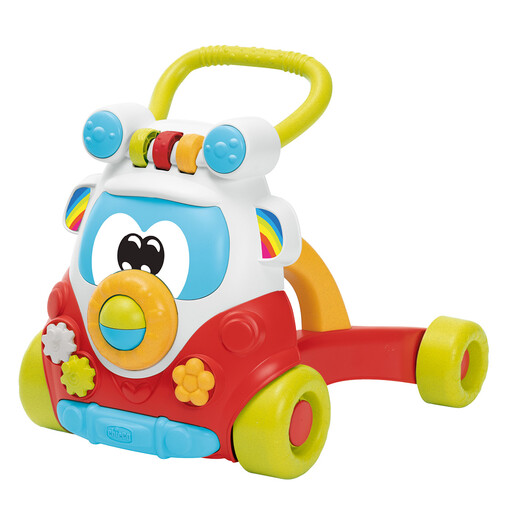
Why it's a great fit: This model was specifically designed as a baby walking aid, combining stability with a well-designed play concept. It is ideal for parents who prioritise safety and targeted motor skill development.
The four large wheels and wide base counteract the risk of tipping. Instead of electronics, the activity centre relies on five manual activities that train fine motor skills and prevent overstimulation. The 2-in-1 function ensures long-term use.
Combines a stable walking aid with a mechanical activity centre. Simultaneously promotes balance and motor skills.
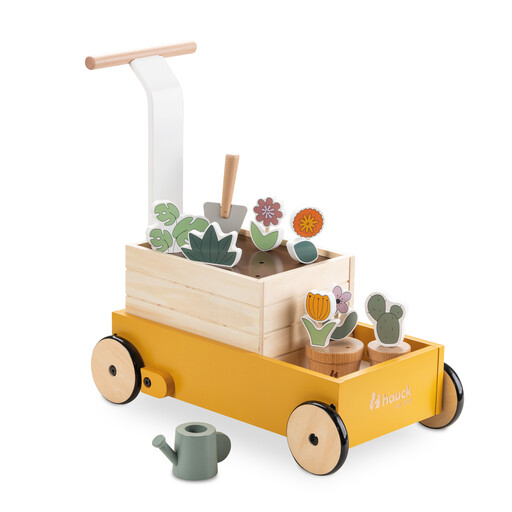
Why it's a great fit: For families who prefer sustainable materials and a timeless design. Ideal as a high-quality gift that is also visually appealing and encourages imaginative role-play.
This wooden model completely forgoes electronics, focusing instead on tactile play experiences. The adjustable brake on the wheels allows for individual speed customisation, significantly increasing safety during the initial phase.
Made from durable wood from FSC-certified forests. The adjustable wheel speed offers additional control and safety.
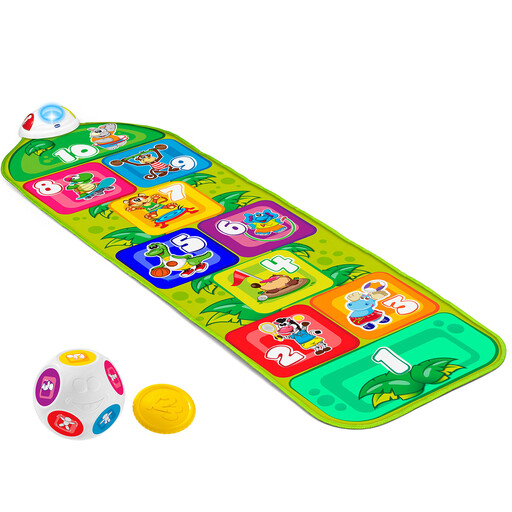
Why it's a great fit: For children who can already walk confidently (from 24 months), this is an excellent addition to further train balance, coordination, and precision. It promotes active indoor play.
This product avoids the short-lifespan trap as it is designed for a broad age range (2-5 years) and grows with the child. Here, the electronic elements are directly linked to physical activity, specifically promoting gross motor skills.
Two game modes (Hopscotch and Fitness) with increasing difficulty levels provide long-lasting engagement and actively promote physical development.
We have compiled a complete, up-to-date list of products that fully meet these strict selection criteria and safety standards.
Most push walkers, like the Chicco Happy Hippy Walker, are recommended for children from around 9 months of age. The most important prerequisite is that the child can already sit up independently and pull themselves up on furniture. The walker then serves as a support for their first attempts at standing and walking.
Walkers with large, sturdy wheels are well-suited for smooth indoor floors like parquet, laminate, or tile. On high-pile carpets, the rolling resistance may be too high, making it difficult to push. Regardless of the flooring, it is crucial to keep the walking area free of obstacles like cables or small objects and to never use the device near stairs, steps, or sloped surfaces.
A push walker is pushed along by the child from behind. The child supports their own body weight, actively training their balance and muscles. In contrast, a traditional sit-in walker, where the child is placed inside and is partially suspended, is viewed critically by many experts. This is because it can promote an unnatural posture and may delay the development of independent walking. Push walkers are therefore considered the more developmentally beneficial alternative.