
Lieferung heute & morgen

Qualitätsgarantie

Willkommens-Angebote freischalten: KOSTENLOSE Lieferung | Bis zu 80 % RABATT | Kostenlose 30-Tage-JoyPlus-Testphase
App herunterladen
A baby bottle needs to do more in daily life than just look good. What really matters is the capacity, the teat flow rate, the material, how easy it is to clean, and whether the bottle suits your baby’s current feeding situation. The Chicco NaturalFeeling Baby Bottle is available in several sizes, colours and flow levels. This means you can tailor your choice to your baby’s age and drinking habits – but at the same time, similar product names can differ in important details.
As a Joybuy Product Recommendation Officer, I’ve filtered out the relevant information and will show you what parents, grandparents and carers should look out for before buying.
A larger bottle isn’t automatically suitable for every baby. A Chicco baby bottle 150 ml is handy for smaller feeds and early feeding routines. A Chicco baby bottle 250 ml offers a bit more reserve, while a Chicco baby bottle 330 ml is, according to product details, intended for babies from around six months old.
The capacity should match your baby’s usual feed volume. A bottle that’s too large can feel unnecessarily heavy in your hand, whereas one that’s too small will need refilling more often during bigger meals.
An anti-colic valve can affect the air intake during feeding. The Chicco NaturalFeeling models feature a double anti-colic valve. According to the manufacturer, this is designed to reduce the amount of air taken in, which may help with spitting up or wind. However, this doesn’t guarantee trouble-free feeding or a medical effect.
Correct assembly is also important: the teat, screw ring and bottle body must be put together properly so that the bottle is leak-proof and the valve works correctly.
A breast-shaped teat can be useful for mixed feeding, but it doesn’t replace your baby’s individual adjustment. The NaturalFeeling teats are made from soft silicone and have an angled design. According to the product description, this helps keep the teat filled with milk during feeding.
Even more important is the flow rate:
Age recommendations are just a guide. If milk flows too quickly and your baby coughs or chokes, the teat may not be right for their current drinking style. If your baby drinks very slowly or tires easily, a different flow rate might be better. Any change should be made gradually.
The Chicco models listed are made from a PP bottle body and a silicone teat. The product details state that the bottles are BPA-free; some variants are also described as latex-free or phthalate-free. Even so, always check the details for the specific colour and size you’re buying, as features can vary.
A silicone teat is firm yet soft. Before each use, you should inspect it from all angles. If you find any cracks, deformations or other damage, replace it straight away. Some product information recommends regular replacement for hygiene reasons, for example after about two months. Always follow the manufacturer’s own instructions.
The Chicco NaturalFeeling bottles in this selection are dishwasher-safe, with some recommending cleaning on the top rack. Before cleaning, take all the parts apart. Milk residue can build up, especially around the valve and teat.
When it comes to microwave suitability, there are differences between variants: the neutral 150 ml version is described as not microwave-safe, while a light blue variant includes microwave-safe details. So don’t automatically use the care instructions from a different colour or size. Always check the temperature of the feed before giving it to your baby.
When searching for a Chicco NaturalFeeling Baby Bottle, you should check not only the colour but also the model number, size and flow rate. Pink, Neutral and Light Blue may each be offered with different teat flow levels. A quick look at the product detail page will help you avoid accidentally ordering a 330 ml bottle with fast flow instead of a 150 ml bottle for a newborn.
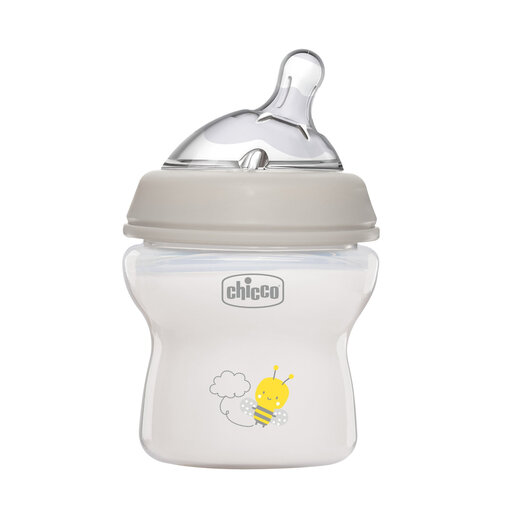
Why this product fits the profile: The 150 ml size is designed for smaller feeds and getting started with bottle feeding. The neutral colour works well in different care settings.
The product details specify a slow or normal flow suitable from birth. This means you’re choosing based on teat flow as well as bottle size.
150 ml, BPA-free plastic, silicone teat, double anti-colic valve and dishwasher-safe design.
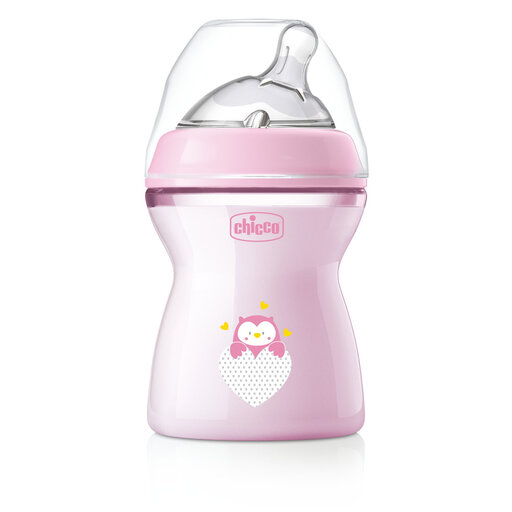
Why this product fits the profile: The medium flow level and 250 ml capacity are, according to product details, aimed at babies from around two months old who are taking larger feeds.
The model name clearly states the size and flow rate. This makes it easier to choose the right bottle than a product simply marketed as “suitable for all ages”.
250 ml, medium flow, angled silicone teat, double valve and dishwasher-safe cleaning.
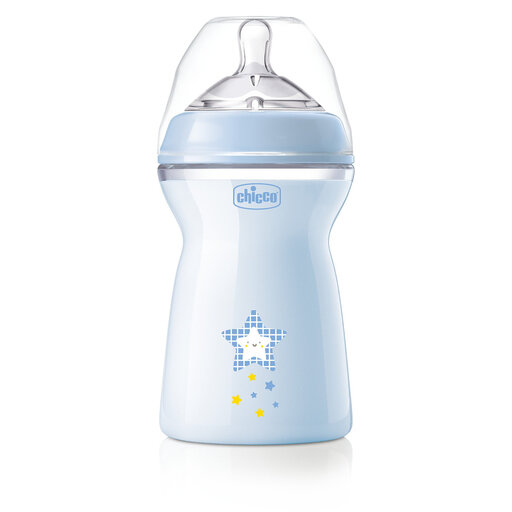
Why this product fits the profile: The 330 ml bottle with fast flow is, according to product details, intended for babies from six months old and offers more volume for larger feeds.
The age recommendation of six months and above narrows down its use. This helps avoid choosing a fast-flow teat for a newborn.
330 ml, fast flow, BPA-free PP bottle body, silicone teat and dishwasher-safe cleaning.
We’ve put together a full, regularly updated list of products that meet these strict selection criteria and the safety regulations in force across the EU.
For newborns, the 150 ml variant with slow or normal flow is the most suitable option from this selection. Also check the age recommendation on the specific product page. Don’t choose a medium or fast-flow teat just because the bottle has a larger capacity.
The bottle body can be used for longer with proper care. The teat is a wear part and should be checked before every feed. If you notice cracks, a sticky surface, deformations or stretched valve areas, it needs to be replaced. Always follow the manufacturer’s care and replacement instructions.
No, the details vary by model. Some Chicco variants are described as microwave-safe, while others are explicitly not. So always check the instructions for the colour and size you’ve bought. Regardless, always check the feed thoroughly for an even temperature before giving it to your baby.