
Lieferung heute & morgen

Qualitätsgarantie

Willkommens-Angebote freischalten: KOSTENLOSE Lieferung | Bis zu 80 % RABATT | Kostenlose 30-Tage-JoyPlus-Testphase
App herunterladen
Choosing the right baby bottle is a fundamental decision for expectant and new parents. With so many options on the market, finding a model that meets your child's needs can be a challenge. In particular, combining breastfeeding and bottle-feeding (combination feeding) or dealing with colic often leads parents to wonder which bottle provides the most natural and comfortable feeding experience.
This article serves as a guide to the Chicco NaturalFeeling baby bottle. It highlights the key features of the product line and introduces various models to help you make an informed decision.
Before you make a decision, it's helpful to understand the key factors that define a good baby bottle. The Chicco NaturalFeeling range was developed to address the specific needs of infants.
A key feature is the teat. For high acceptance, especially when using a bottle for combination feeding, a breast-like teat is advantageous. The NaturalFeeling range uses a soft silicone teat with a velvety surface ("Mum Effect") designed to mimic the feel of the breast. The distinctive angled teat on the newborn models is designed to always stay full of milk and support the baby's natural neck position.
Gas and colic often result from swallowing air during feeding. An anti-colic baby bottle helps to counteract this. Chicco NaturalFeeling bottles are equipped with a dual anti-colic valve. This system is designed to prevent air from mixing with the milk and being ingested by the infant, which can help reduce regurgitation and discomfort.
As your child grows, their appetite and sucking strength change. It is therefore important to adjust the bottle size (capacity in ml) and the teat's flow rate.
All Chicco bottles presented here are declared as BPA-free baby bottles and are made from polypropylene.
Here is an introduction to three models from the NaturalFeeling range, designed for different stages of an infant's development.
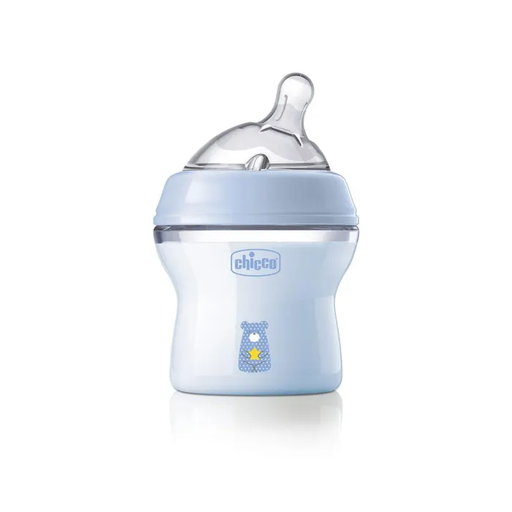
What makes it special: This model is specially designed for the first feeds. The angled teat with a slow flow supports the natural feeding position of newborns and ensures the teat stays full of milk. The dual anti-colic valve is integrated to minimise air swallowing.
Advantages:
Who it's for: Ideal for newborns from birth (0+ months), especially as a first bottle or when introducing combination feeding.
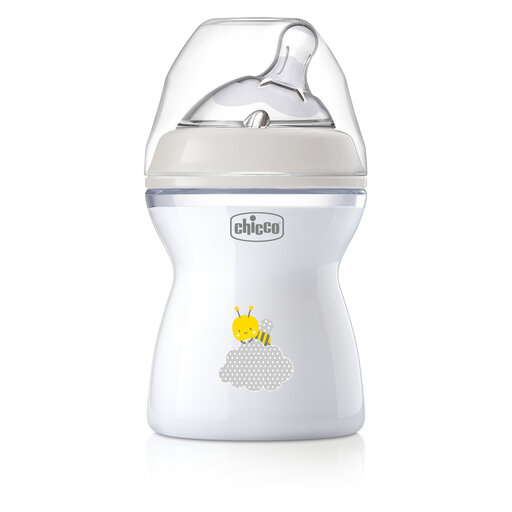
What makes it special: This bottle represents the next step for growing babies. With a 250 ml capacity and a medium flow, it adapts to their increasing appetite and stronger sucking action. The teat retains its breast-like shape to encourage acceptance.
Advantages:
Who it's for: Recommended for infants from approx. 2 months, whose feeding needs have outgrown the newborn stage.
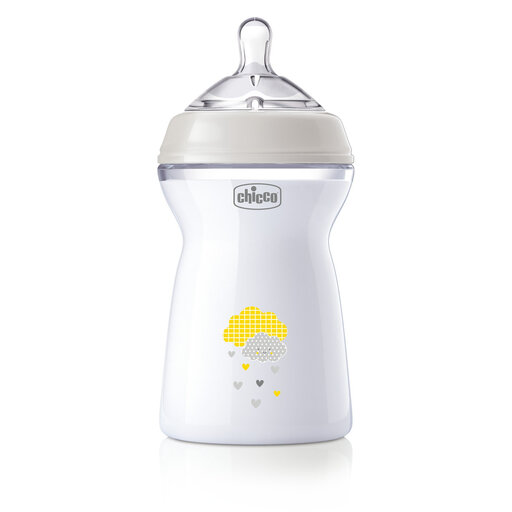
What makes it special: With a 330 ml capacity and a fast flow, this bottle is the largest option in the NaturalFeeling line. It is intended for older babies who drink larger quantities per meal and require a higher flow rate. The wide, rounded teat base continues to support a natural latch.
Advantages:
Who it's for: Suitable for babies from 6 months who need a fast flow and larger meals.
If the NaturalFeeling range doesn't fully meet your requirements, or if you'd like to compare other materials and brands, you can find a wider selection of baby bottles for different needs in our Plastic Milk Containers category.
Yes, the range was developed with the goal of making the transition between breast and bottle easier. The soft, wide, and breast-shaped silicone teat is designed to promote a natural latch, thereby supporting acceptance in breastfed babies.
The bottles feature a dual valve at the base of the teat. During feeding, this valve allows air to enter the bottle, but not the teat. This prevents a vacuum from forming and stops the infant from swallowing air, which is a common cause of colic, gas, and regurgitation.
The bottles are designed for easy cleaning. They can be cleaned in the dishwasher (top rack). Before the first use and for regular sterilisation, all parts should be sterilised in boiling water for a few minutes. It is recommended to check the teat for any cracks or signs of wear before each use and to replace it for hygiene reasons approximately every two months.