
Lieferung heute & morgen

Qualitätsgarantie

Willkommens-Angebote freischalten: KOSTENLOSE Lieferung | Bis zu 80 % RABATT | Kostenlose 30-Tage-JoyPlus-Testphase
App herunterladen
A Chicco NaturalFeeling baby bottle can be a great option for breastfeeding, bottle feeding or combination feeding. However, the decision isn't just about the brand or the colour. Capacity, teat flow, material and cleaning all determine whether the bottle suits your baby's age and drinking habits.
When buying, three common pitfalls can arise:
The flow should match your baby's developmental stage and drinking speed. The available variants in the Chicco NaturalFeeling range differ significantly:
The age guide is a starting point. Also observe whether your baby drinks calmly and without excessive effort. Do not enlarge the teat yourself. If teats become damaged, torn or feel brittle, they need replacing.
The Chicco NaturalFeeling bottles use an angled teat with a wide base. The shape is designed to support a position where the teat stays filled with liquid during feeding. A breast-like teat can help with the transition between breast and bottle, but it doesn't replace your baby's individual adjustment.
The integrated double valve is designed as an anti-colic system. According to the respective product information, it is intended to reduce air intake during feeding. This is a technical product feature, not a medical effectiveness claim. What matters most is correct assembly: a teat that sits crookedly or a ring that isn't screwed on properly can cause leaks and alter feeding behaviour.
The variants mentioned are made from polypropylene (PP) for the bottle and silicone for the teat. Several product descriptions indicate a BPA-free baby bottle. Before buying, parents should check the details of the specific colour and size variant, as care instructions can differ between similar items.
For a dishwasher-safe baby bottle, all individual parts should be taken apart before loading. The top basket is usually recommended. Before first use, the parts must be thoroughly cleaned and sterilised according to the manufacturer's instructions. Teats should be checked in all directions before each use. Not every variant is suitable for the microwave; for the Chicco models listed here, some explicitly advise against it.
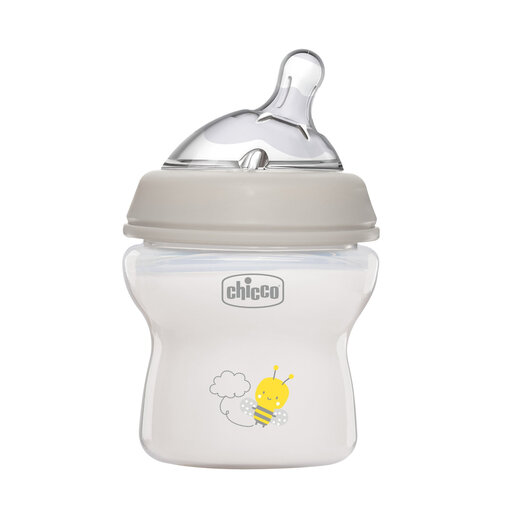
Why this product fits the profile: The compact capacity and slow or normal flow are suitable, according to product information, for babies from birth and for smaller feeds.
The slower teat flow prevents beginners from automatically choosing a fast-flow variant designed for older babies.
150 ml capacity, angled silicone teat, double valve and dishwasher-safe design according to the product description.
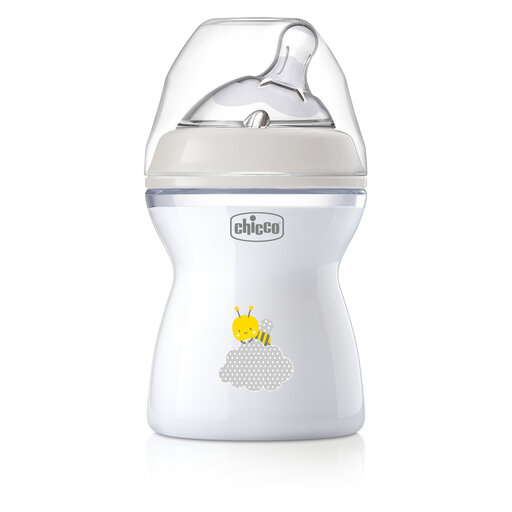
Why this product fits the profile: The medium size and medium-flow teat appeal to families looking for a balanced everyday solution for combination feeding after the newborn stage.
The clear age recommendation from around 2 months helps you avoid choosing the teat flow based solely on bottle size.
250 ml, medium flow, breast-like silicone shape, angled teat and double valve according to product information.
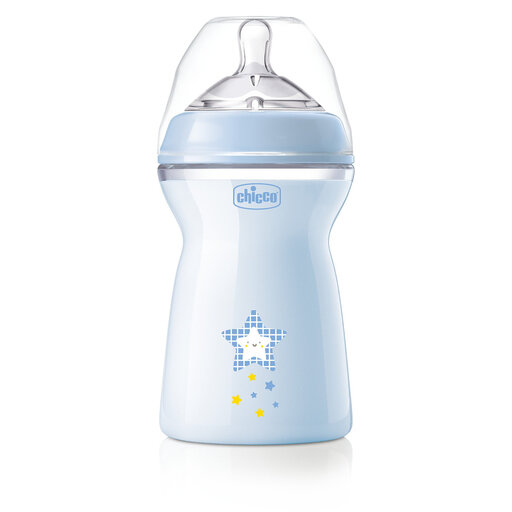
Why this product fits the profile: For babies from 6 months, the larger capacity can be practical for longer days, outings or regular bottle use.
The clear labelling as fast flow and from 6 months distinguishes this bottle clearly from newborn variants.
330 ml, fast flow, silicone teat, PP bottle body, double valve and dishwasher cleaning according to the product description.
We've put together a complete, regularly updated list of products that fully meet these strict selection criteria and the safety regulations in force in the EU.
For newborns, according to product information, the 150 ml variant with normal or slow flow is intended. The 250 ml models are classified from around 2 months and the 330 ml fast flow models from 6 months. The information on the product page and your baby's feeding behaviour are also decisive.
The breast-like shape and angled teat are designed, according to the manufacturer, for switching between breast and bottle. A baby bottle for combination feeding can support this transition structurally. However, whether your baby accepts the bottle is individual and cannot be guaranteed.
A teat should be checked for cracks, deformation and material weakness before each use. If visible damage is present, replace it immediately. Some product information also recommends regular replacement, for example after approximately two months. The specific manufacturer instructions for the variant you bought take priority. The bottle itself should also be disposed of if it shows cracks, deep scratches or permanently damaged threads.