For reheating portions
If you mainly want to reheat chilled portions thoroughly during the renovation, look for a straightforward microwave with easy-to-control time and power settings.


If you mainly want to reheat cooked chicken casserole, an easy-to-use solo microwave should be enough. A grill or convection function is useful if you also want to brown toppings or bake during the renovation. Before you buy, check that your casserole dish will fit inside the cavity and on any turntable. For safe reheating, the German Federal Institute for Risk Assessment recommends reaching at least 70 °C for two minutes throughout. Rated power and automatic programmes alone cannot confirm this.
If you mainly want to reheat chilled portions thoroughly during the renovation, look for a straightforward microwave with easy-to-control time and power settings.
If you want to keep using your existing dish, compare its dimensions with the usable cavity, door opening and, where applicable, turntable. A flat base can be helpful for square dishes, but it does not guarantee a good fit.
If you also want to brown toppings or bake during the kitchen renovation, consider a combination model with a grill or convection function. Make sure you have enough worktop space for it.
Right for you if: You mainly reheat cooked casserole and don't need an oven alternative.
Bear in mind: A solo microwave does not have a grill or convection function.
Right for you if: You also want to brown the top of your food from time to time.
Bear in mind: Grill and microwave power serve different purposes and should not be confused.
Right for you if: You also need to do some baking while the kitchen is being renovated.
Bear in mind: Check that the larger appliance will fit in its temporary location.
The percentages relate to the main buying priorities when reheating chicken casserole during a kitchen renovation.
| Priority | What to check when buying | Who is this important to? |
|---|---|---|
| Controlled reheating | Time and power settings; whether you can stir or rearrange the food and check its temperature in several places. | When I reheat chilled chicken casserole, I also want to check that it is hot enough in the middle. Around 33% of consumers are likely to have this as their main priority. |
| A casserole dish that fits | Compare the dish, including handles and lid, with the cavity dimensions, door opening and, where applicable, turntable diameter. | If I want to keep using my square or large casserole dish, it needs to fit properly. Around 25% of consumers are likely to care most about the size of their dish. |
| Additional oven function | Choose a grill or convection function only if you plan to use it during the renovation; check power ratings separately for each heating mode. | If I also want to brown toppings or bake during the renovation, I need more than a basic reheating function. Around 25% of consumers are likely to have this as their main priority. |
| Space and power connection | Check the external dimensions, door opening and cable length against the space available and the power socket. | If I set up the microwave in a temporary kitchen area, the appliance and power connection need to work well there. Around 17% of consumers are likely to care most about limited worktop space. |
A generous capacity in litres does not tell you whether a dish will fit on the turntable or have enough headroom. A flat base will not solve every sizing issue either.
Measure the dish, including handles and lid, and compare the dimensions with the cavity, door opening and turntable. You may need to use a different dish that fits.
Each heating mode has a different purpose. A wattage rating for the grill does not tell you the microwave power.
If you mainly reheat casserole, start by assessing the microwave function. Choose additional features based on whether you really want to brown toppings or bake.
Cool spots can remain in a poultry dish even when the surface feels hot. An automatic programme cannot confirm the temperature inside.
Stir the casserole partway through or rearrange it. The German Federal Institute for Risk Assessment recommends reaching at least 70 °C for two minutes throughout when reheating food.
The models compared range from a solo microwave for reheating to a combination model with grill and convection.
The MG 20 Ecostyle Ceramic and MCG 25 Ceramic chef models are worth comparing if you have dishes that could benefit from a flat base.
In the models compared, a grill microwave for reheating is set against a larger combination model for additional oven tasks.
The NN-SD36 solo microwave is a useful comparison for households that want to reheat food without a grill or convection function.
The YC-MG01E-B represents a microwave with an additional grill in this model comparison.
The models below include solo microwaves for reheating, as well as combination models with grill or convection for additional tasks during a kitchen renovation.
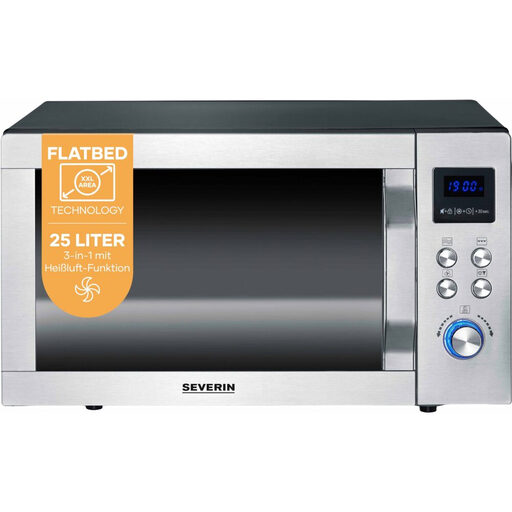 No image available
A good choice if you want to use the grill or convection function during the renovation, as well as reheat food.
900 W microwave power; grill and convection; flat base. These specifications apply to the MW 7777 model.
 No image available
An option if you mainly reheat individual portions and do not need a grill or convection function.
19 l capacity; 700 W; inverter technology; six power levels; defrost function. Check that your dish fits inside before you buy.
 No image available
For anyone looking for a solo microwave with power levels and a defrost function for reheating food.
20 l; 700 W; six power levels; defrost function; 30-minute timer; turntable with 360° rotation.
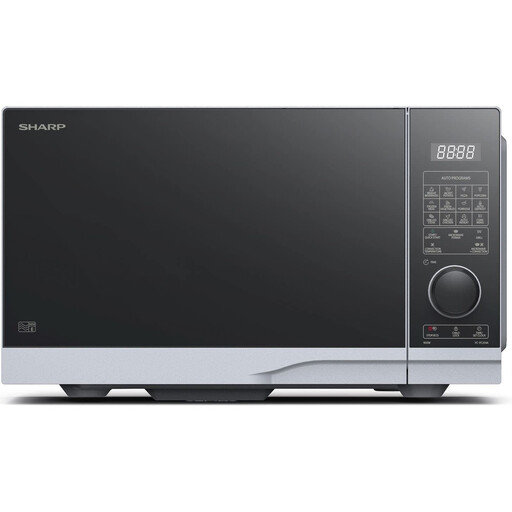 No image available
A combination option if you want to grill or use convection as well as reheat food.
25 l; microwave, grill and convection. Check that your casserole dish fits on the turntable.
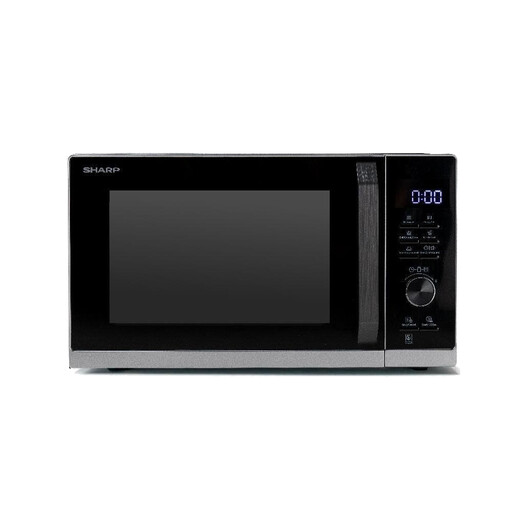 No image available
A practical option for a temporary kitchen if you want to use the grill and convection functions as well as reheat food.
27 l; 900 W microwave power; 1,000 W grill power; 2,100 W convection power; six microwave power levels. The power ratings refer to different heating modes.
Reheat the casserole in microwave-safe cookware, stirring or rearranging it partway through, and check the temperature in the centre too. The German Federal Institute for Risk Assessment recommends at least 70 °C for two minutes throughout; an automatic setting cannot confirm this.
Only if both the dish and lid are suitable for the heating mode you are using. Check the product instructions and observe any temperature or power limits. The German consumer advice centre points out that not every lid is microwave-safe; you also need to check that it is approved for use with the grill and convection functions.
Measure the available space and room to open the door, and check the power connection, cable length, installation requirements and ventilation instructions in the manual for your chosen model. Elektro+ highlights the importance of planning socket locations when modernising a kitchen; this does not mean there is one standard minimum clearance for all microwaves.
The seller, rather than the manufacturer, is generally responsible if a product is faulty. The German consumer advice centre distinguishes statutory consumer rights from a voluntary guarantee; the rights and time limits that apply in a particular case depend on the circumstances.
Look for the CE mark and the required German-language operating and safety instructions. Germany’s Federal Network Agency lists correct CE marking as something to check; it is not an independent quality mark.