Households where people eat at different times
If you don’t all eat together, you can reheat just the next portion and keep the remaining food chilled until you need it. The BfR provides advice on safe chilling and reheating.


For cooked chicken casserole that will be eaten in portions at different times, a solo microwave is usually sufficient, provided the dish fits in the cavity and you can adjust the power. An inverter may offer additional power levels; a grill or convection function is mainly useful if you want a browned top. According to the German Federal Institute for Risk Assessment (BfR), no appliance feature replaces refrigerating the remaining portions, stirring the casserole and checking that it has been heated thoroughly throughout.
If you don’t all eat together, you can reheat just the next portion and keep the remaining food chilled until you need it. The BfR provides advice on safe chilling and reheating.
If portion sizes or dishes vary, the cavity dimensions and easy-to-adjust power settings are important factors to consider. You can find relevant appliance specifications from brands including Sharp, Severin and Panasonic.
If you want a browned top as well as a hot meal, consider a microwave with a grill or convection function. IMTEST distinguishes these combination appliances from simpler reheating models; Panasonic also offers dedicated models with an oven function.
A good choice if: You’re reheating cooked casserole in individual portions and don’t expect a browned top.
The trade-off: Without a grill function, the appliance is limited to microwave cooking; you’ll still need to stir the food and check its temperature.
A good choice if: You reheat different portion sizes and want more power levels to choose from.
The trade-off: Manufacturer claims about more even heating don’t replace checking the portion you’re reheating.
A good choice if: You want a browned top as well as a hot centre.
The trade-off: These extra functions aren’t necessary for simply reheating individual portions; browning doesn’t tell you whether the centre is hot enough.
| What matters | What to look for when buying | Who is this important for? |
|---|---|---|
| Heating through evenly | Adjustable power and time; the ability to stir the casserole while it’s heating. | If I’m heating chicken casserole for people who’ll eat later, I also want to be able to check the centre. Around 36% of consumers prioritise thorough heating. |
| Repeated use | Check that time and power are easy to set and that the programmes suit the food. | If you’re reheating several portions one after another, you’ll want to repeat the settings without unnecessary steps. Around 29% of consumers prioritise ease of use. |
| Dish and space | Compare the dish’s width and height with the cavity and turntable; measure the space where you plan to put the appliance. | If I want to keep using a particular casserole dish, it needs to fit in the cavity and be able to move around inside it. Around 21% of consumers prioritise dish fit and available space. |
| Browned top | Only look for a grill or convection function if you intend to use it. | If you want a browned top as well as a hot centre, look for a suitable extra function. Around 14% of consumers prioritise this. |
A browned top isn’t a reliable indication that cooler spots inside the chicken casserole have also been heated thoroughly.
Choose a grill or convection function if you want a crispy top. Check the temperature of the food separately.
The capacity in litres alone won’t tell you whether a wide dish will fit or the turntable will be able to rotate freely.
Measure the dish you use and compare its dimensions with the cavity and turntable. Check the space where you plan to put the appliance, too.
If your dish is very wide, you may need to use a smaller dish for each portion instead.
For the Bosch FFL020MW0, a retailer’s description conflicts with the manufacturer’s information about the controls.
Before buying, check the full model number and key features against the manufacturer’s information.
The R-200WW is an example of a compact solo microwave with mechanical controls.
The MW 7770 is an example of a solo microwave with mechanical controls.
The freestanding FFL020MW0 is an example of a 20-litre solo model.
The NN-SD38 is an example of a solo microwave with inverter; the NN-CD575M is a separate model with a convection function.
The MS23B3515AS/EN is a solo alternative with defrost programmes and a ceramic-enamel interior.
The Joybuy appliances below include solo microwaves for reheating individual portions, as well as a combination model with grill and convection functions for anyone who also wants a browned top.
 No image available
An option if you want to reheat individual portions using a choice of power levels.
19 l, 700 W, six power levels and a defrost function; the description lists rotary controls for power and time.
 No image available
An option if you’re looking for a solo microwave with manually adjustable power and time.
20 l, 700 W, six power levels and a 30-minute timer; the description lists two rotary controls.
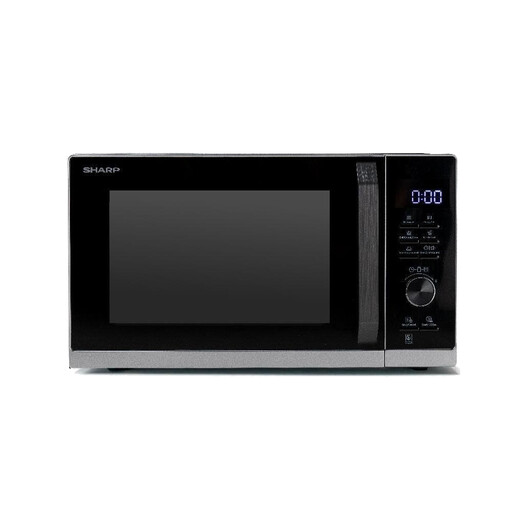 No image available
An option if you want to use the grill or convection function as well as reheat food.
27 l and 900 W microwave output; the product title also lists 1.000 W grill output and 2.100 W convection output.
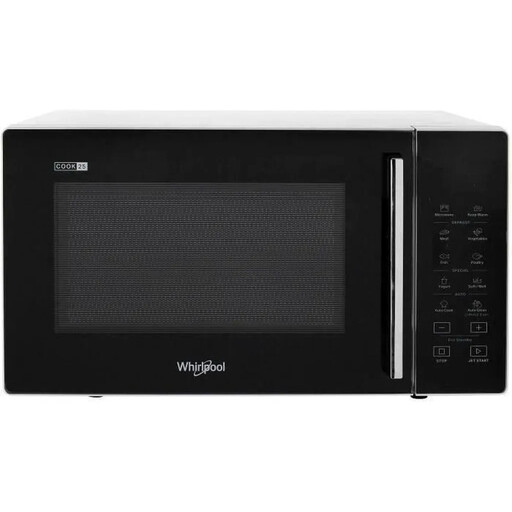 No image available
An option if you’re looking for a solo microwave with several power levels and a turntable.
25 l, 900 W, seven power levels and a 27 cm turntable.
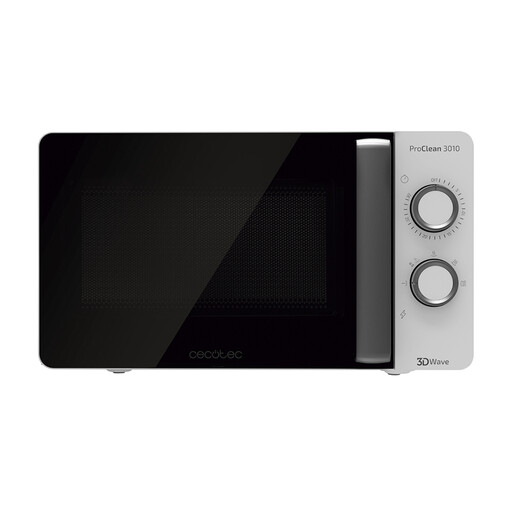 No image available
An option if you’re looking for a solo microwave with several power levels for individual portions.
20 l, 700 W and six power levels.
The BfR recommends chilling leftovers that you plan to eat later. Divide large quantities into shallow portions, chill them to below +7 °C within a few hours and eat them within two to three days.
The BfR recommends at least 70 °C for two minutes throughout the food. Stir the casserole partway through heating in the microwave and, if in doubt, check the temperature with a meat thermometer.
Only use cookware that’s suitable for microwave use, and follow its temperature and wattage limits. The Verbraucherzentrale lists glass and ceramic as possible materials; the BfR advises against using melamine resin dishes to heat food in the microwave.
For consumer purchases, the retailer is generally responsible for the statutory warranty. The Verbraucherzentrale gives a period of two years from delivery; a voluntary manufacturer’s guarantee is separate and is subject to its own terms and conditions.