What should you look for when buying?
Fridge without a freezer
A good fit if: you only prepare meals for the next two to three days, or already have a suitable separate freezer.
Keep in mind: without freezer space elsewhere, this type of appliance won’t work for portions you plan to eat later in the week.
Fridge-freezer
A good fit if: you prepare meals for several working days in one go and want to freeze the portions you’ll eat later.
Keep in mind: freezer space takes up part of the appliance’s capacity, so compare fridge and freezer volumes separately and check the space available for installation.
For cooked leftovers, the BfR recommends cooling them to below +7 °C within a few hours and eating them within two to three days if refrigerated. Make room in the freezer for later portions and check the temperature where the containers will actually be stored.
| Buying priority |
What to look for |
Who will find this most important? |
| Reliable cooling |
Allow room for covered containers in a suitable chilled area, and check the temperature where food is stored while the appliance is in use. |
When I store cooked portions, I want to be able to check the temperature where they’re actually kept. That’s why around 33% of consumers prioritise controllable cooling. |
| Freezer space for later portions |
Consider the stated freezer capacity separately from the fridge capacity, and allow room for portioned containers. |
When I prepare meals for several working days in one go, I need extra storage space for later lunches. Around 27% of consumers put freezer space first. |
| Dimensions and container space |
Measure the space and your containers; check the specific model’s dimensions, door opening and adjustable shelves. |
When my kitchen has limited space, the appliance needs to fit and have room for my containers. Around 20% of consumers prioritise suitable dimensions and usable space. |
| Energy consumption |
Compare annual energy consumption for appliances with a fridge-freezer layout that suits your needs; calculate running costs using your own electricity tariff. |
When I choose an appliance that suits my needs, I also want to take its stated energy consumption into account. Around 20% of consumers put running costs first. |
Joybuy products for lunches and weekly meal prep
This selection includes a compact fridge with a freezer compartment and fridge-freezers with separately stated fridge and freezer capacities. This lets you compare appliances for lunches you’ll keep chilled in the short term with models that offer stated freezer space for portions you’ll eat later.
 No image available
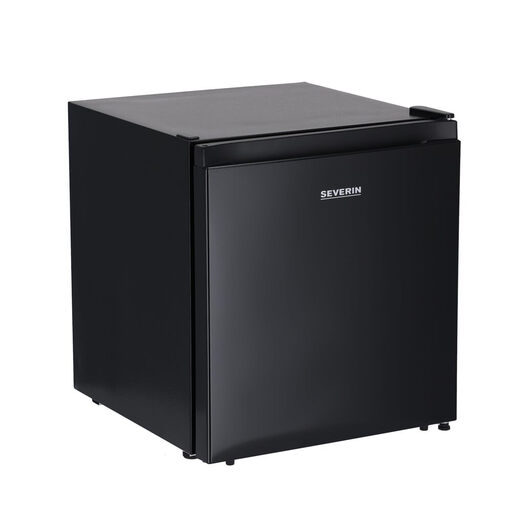
Severin KB 8879 mini fridge with freezer compartment
For smaller amounts you plan to eat within two to three days; check the temperature where they’re actually stored.
45 l total capacity, including a 5-l freezer compartment; adjustable thermostat and removable shelf.
Dimensions: 41.8 × 44.8 × 47.8 cm.
View at Joybuy
 No image available
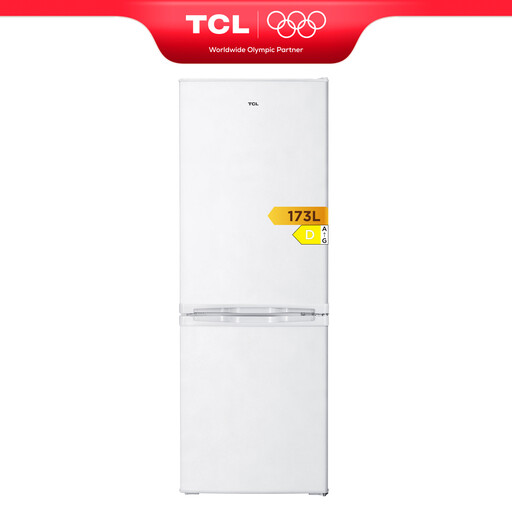
TCL RF225BWD0AM fridge-freezer
If you want to freeze portions for later in the week, the separately stated capacities can help you plan; you’ll need to check the storage temperature where your lunch boxes are kept.
173 l total capacity: 121 l fridge capacity and 52 l freezer capacity.
Adjustable shelves; LED lighting; energy rating D.
View at Joybuy
 No image available
LG GBBSJ1CCPY fridge-freezer
Fridge and freezer capacities are listed separately for chilled lunches and portions you plan to freeze for later; check the temperature where they’re stored.
333 l total capacity: 220 l fridge capacity and 113 l freezer capacity.
Three fridge shelves and three freezer drawers; temperature control, plus Fast Cooling and Fast Freezing functions according to the product description. Energy rating C.
View at Joybuy
 No image available
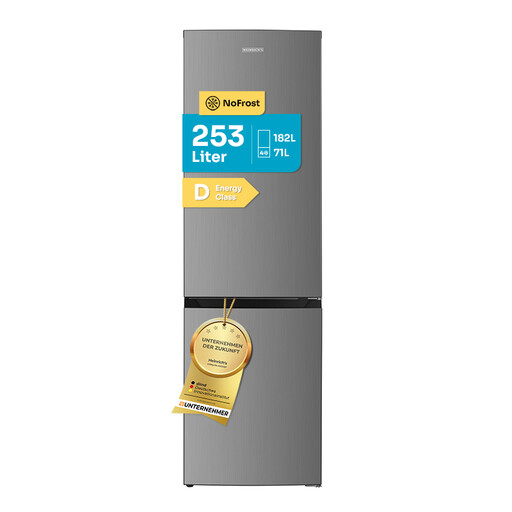
Heinrich’s fridge-freezer, 253 l
If you want to freeze lunch portions for later, you can plan around the separate fridge and freezer capacities; check the temperature where they’re actually stored.
182 l fridge capacity and 71 l freezer capacity; 54 cm wide with a reversible door.
The stated temperature setting ranges from 2 °C to 8 °C. For perishable foods, the BfR recommends 2 °C to no more than 7 °C, so check the temperature where food is stored.
Three height-adjustable shelves according to the product description.
View at Joybuy
 No image available
exquisit KGC5232-60-E-040C fridge-freezer
Fridge and freezer capacities are listed separately for lunches and portions you plan to freeze for later; check that your containers will fit in the fridge compartment.
173 l total capacity: 121 l fridge capacity and 52 l freezer capacity; four-star freezer compartment.
49.5 cm wide and 142.5 cm high; reversible door and three glass shelves according to the product description.
View at Joybuy
Frequently asked questions
Can I cook chicken on Sunday and keep it in the fridge until Friday?
That doesn’t follow the BfR’s advice for refrigerated leftovers, which should be eaten within two to three days. Plan a suitable alternative for portions you’ll eat later in the week, such as freezing them, rather than relying on a larger fridge compartment or a marketed freshness zone.
How should I prepare several portions for refrigeration?
The BfR recommends cooling leftovers to below +7 °C within a few hours. You can divide larger quantities between several shallow containers to help them cool. Then store the portions covered and keep perishable foods chilled while you’re travelling, too.
What should I check after installing my fridge?
Check the temperature where the cooked portions will actually be stored. The BfR recommends keeping perishable foods in the fridge at 2 °C to no more than 7 °C; a display or a marketed special compartment on its own won’t tell you the temperature at every storage point.
What running costs should I consider when comparing fridges?
Compare the stated annual energy consumption in kWh and work out the cost using your own electricity tariff, once you’ve found an appliance with a fridge-freezer layout that suits your needs. You can only compare potential savings accurately using the same electricity tariff and period of use.
Which energy label applies to a new fridge?
Fridges and freezers use the rescaled EU energy label, with ratings from A to G. The European Commission introduced this scale for the product group on 1 March 2021; according to Your Europe, the energy label must also be visible when shopping online.


