What should you look for when choosing one?
First decide whether you want to pressure cook or simmer without pressure in your temporary kitchen. Then check the space you have and the appliance’s permitted fill level.
Pressure cooking
A good fit if: you want to make the most of a shorter cooking window and can position the appliance safely, with room to release the pressure.
Remember to allow for: the time it takes for pressure to build and release fully. The lid must not be opened until then.
Simmering without pressure or slow cooking
A good fit if: you’d rather cook without pressure and want to use the Boil or Slow Cook setting for your routine.
Remember to allow for: a longer cooking phase and the permitted fill level stated in the instructions.
| What matters |
What to check before buying |
Who it matters to |
| A safe place to position it |
Check the appliance dimensions and lid clearance against the space you have. Read the instructions for placement requirements and power supply. |
If I only have one clear, stable surface while the kitchen is being renovated, the appliance, lid and steam outlet all need to fit there. Around 36 % of consumers put having a safe temporary cooking station first. |
| A short cooking window |
Check for a pressure cooking function and read the model-specific instructions for releasing pressure. Don’t just consider the programmed cooking time. |
If I don’t have much time to cook, I’ll consider pressure cooking, but I’ll allow for the time it takes pressure to build and release. For around 29 % of consumers, a shorter cooking phase is the top priority. |
| Usable capacity for your batch |
Compare the combined amount of chicken, vegetables and water with the permitted fill level. Check the stated capacity and usable capacity separately. |
When making stock to store, I need to fit all the ingredients within the fill limit. Around 21 % of consumers prioritise having enough usable capacity. |
| Cooking without pressure |
Look for Boil or Slow Cook in the model description. Only consider functions you actually plan to use. |
If I’d rather simmer without pressure and want to keep using the appliance afterwards, I’ll check which cooking methods are specifically listed. Cooking without pressure is the top priority for around 14 % of consumers. |
A guide to some relevant brands
The details below relate to the model ranges mentioned and their documented features. They don’t necessarily apply to every appliance from each brand.
Rommelsbacher
The MD 1000 MeinHans is worth considering if you want to compare pressure cooking with slow cooking and check whether its usable capacity suits your batch.
- The manufacturer lists a 6-l pot, 4 l usable capacity and two pressure settings.
- When planning your stock, the 4 l usable capacity is what matters, not the pot’s total capacity.
Tefal
The Turbo Cuisine CY7548 is an option if you want to compare pressure cooking, slow cooking and searing in one appliance.
- Tefal lists a 5,0 l capacity and 3,2 l usable capacity.
- The manufacturer’s claims about speed or energy savings aren’t independent evidence of how well it makes chicken stock.
Instant Pot
The Pro PRCPC601WE is an option if you want to compare a 5,7-l model with pressure cooking and other cooking methods.
- The instructions for this model list 220–240 V, 1.000–1.200 W and a stainless steel inner pot.
- The 5,7 l figure doesn’t mean you can fill it with that much chicken stock. The instructions and fill limits are what count.
Russell Hobbs
The Good to Go 28270-56 is a pressure-free alternative if you want to use Boil, Simmer or Slow Cook.
- Russell Hobbs lists a 6,5 l stated capacity and a removable control panel.
- Pressure cooking isn’t listed for this model, so don’t treat it as a pressure cooker.
Joybuy products for making chicken stock
This selection includes appliances for simmering without pressure, as well as multicookers with pressure cooking and slow cooking functions. Check your planned quantity of stock against the fill limit and instructions for each model.
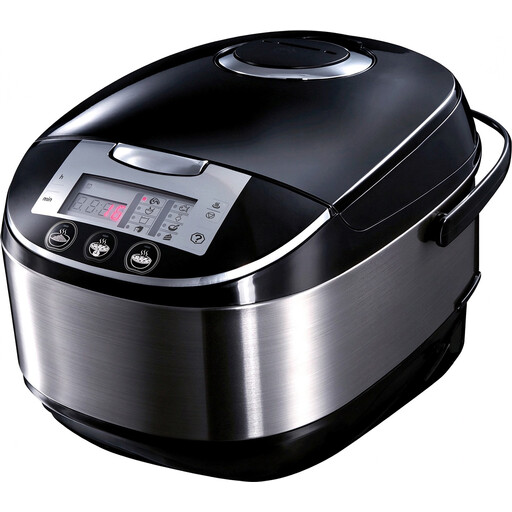 No image available
11-in-1 Multicooker, 5 l, 900 W
The description lists Soup and Slow Cook among the cooking options, making this one to consider if you’re looking for an appliance for these methods.
The product name specifies 5 l, 900 W and a digital display. The description also mentions a timer and keep-warm function.
View at Joybuy
 No image available
IAGREEA Slow Cooker, 2,6 l
For simmering without pressure or slow cooking; the product description lists soup and slow cooking.
Features include a 2,6 l capacity, two manual heat settings and a glass lid with a steam vent. Pressure cooking isn’t listed.
View at Joybuy
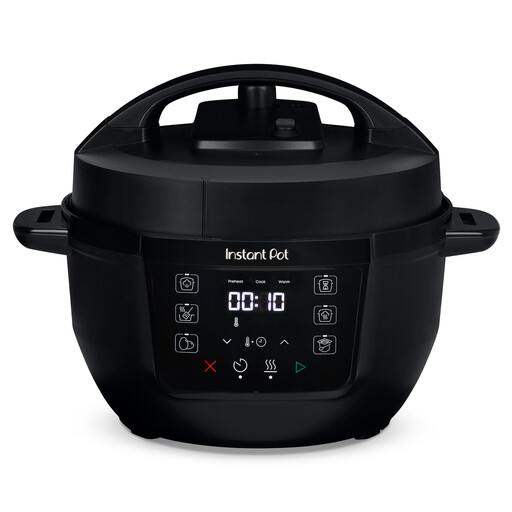 No image available
Instant Pot Multicooker Mini Black, 3.8L, 140-8000-01-EU
Worth considering if you’re looking for a compact model with pressure cooking and slow cooking functions.
Features listed include a 3,8 l capacity, a stainless steel inner pot and dishwasher-safe parts. The description says it serves up to four portions.
View at Joybuy
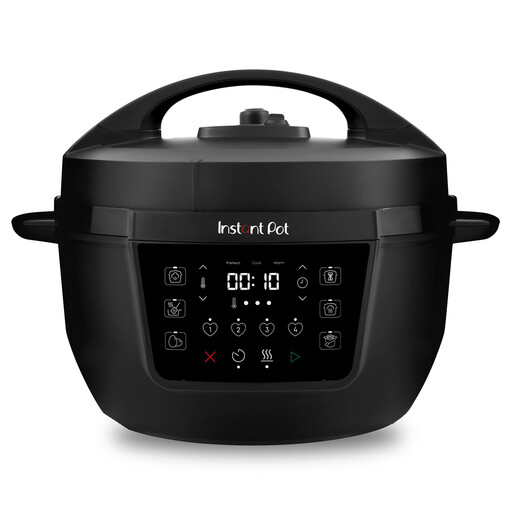 No image available
Instant Pot Multicooker XL, 7.1L, Black, 140-0019-01-EU
Could be a good choice for a larger batch if you want to use pressure cooking and slow cooking in one appliance.
The description lists a 7,1 l capacity, a stainless steel inner pot and up to eight portions. Soups and stews are among the suggested uses.
View at Joybuy
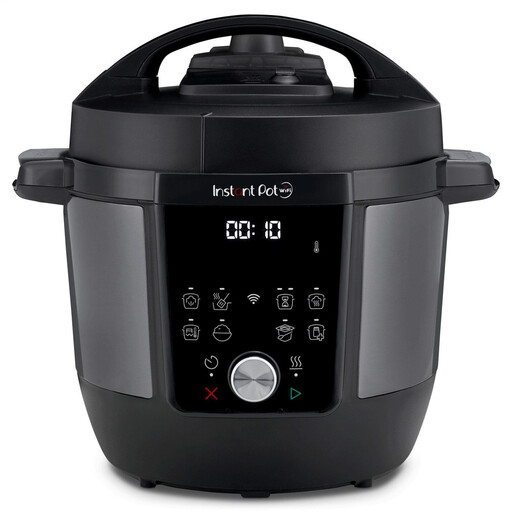 No image available
Instant Pot Multicooker Plus, 5.7L, Black, 112-2001-01-EU
Worth considering if you want to compare pressure cooking and slow cooking for different ways of preparing food.
Features listed include a 5,7 l capacity, an automatically locking lid and a steam release valve. The description also mentions dishwasher-safe parts.
View at Joybuy
Frequently asked questions
Can I use a multicooker on any free surface while my kitchen is being renovated?
No. Place the appliance on a stable, level surface in line with its instructions, and leave room for steam and hot contents. The instructions for one Instant Pot model require a stable, non-flammable surface and warn against placing it near water or blocking the ventilation openings. Requirements may differ between models.
What should I know about opening and cleaning a pressure multicooker?
Only open the pressure lid once the pressure has fully released, and follow the instructions for your specific model. The Instant Pot Duo instructions warn against forcing the lid open. Also check how you’ll clean the inner pot, lid and sealing ring at your temporary cooking station.
How should I store chicken stock if I can’t use my fridge during the renovation?
If you don’t have adequate refrigeration, don’t plan to make a batch for storage. In its kitchen hygiene guidance from March 2026, the German Federal Institute for Risk Assessment (BfR) recommends cooling hot food promptly to below 7 °C for longer storage, and keeping perishable food at 2 °C to no more than 7 °C. The BfR also recommends heating food to 70 °C for at least 2 minutes throughout, and keeping utensils for raw and cooked ingredients separate.
What marking should an electric multicooker sold in Germany carry?
For electrical appliances covered by the relevant harmonised EU rules, CE marking is one of the applicable conformity requirements. It is the manufacturer’s declaration, not an independent quality mark. As part of its market surveillance, the German Federal Network Agency checks factors including product marking, product traceability and safety instructions.
Are a manufacturer’s guarantee and the statutory warranty the same thing?
No. For consumer purchases, the statutory warranty generally applies against the seller; the German government gives the general period as two years. A guarantee, by contrast, is an additional voluntary promise and is subject to the guarantor’s terms.


