Batch cooks making large quantities
You want to prepare several meals from one batch. So, check the actual usable volume for ingredients and liquid, and allow space for portioning and cooling too.


For regular batch cooking, the key isn’t the stated pot capacity but the usable volume within the fill limit for poultry, vegetables and liquid. Then check how pressure is released, how easy the lid and seal are to clean, and whether you can cool the finished stock in portions. A larger appliance only makes sense if the quantity you want to cook and the space you’ll need afterwards fit your routine.
You want to prepare several meals from one batch. So, check the actual usable volume for ingredients and liquid, and allow space for portioning and cooling too.
You want to cook stock under pressure and are particularly keen on clear fill limits and a pressure-release method you can control.
You use the pot for other dishes too and want to be able to clean the lid and seal regularly. Also check that any replacement parts are explicitly compatible with your full model number.
Check batch size, pressure release and cleaning separately: the pot capacity doesn’t automatically tell you how much stock you can make in one go.
| What matters | What to check before buying | Who should pay particular attention? |
|---|---|---|
| Usable capacity | Compare the permitted fill level with the amount of poultry, vegetables and liquid you plan to use. Rommelsbacher lists 4 litres of usable capacity for the MD 1000, which has a 6-litre pot; Tefal gives the CY7548 a usable capacity of 3.2 litres, with a stated capacity of 5.0 litres. | If you want to prepare several meals from one batch, what matters is how much fits within the fill limit. Around 33 % of consumers put usable capacity first. |
| Pressure release and cooling | Check the instructions for releasing pressure and make sure you have containers and fridge space ready for portioning. The Instant Pot Duo instructions warn against forcing the lid open before the pressure has fully released; the German Federal Institute for Risk Assessment (BfR) highlights the risks of inadequately chilled food. | If you want to keep clear of hot steam when opening the cooker and handle the finished stock safely, pay particular attention to what happens after cooking. Around 27 % of consumers prioritise this. |
| Cleaning and replacement parts | Check which parts can be cleaned according to the appliance instructions and whether seals fit your exact model number. F.A.Z. Kaufkompass described the tested Rommelsbacher MD 1000 as awkward to clean. | If you often make stock and other dishes, easy cleaning and compatible replacement parts matter. Around 20 % of consumers look first at maintenance and wear parts. |
| Ease of use and other dishes | Check that the specific model has a pressure-cooking function and that you find it easy to use. Tefal describes the CY7548 as having a rotary control and ten automatic programmes. | If you want to make other dishes in the same appliance as well as stock, look for controls that suit you and useful extra functions. Around 20 % of consumers prioritise versatility and ease of use. |
Stated capacity and usable capacity are different. For example, the Rommelsbacher MD 1000 has a 6-litre pot but 4 litres of usable capacity; the Tefal CY7548 has capacities of 5.0 and 3.2 litres respectively.
Allow for poultry, vegetables and liquid within the fill limit for your specific model. If the pot is too small, you may need to cook in more batches.
The process also includes building and releasing pressure, straining, portioning and cooling. Don’t open the lid until the pressure has fully released.
Plan for the whole batch-cooking session, not just the stated programme time, and follow your appliance’s instructions when opening it.
Cooling and portioning a larger quantity takes time too, and you’ll need suitable containers.
A pressure-cooking programme doesn’t prove that stock in a sealed jar will keep without refrigeration. The BfR distinguishes ordinary heating from processes that treat heat-resistant spores during food canning.
Don’t store cooked stock without refrigeration just because you made it in a pressure cooker.
The MD 1000 MeinHans combines pressure cooking with other programmes and states a usable capacity that can help you plan a batch of stock.
The Turbo Cuisine CY7548 is an option for smaller batches, with a pressure-cooking function and rotary control.
The Duo instructions are relevant to pressure cooking and fill limits for the Duo models they cover.
Midea offers an electric multi-pressure cooker, the MPC802SAMK.
These electric pressure cookers and multi-cookers are options for making stock under pressure and batch cooking. For each model, compare its stated pot capacity with the permitted fill level in the instructions.
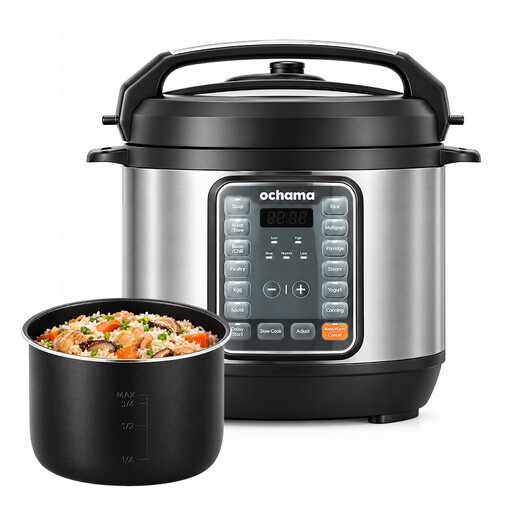 No image available
For making stock under pressure and batch cooking; the product name states a capacity of 6 litres.
Do not exceed the fill mark; according to the product details, a lower fill limit applies to ingredients that expand.
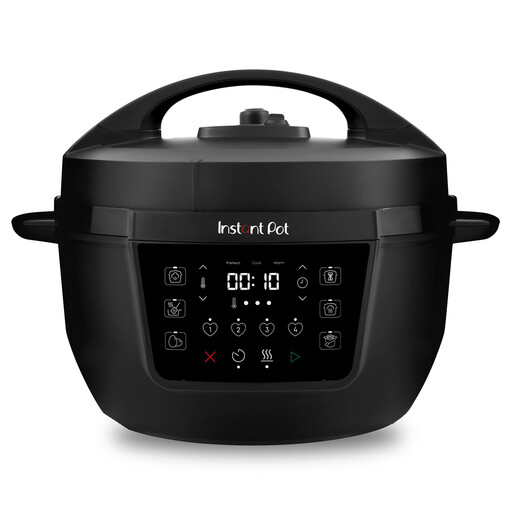 No image available
An option for making stock under pressure; the stated pot capacity alone doesn’t determine how much you can cook within the fill limit.
The product name states a capacity of 7,1 litres and model number 140-0019-01-EU.
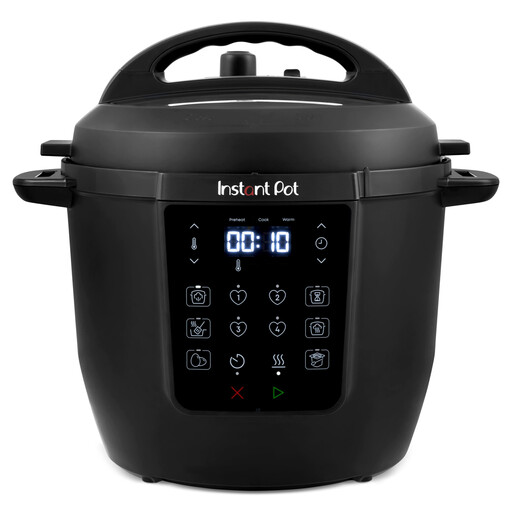 No image available
For making stock under pressure and regular batch cooking; check the permitted fill level in the appliance instructions.
Instant Pot includes model number 112-2000-01-EU in its compatibility list for a sealing ring set. Check the full model number before buying replacement parts.
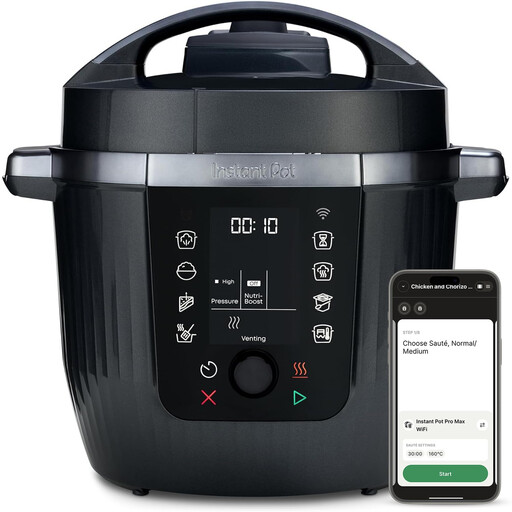 No image available
For making stock under pressure and batch cooking; the product name states a capacity of 5,7 litres and a power rating of 1200 W.
The pressure must be fully released before you open the lid. Take care around hot steam at the release valve.
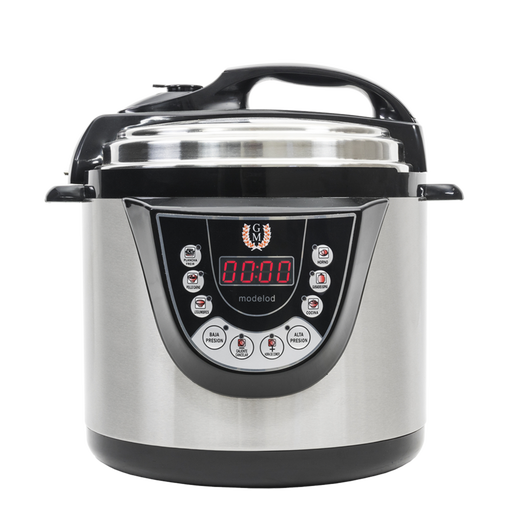 No image available
An option for making stock under pressure and a range of cooking tasks; the product name states a capacity of 6 litres.
Keep to the maximum fill mark and don’t open the lid until the pressure has fully released.
No. Stated capacity and permitted fill level aren’t the same. Rommelsbacher lists 4 litres of usable capacity for the MD 1000, which has a 6-litre pot; the Instant Pot Duo instructions limit the fill level of the Duo models they cover to no more than two-thirds, and less for ingredients that expand. Always follow the instructions for your specific model.
Follow the pressure-release instructions for your model and don’t open the lid until the pressure has fully released. The Instant Pot Duo instructions specifically warn against forcing the cooker open before then.
Portion the stock and keep it chilled; a cooker’s keep-warm function isn’t a way to store it long term. The German Federal Institute for Risk Assessment highlights the risks of inadequately chilled food.
Not every sealing ring fits every model. Instant Pot lists sealing rings for specific 5,7-litre model numbers; before buying, check your appliance’s full model number against the compatibility list.
It is required if the specific appliance falls under harmonised EU rules that require it. The EU explains that the manufacturer is responsible for compliance and that CE marking is not a certificate from a central EU testing body. Check the details for the specific version.
No. A pressure-cooking programme does not demonstrate that the stock can be safely preserved. The German Federal Institute for Risk Assessment distinguishes ordinary heating from the treatment of heat-resistant spores during food canning.