Class organisers making a larger batch of stock
If you want to fit the bones, vegetables and liquid for several participants into the pot in one go, usable capacity and the specific model’s fill limits are what matter.


Choose a slow cooker based on the total quantity of bones, vegetables and liquid, and check the fill limits for the specific model. The stated pot capacity does not automatically tell you how much finished stock you’ll get. If your class starts at a set time, a cooking timer you can adjust can be useful; for a more flexible schedule, a basic slow cooker may be enough. Whatever automatic functions it has, you’ll still need to plan for heating the stock through, keeping it hot and cooling it promptly.
If you want to fit the bones, vegetables and liquid for several participants into the pot in one go, usable capacity and the specific model’s fill limits are what matter.
If you’re working to a fixed schedule, an adjustable cooking timer can be useful. When it’s time to serve, the stock’s actual temperature matters too, not just the keep-warm function.
For smaller batches, consider the space the appliance takes up, how you’ll portion the stock and how easy it is to clean. Extra cooking functions are most useful when you’ll also use them for other recipes.
First, compare the total batch with the model’s fill limits. Then plan for cooking time, temperature checks and space for serving.
| What matters | What to check before buying | Who should pay particular attention? |
|---|---|---|
| Batch size | Compare the total quantity of bones, vegetables and liquid with the fill limits for the exact model. Don’t assume the stated capacity equals the amount of finished stock. | If I’m cooking for several participants in one go, I need room for all the ingredients. Around 31% of consumers are likely to prioritise batch size. |
| Cooking time and class schedule | Check the cooking time range and what happens when the programme ends. Keep-warm mode is no substitute for checking the temperature. | If the class starts at a set time, the cooking stage needs to fit the schedule. Around 25% of consumers are likely to prioritise being able to plan the cooking time. |
| Safe preparation and storage | Check the temperature of the food: the Federal Institute for Risk Assessment recommends heating it to at least 70 °C throughout for two minutes, and keeping it at a minimum of 60 °C throughout to hold it hot. Cool leftovers promptly. | When I’m cooking for others, I don’t want to rely on an appliance setting alone. Around 25% of consumers are likely to prioritise safe serving and handling. |
| Worktop space and extra functions | Check the dimensions and cleaning instructions for the insert and lid. Choose extra cooking programmes based on what you’ll actually use. | If worktop space is limited, I want to know whether the pot will fit and whether I’ll use its extra functions in class. Around 19% of consumers are likely to prioritise space and versatility. |
Bones and vegetables take up space before you add the liquid. The stated capacity doesn’t tell you how much stock will be left after straining.
Measure your planned batch and check the fill limits for the exact model before choosing a size.
A pot that’s too small may mean an extra cooking session and more time spent straining the stock.
A keep-warm function doesn’t prove that the stock has reached the required temperature throughout or that it will cool quickly enough for storage.
Plan to check the temperature, portion the stock and cool leftovers promptly, regardless of the appliance’s automatic functions.
Manufacturer specifications vary by model: Crock-Pot lists a timer of 30 minutes to 20 hours for the CSC063X; Ariete gives a maximum of five hours for the 2904/03’s slow-cook mode.
Check the time range for the exact appliance version against your recipe and class schedule. A longer adjustable cooking time is not, by itself, a guarantee of safety.
According to the manufacturer, the 6 l MaxiCook 22750-56 offers adjustable cooking time and could suit larger batches.
The manufacturer lists a capacity of 7.5 l and a digitally adjustable cooking time for the CSC063X. The CSC025X manual also describes a 3.5 l slow cooker.
According to the manufacturer, the VS-3915 is a 3.5 l slow cooker with two heat settings.
According to the manufacturer, the 2904/03 combines a 3.5 l pot with several cooking functions.
The Duo manual describes slow cooking alongside pressure cooking, for buyers who want to use both methods.
This selection of Joybuy products includes multi-cookers with a slow-cook programme, as well as a basic slow cooker for smaller batches.
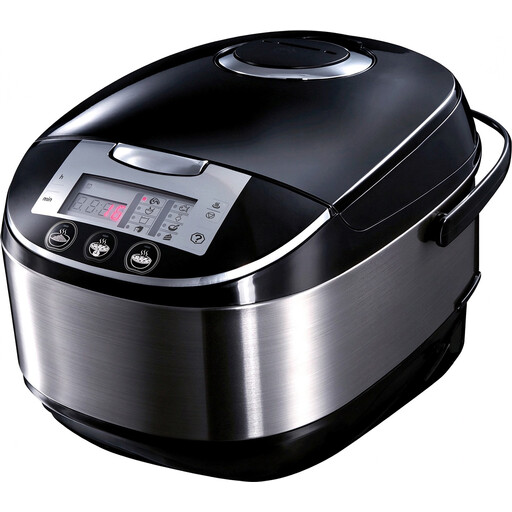 No image available
An option if you want to combine slow cooking with other cooking programmes and set a delayed start.
Specifications include 11 programmes, a 24-hour delay timer and automatic keep-warm mode. The appliance is described as a domestic appliance.
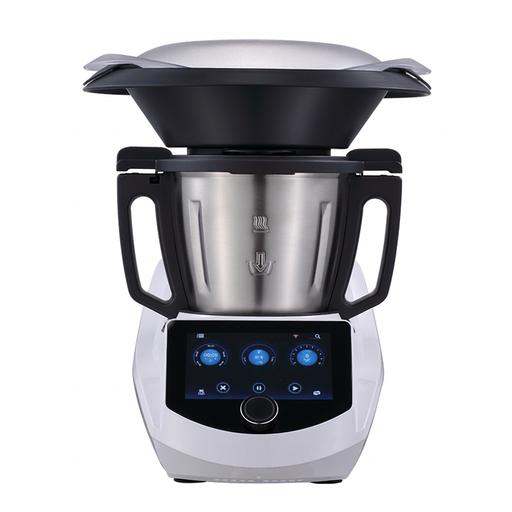 No image available
An option if you want to combine slow cooking with other cooking modes in one appliance.
The product description lists slow cooking and a colour screen.
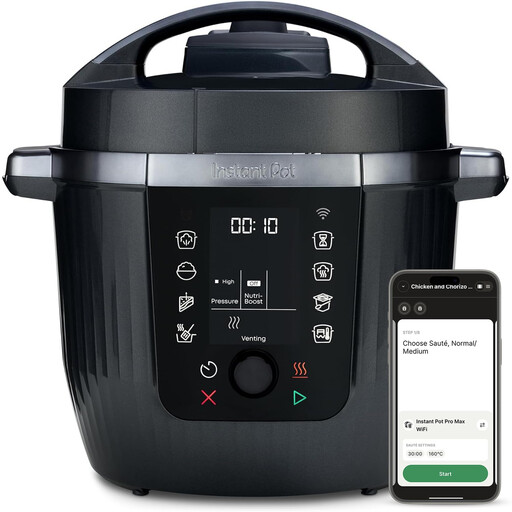 No image available
For a cooking routine where you want to combine slow cooking with other methods and adjust the cooking time and temperature.
Specifications include 5.7 l, 10-in-1 and 1200 W. The inner pot is described as dishwasher-safe. According to the description, the appliance is intended for domestic use, not commercial use.
 No image available
An option for a larger batch if you want to set a delayed start and keep the food warm after the programme finishes.
Specifications include 8 l, 9-in-1, 1200 W, a 24-hour delay timer and automatic keep-warm mode for up to 12 hours. The product description states that it serves up to 10 portions.
 No image available
For a smaller batch if manual heat settings are all you need and you’d also use a steaming insert.
Specifications include a 2.6 l capacity and two manual heat settings. The appliance is described as being for domestic use only, not commercial use.
Not necessarily. Add together the bones, vegetables and liquid to work out the total batch, then check the fill limits for the exact model. The capacity in litres refers to the stated pot volume, not a guaranteed quantity of finished stock.
The Federal Institute for Risk Assessment recommends heating food to 70 °C throughout for at least two minutes, then keeping it at a minimum of 60 °C throughout to hold it hot. You should cool leftovers promptly. A keep-warm button doesn’t tell you what temperature the stock actually reaches.
Only if the instructions for that specific insert say you can. For the Russell Hobbs MaxiCook 22750-56 insert, the manual lists gas and electric hobs, but doesn’t approve its use on induction.
You can’t determine this simply from the fact that it’s a cookery class. Regulation (EC) No 852/2004 provides an exemption for the domestic preparation, handling or storage of food for private domestic consumption. For food businesses, the Federal Portal describes registration with the relevant local food safety authority. If the class is organised as a business, check with the authority what registration and expertise are required for handling perishable food in your specific circumstances.