
Lieferung heute & morgen

Qualitätsgarantie

Willkommens-Angebote freischalten: KOSTENLOSE Lieferung | Bis zu 80 % RABATT | Kostenlose 30-Tage-JoyPlus-Testphase
App herunterladen
Furnishing a child's room often means creating maximum functionality within a limited space. A child's bed with a desk seems like the ideal solution, combining a place to sleep, study, and store belongings. However, the market is flooded with models of widely varying quality. A poorly considered decision can quickly lead to frustration, whether from wobbly frames or impractical details.
As a Joybuy Product Recommendation Officer, I see daily which features make a piece of furniture durable and useful. This guide will help you navigate the common pitfalls and make an informed choice that meets your child's needs.
Many attractively designed beds prove to be impractical in everyday use. Pay close attention to these three weak points to avoid a poor investment:
To make the right choice, you should focus on objective and measurable features. The following three parameters are crucial for safety, longevity, and functionality.
The foundation of any good bed is its material.
A multifunctional bed must excel in all its functions.
Your child's safety is the top priority.
Instead of making a one-size-fits-all recommendation, we have identified models tailored to specific needs and room situations.

Why this model fits: Ideal for parents seeking a complete and space-saving solution for a small child's room. It combines sleeping, studying, and storage in a single, thoughtfully designed piece of furniture.
The construction of solid pine wood and MDF provides a stable base that includes the desk. The two large drawers offer practical, highly usable storage space.
Fully integrated 3-in-1 solution. Raised side edges for mattress security and rounded corners for added protection.

Why this model fits: For parents looking for a safe bed with flexible storage. The free space underneath can be customised with storage boxes or, later, a separate desk.
The solid pine wood construction offers high stability. Instead of fixed, potentially impractical drawers, it provides 44 cm of clearance for flexible use.
Full-length guard rail for enhanced safety. The open area under the bed encourages creativity in room design.
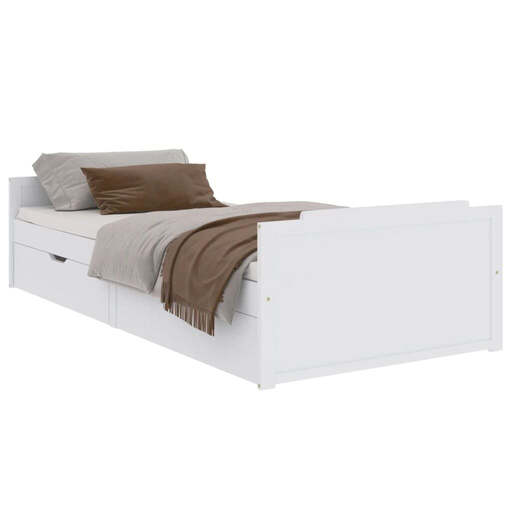
Why this model fits: Perfect for anyone whose main goal is to create order in the child's room. The focus is clearly on a sturdy bed and maximum integrated storage.
The solid pine wood construction guarantees longevity. The two large, integrated drawers provide generous and well-defined storage space that is easily accessible.
Classic design with a focus on stability and storage. The drawers make optimal use of the space under the bed.
We have compiled a complete, up-to-date list of products that meet these strict selection criteria and safety standards.
1. What mattress height is suitable for a child's bed with a desk? The recommended mattress height depends on the bed's design, particularly the height of the safety rails. Many manufacturers specify a maximum thickness, often between 13 cm and 20 cm. A thinner mattress ensures that the guard rail remains fully effective. Check the product specifications for an exact recommendation.
2. Is a solid wood child's bed really necessary? It's not strictly necessary, but it is often a worthwhile investment. A solid wood child's bed is significantly more robust and resistant to scratches and impacts than one made of particleboard. It contributes to the overall stability of the structure, which is a crucial safety factor, especially for models with an integrated desk or for high-sleeper beds.
3. How much space should be planned for a cabin bed with a desk? Don't just measure the bed's dimensions (e.g., 90x200 cm); plan for additional space for use. There should be at least 80 cm of free space in front of the desk for a chair and freedom of movement. If the bed has pull-out drawers, you must also account for their extended depth to ensure they can be opened fully.