
Lieferung heute & morgen

Qualitätsgarantie

Willkommens-Angebote freischalten: KOSTENLOSE Lieferung | Bis zu 80 % RABATT | Kostenlose 30-Tage-JoyPlus-Testphase
App herunterladen
Choosing a child car seat is one of the most critical decisions for your child's safety in the car. The market offers a bewildering array of models, standards, and features. This complexity often leads to uncertainty and costly mistakes, with many parents investing in seats that don't fit their child, their car, or their family's daily routine.
As your Joybuy Product Recommendation Officer, I'll help you understand the crucial criteria. This guide focuses on the most common pitfalls and shows you what to look for to make an informed and sensible long-term decision.
Common Pitfalls When Buying a Child Car Seat:
To avoid these mistakes, you should focus on three core technical parameters. These form the basis for a safe and practical choice.
For several years, two approval standards have coexisted: the older ECE R44/04 and the newer UN R129, better known as i-Size.
Recommendation: When buying new, prioritise an i-Size car seat as it complies with the latest safety standards.
Correct installation is crucial for a seat's protective performance. User error is one of the most common reasons for reduced safety.
Recommendation: If your vehicle has ISOFIX anchors, a seat with this system is generally the better choice due to its simpler and more secure handling.
An all-in-one car seat is an economical and practical solution. These models are designed to adapt to a growing child, covering multiple age groups.
Recommendation: For families looking for a long-term solution, a certified, multi-stage i-Size seat is an excellent investment.
Based on these objective criteria, we have identified some models that are suitable for different needs and lifestyles.
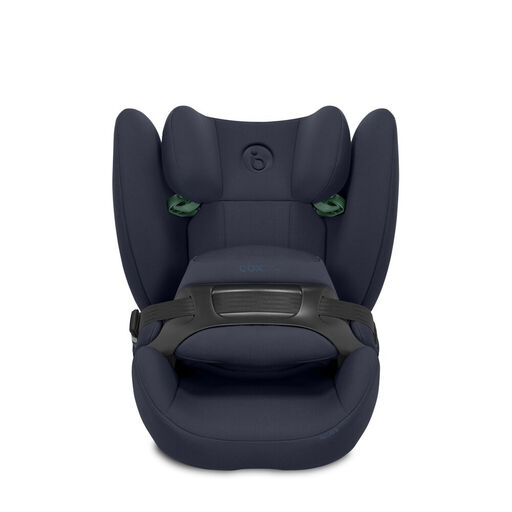
Why This Fits Their Persona: Ideal for families who want to make a single investment for the entire car seat period. This seat covers the age range from approx. 15 months to 12 years.
It solves the short-term planning problem by being designed as a 2-in-1 seat, making the purchase of multiple follow-up seats unnecessary. It is a classic all-in-one car seat.
Long lifespan of over 10 years; adjustable impact shield for children up to 105 cm; meets the i-Size standard (UN R129/04).

Why This Fits Their Persona: Perfect for parents seeking maximum comfort and ease of use from birth. The 360° rotation feature makes placing and securing the child significantly easier.
Addresses the problem of complicated installation and handling. The rotation function and clear ISOFIX installation with a support leg reduce user error and are easier on parents' backs.
360° rotation mechanism; approved under the i-Size standard (ECE R129/04) for children from 40 to 105 cm; allows for extended rear-facing travel (rear-facing seat).
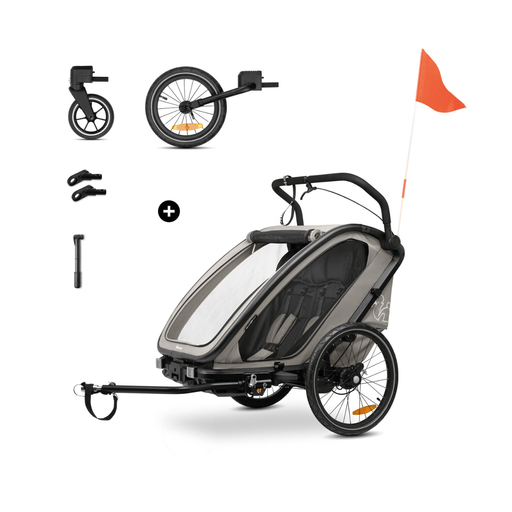
Why This Fits Their Persona: For families whose mobility extends beyond the car. This product combines a child bike trailer with a city-stroller and an outdoor companion for two children.
Solves the problem of needing to buy separate transport for each activity (cycling, walking). It bundles multiple functions into one product, saving space and money.
3-in-1 functionality; space for two children up to 22 kg each; adjustable suspension for different terrains and a comprehensive safety package (LED light, reflectors, 5-point harnesses).
Beyond car seats, there are also clever solutions for travelling by plane or train. A practical ride-on suitcase for kids can turn the journey into an adventure while also serving as carry-on luggage.
We have compiled a complete, real-time list of products that fully satisfy these strict selection criteria and European safety regulations.
1. How long must my child sit in a rear-facing car seat? According to the i-Size standard (UN R129), rear-facing transport is legally required until 15 months of age and a height of 76 cm. However, safety experts recommend keeping children rear-facing for as long as possible, ideally up to the age of four, as this offers the best possible protection for the head and neck in a frontal impact.
2. Can I use an ISOFIX car seat in a car without ISOFIX? That depends on the seat model. Some seats are "hybrid" and can be installed using either ISOFIX or the vehicle's 3-point seat belt. However, pure ISOFIX seats without an alternative belt path cannot be used in cars without the corresponding anchor points. Always check this in the product description or the seat's user manual.
3. When should we switch from an infant carrier to a larger car seat? The switch is necessary when your child's head extends beyond the top edge of the infant carrier, or when the maximum permitted weight or height is exceeded. Don't base the decision on age or whether their feet are touching the back of the vehicle seat. The head must always be fully contained and protected by the shell.