
Lieferung heute & morgen

Qualitätsgarantie

Willkommens-Angebote freischalten: KOSTENLOSE Lieferung | Bis zu 80 % RABATT | Kostenlose 30-Tage-JoyPlus-Testphase
App herunterladen
Choosing the right child car seat is one of the most important decisions for parents and grandparents. However, the market is overwhelming and filled with marketing promises that create more confusion than clarity. A poor purchase is not only a strain on your wallet but can, in a worst-case scenario, compromise your child's safety. As your Joybuy Product Recommendation Officer, I'm here to help you separate fact from fiction and make an informed decision.
Many buyers fall into the same common traps. Here are the most frequent ones you should know:
To avoid these pitfalls, you should focus on the fundamental, non-negotiable features of a child car seat. These parameters define its safety and real-world usability.
The i-Size standard (UN R129) is the current European safety standard for child car seats. Unlike the older ECE R44 regulation, which is based on the child's weight, i-Size classifies seats according to body height. This allows for a more precise fit. Key advantages of i-Size include:
The method of installation is critical for the seat's stability.
Modern seats offer numerous features that make daily life easier. A 360-degree rotating car seat makes placing and buckling up the child significantly easier. A car seat with an impact shield is an alternative to the classic 5-point harness. The impact shield functions similarly to an airbag, distributing the impact energy over a large area of the upper body in a frontal collision.
For use at home, high chairs are relevant. Here too, there are specialised models like the folding high chair for space-saving storage or the lightweight travel high chair for on the go.
Instead of making a blanket recommendation, we have identified products that meet specific needs and cleverly avoid the pitfalls mentioned earlier.
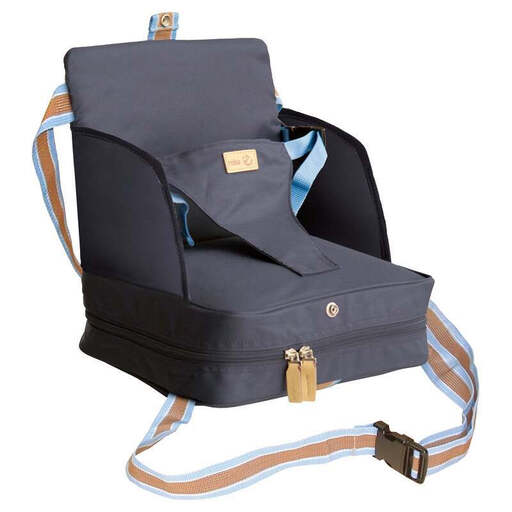
Why This Fits Their Persona: Perfect for families who are often on the move, whether at a restaurant, visiting grandparents, or on holiday. This booster seat is not a car seat, but a flexible solution for standard chairs.
It bypasses the "one-seat-fits-all" trap by clearly positioning itself as a specialised travel high chair and not attempting to be a car seat. Its function is clearly defined and reliably fulfilled.
Extremely portable thanks to an inflatable cushion; adjustable straps for securing to almost all standard chairs; robust, wipe-clean material.
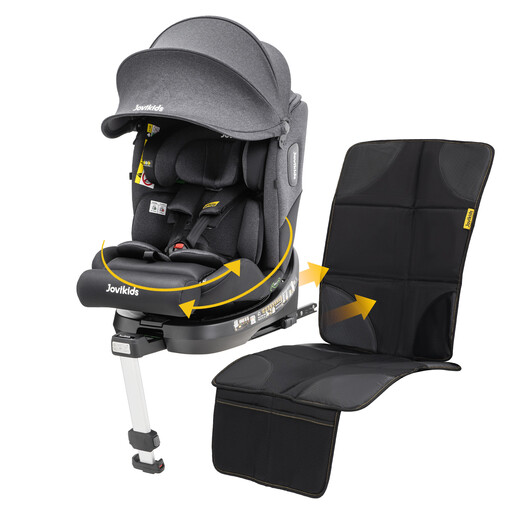
Why This Fits Their Persona: Ideal for parents seeking a single, cost-effective investment for their child's entire upbringing. This seat covers the range from birth (40 cm) to 12 years (150 cm).
This all-in-one car seat avoids compromises through thoughtful adjustments: it features removable newborn inserts and a 12-position adjustable headrest, ensuring a precise fit at every growth stage.
Certified to the strict i-Size standard (ECE R129); 360° rotation for easy entry and exit; installation with ISOFIX and a support leg for high stability.

Why This Fits Their Persona: For parents who refuse to compromise on safety and daily comfort. This seat combines high safety standards with maximum user-friendliness.
It avoids the "feature trap" by offering practical functions like 360° rotation not as a gimmick, but as an integral part of a well-designed safety concept (i-Size, L.S.P. System). Here, comfort and safety go hand in hand.
Full 360° rotation for back-friendly entry and exit; integrated Linear Side-impact Protection (L.S.P. System); 5 recline positions in both directions for superior comfort.
We've compiled a complete, up-to-date list of products that fully meet these strict selection criteria and UK safety regulations.
A child car seat has a limited lifespan. Plastic ages due to UV radiation and temperature fluctuations and can become brittle. Most manufacturers recommend a usage period of 5 to 10 years from the date of manufacture (not the date of purchase). You can find the exact date on a sticker on the seat. After this period, its protective function can no longer be guaranteed.
Yes, absolutely. After an accident, even at low speed (often from just 10 km/h or 6 mph), a child car seat must be replaced. Hairline cracks can form in the material that are not visible to the naked eye but can severely compromise the seat's stability in a subsequent accident. Some manufacturers offer a free replacement as part of their warranty programmes.
Both systems are designed to secure the child in the seat, but they work differently.