
Lieferung heute & morgen

Qualitätsgarantie

Willkommens-Angebote freischalten: KOSTENLOSE Lieferung | Bis zu 80 % RABATT | Kostenlose 30-Tage-JoyPlus-Testphase
App herunterladen
Choosing a child car seat is one of the most important decisions parents make for their child's safety. The market offers an overwhelming variety of models, standards, and features, which can make the choice complicated. Many products advertise comfort features or a long service life, but not all deliver on their promises. As your Joybuy Product Recommendation Officer, I'll help you understand the crucial criteria and avoid common purchasing pitfalls.
Before we dive into the technical details, it's important to critically examine common marketing promises. These three points often lead to poor purchasing decisions:
To make an informed decision, you should focus on the core parameters that are truly relevant for safety and correct installation.
The i-Size norm is the current European standard for child car seats and offers significant advantages over the older ECE R44 regulation:
The installation method is crucial for the seat's stability. ISOFIX is an internationally standardised system with anchor points that are firmly connected to the vehicle's chassis.
Installation with the vehicle's 3-point seat belt is more flexible but also more prone to error. Careful and tight belt routing according to the manual is essential here.
Car seats are tailored to the anatomy and needs of different age groups:
Here are some recommendations tailored to specific needs that take the aforementioned criteria into account.

Why This Fits Their Persona: Ideal for parents looking for a safe and comfortable all-in-one solution for the first four years, right from birth. The 360° rotation feature is easy on the back during daily use, while the newborn inlay ensures an ergonomically correct position for the little ones.
While this is a convertible model for the 0-4 year age range, it is specifically designed for this phase. The included newborn inlay and multi-adjustable headrest ensure a precise fit, avoiding the compromises of 0-12 year seats.
Meets the strict UN R129/03 (i-Size) standard. Offers 360° rotation for easy entry and exit, and allows for extended rear-facing travel up to 20 kg.

Why This Fits Their Persona: Perfect for the transition after the infant carrier. This model combines high safety standards with the convenience that active families need in their daily lives. Its easy handling and robust materials are designed for intensive use.
This seat doesn't just focus on the 360° rotation; it integrates this feature into a comprehensive safety concept. It combines convenience with integrated Linear Side-impact Protection (L.S.P. System) and approval under the UN R129/03 i-Size standard, ensuring no compromises on safety.
Awarded "Test Winner" in its group by Stiftung Warentest / ADAC (Issue 05.24). Offers 5 recline positions in both directions and a one-hand adjustable headrest with 12 positions.
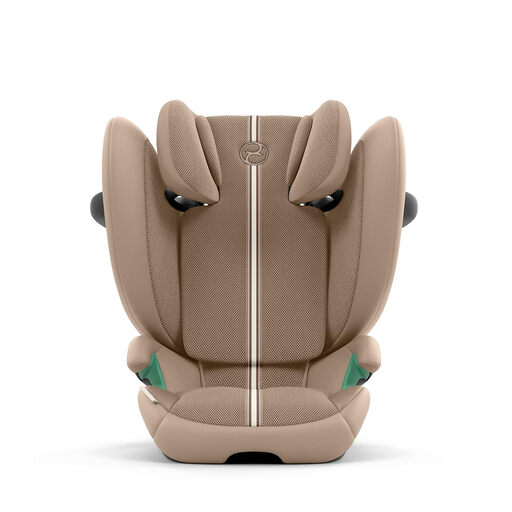
Why This Fits Their Persona: A long-lasting investment for children from approx. 3 to 12 years old (100-150 cm). This seat focuses on safety and comfort for longer journeys, which is crucial for growing children. Its easy adjustability makes it a reliable companion for many years.
As a follow-on booster seat, this model is specifically designed for the needs of older children. Instead of being a compromise for all age groups, it offers an excellent, adaptable fit for its specified age range with its adjustable headrest and flexible side wings.
Certified according to the UN R129/04 standard. The L.S.P. System Plus provides enhanced side-impact protection, according to the manufacturer. The reclining backrest ensures comfort on long trips.
We have compiled a complete, up-to-date list of products that fully meet these strict selection criteria and the highest safety standards.
According to the i-Size standard (UN R129), rear-facing travel is legally required until 15 months of age and a height of 76 cm. However, safety experts recommend keeping children in a rear-facing seat for as long as possible, ideally up to the age of four. This position offers significantly greater protection for the head and neck in a frontal collision.
The main difference lies in the safety requirements and classification. i-Size (UN R129) classifies seats by the child's height, mandates a passed side-impact test, and makes rear-facing travel compulsory until 15 months. The older ECE R44 standard categorises seats by weight and did not have a standardised side-impact test. Therefore, i-Size seats generally offer a higher standard of safety.
Using a second-hand car seat is generally discouraged unless you know its history completely. A seat can have invisible hairline cracks in the material after an accident, which would compromise its protective function. Furthermore, the materials are subject to ageing, which can reduce safety after about 6-10 years. If you are considering a used seat, ensure it has never been in an accident, the instruction manual is included, and it still complies with current standards.