
Lieferung heute & morgen

Qualitätsgarantie

Willkommens-Angebote freischalten: KOSTENLOSE Lieferung | Bis zu 80 % RABATT | Kostenlose 30-Tage-JoyPlus-Testphase
App herunterladen
A child car seat must suit your child, your vehicle and how you plan to use it. Yet product pages often encourage unsuitable purchases: a broad age range may sound convenient, a swivel function can seem automatically safer and a low price may conceal a lack of everyday practicality. What really matters are clear, verifiable details such as height, installation method, approval standard and belt routing.
“From birth to 12 years” sounds like a solution for the whole of childhood. In practice, newborns, toddlers and school-age children need to be positioned differently. With a child car seat from birth, for example, a suitable newborn insert, an appropriate reclined position and rear-facing use are important. A model for 100–150 cm, on the other hand, is intended for taller children and is unsuitable for babies.
A swivel child car seat can make buckling up easier. On its own, however, this feature says nothing about whether the seat is suitable for every vehicle or seating position. Before buying, parents should check whether ISOFIX attachment, a support leg or a top tether is required, and whether the vehicle manufacturer permits the relevant installation method.
A seat that is suitable only for a short height range may need to be replaced sooner. Conversely, a very large seat is not automatically more economical if it is difficult to reconfigure or does not fit in multiple vehicles. A washable cover, spare parts and actual vehicle compatibility should also be included when considering the total cost.
Approval under UN R129 or ECE R129 is based primarily on the child’s height. The exact measurements must always match the product instructions. For babies and small children, a rear-facing child car seat may be suitable. It allows the child to travel facing backwards. For R129 seats, rear-facing use is mandatory until at least 15 months of age and a height of 76 cm; the individual instructions may specify a longer period of rear-facing use.
Look out for these ranges:
A child car seat with ISOFIX is attached to the vehicle’s standardised anchorage points. Visible colour indicators can help with checking the installation, but they do not replace the instructions. Some models also require a top tether, while others use a support leg.
With seats for 100–150 cm, the child is often secured using the vehicle’s three-point seat belt. The belt must run across the shoulder and pelvis without rubbing against the neck or crossing the stomach. A booster seat must not be used with a two-point seat belt unless the approval specifically permits it.
A child car seat with side-impact protection may feature protective elements built into the shell or side wings. What matters is whether the seat is approved to a valid standard and fits the vehicle correctly. The headrest and harness system should also be easy to adjust. A harness that is too loose, thick winter clothing or twisted belt routing can compromise proper restraint.
You should also check the following before buying:
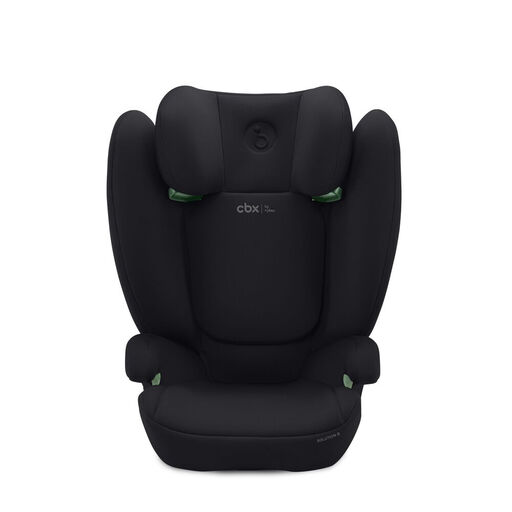
Why this product suits this profile: The seat is designed for children from 100 to 150 cm and offers a straightforward specification for everyday use.
The clearly defined height range helps prevent the seat from being bought too early for a smaller child. ISOFIX is used for attachment; the exact belt routing must be checked against the instructions.
UN R129/04, a 12-position adjustable headrest and machine-washable cover at 30 °C according to the product information.

Why this product suits this profile: For families with a baby or toddler, this model combines use from 40 to 105 cm with several adjustment options.
The 40–105 cm range clearly defines the period of use. Rear-facing use for smaller children and the insert for 40–60 cm must be observed explicitly.
UN R129/03, integrated ISOFIX base with support leg, 360-degree swivel mechanism and 12 headrest positions according to the product description.
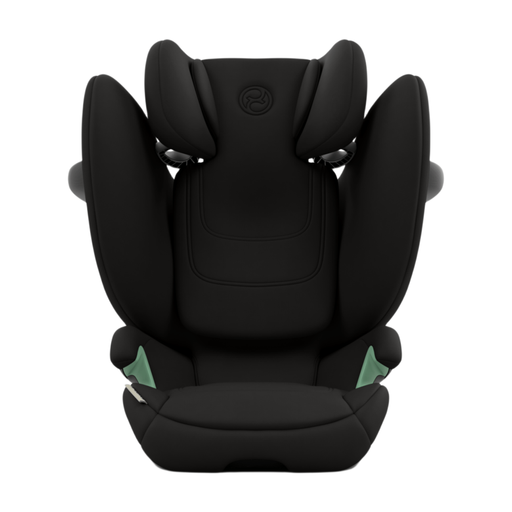
Why this product suits this profile: The foldable design and weight of 5.8 kg are useful for families that regularly switch between cars.
Use is limited to 100–150 cm. This helps prevent a foldable seat from being mistakenly used for a baby or a significantly smaller child.
UN R129/04, ISOFIX or vehicle seat belt, plus an adjustable headrest and foldable construction according to the product information.

Why this product suits this profile: The 2-in-1 approach is aimed at parents looking for a seat from 76 cm to 150 cm and who want to manage the change in restraint system carefully.
The product information specifies clear changeover points: the impact shield is removed at 105 cm or 21 kg, after which the vehicle’s three-point seat belt is used.
UN R129/04, ISOFIX and top tether for the relevant height range, plus a 12-position adjustable headrest according to the product description.
We have put together a complete, regularly updated list of products that fully meet these strict selection criteria and the safety regulations applicable in the EU.
For babies, a rear-facing infant carrier or an i-Size child car seat from 40 cm may be suitable. The approved minimum height, a suitable insert and the correct harness position are crucial. A seat for 100–150 cm is not suitable.
This depends on the approved height range, the condition of the seat and the manufacturer’s information. A model up to 105 cm will typically be outgrown sooner than a child car seat up to 12 years approved for use up to 150 cm. The seat should be replaced after an accident or if there is visible damage.
No. Some child car seats are attached using ISOFIX, while others use the three-point seat belt or a combination of both systems. The decisive factors are the seat’s approval, the vehicle instructions and the manufacturer’s installation guidance.