
Lieferung heute & morgen

Qualitätsgarantie

Willkommens-Angebote freischalten: KOSTENLOSE Lieferung | Bis zu 80 % RABATT | Kostenlose 30-Tage-JoyPlus-Testphase
App herunterladen
Choosing a child car seat is one of the most critical decisions for your child's safety in the car. The market offers a plethora of models, standards, and features, which makes finding your way difficult. As your Joybuy Product Recommendation Officer, I'll help you understand the crucial criteria and avoid typical purchasing traps, so you can make an informed and safe choice.
Many parents invest in a seat that looks promising on paper but fails to deliver in practice. Two common pitfalls are particularly costly and potentially unsafe:
To make a safe and sound decision, you should check three core parameters. These form the foundation for your child's protection and ensure the seat fits your vehicle and lifestyle.
The most important guidance is the approval standard. For several years, the i-Size car seat (standard UN R129) has been establishing itself alongside the older ECE R44/04 standard. An i-Size seat offers clear advantages:
Look for the orange approval label when purchasing. A seat compliant with UN R129 is a future-proof choice that meets current safety requirements.
Correct installation is essential for the seat's protective function. Studies show that a high number of child car seats are installed incorrectly.
A child's journey in a car is divided into several phases, for which there are specialised seats:
We have selected products that meet specific needs and purposefully avoid the pitfalls mentioned.
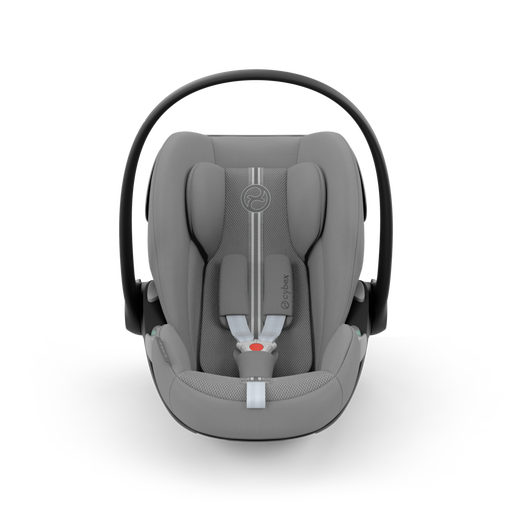
Why This Fits Their Persona: Ideal for parents who refuse to compromise on safety and ergonomics for their newborn. This infant carrier is specifically designed for the needs of the very youngest.
This seat avoids the "one-seat-fits-all" trap by specialising in the first phase of life. The ergonomic lie-flat position and newborn inlay are precisely tailored to the anatomy of infants.
Certified according to the latest i-Size standard (UN R129). Offers a near-flat lying position that can also be used outside the car on a stroller frame. The 180° rotation on the optional Base G makes getting your child in and out easier.
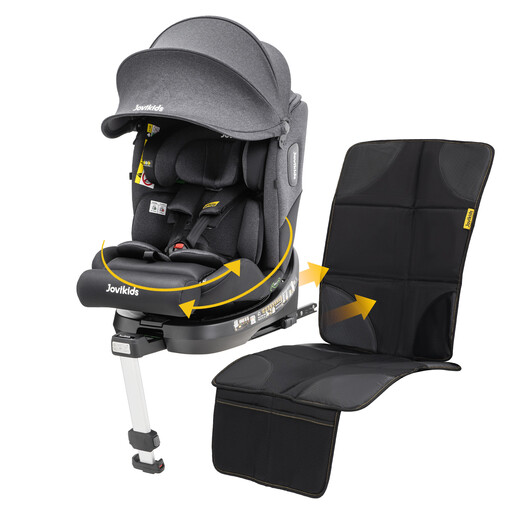
Why This Fits Their Persona: For parents looking for a long-term solution without sacrificing modern safety standards and comfort. This seat covers the entire period of use from birth to 12 years.
This seat is an example of a modern all-in-one car seat that meets the i-Size standard. It combines a long period of use with the strict safety requirements of UN R129, instead of relying on outdated standards.
Covers the huge range from 40 to 150 cm. The 360° rotation feature makes getting in and out easier. Installation is secure via ISOFIX and a support leg. The headrest is 12-way adjustable.

Why This Fits Their Persona: Perfect for the transition from toddler to school-aged child. This 2-in-1 seat accompanies children from approx. 15 months for many years, adapting to their growth.
While this is a multi-stage seat, it's for a clearly defined phase (from 76 cm). It uses an impact shield, which according to manufacturer Cybex can reduce the risk of neck injuries, and later converts into a full-fledged high-back booster seat.
Meets the i-Size standard (UN R129). Offers a very long lifespan of over 10 years. The integrated side-impact protection and the 12-way adjustable headrest ensure safety and comfort at every stage of growth.
We have compiled a complete, up-to-date list of products that fully meet these strict selection criteria and UK safety regulations.
1. How long must my child travel in a rear-facing car seat? According to the i-Size standard (UN R129), rear-facing transport is legally required until 15 months of age and a height of 76 cm. However, safety experts recommend keeping children rear-facing for as long as possible, ideally up to the age of four, as this offers the best possible protection for the head and neck in a frontal collision.
2. Does every ISOFIX car seat fit in every car with ISOFIX? No, not necessarily. Although ISOFIX is a standardised system, there can be differences in the shape of vehicle seats or the position of the anchor points. Therefore, always check the vehicle compatibility list on the car seat manufacturer's website before purchasing. It lists the car models for which the respective seat is approved.
3. When does it make sense to switch from a child car seat to a booster seat? The switch to a booster seat (Group 2/3) usually occurs when the child has reached the maximum weight or height limit of the previous seat (usually around 18 kg or 105 cm). It is strongly recommended to use a high-back booster seat. Unlike a simple booster cushion, this provides crucial side-impact protection for the head and upper body and ensures that the shoulder belt runs correctly over the child's shoulder.