
Lieferung heute & morgen

Qualitätsgarantie

Willkommens-Angebote freischalten: KOSTENLOSE Lieferung | Bis zu 80 % RABATT | Kostenlose 30-Tage-JoyPlus-Testphase
App herunterladen
Choosing a child car seat is one of the most important decisions parents make for their child's safety. However, the market is overwhelming and filled with marketing promises that often create more confusion than clarity. Many well-intentioned purchases turn out to be impractical, unsafe, or simply a poor investment in everyday use.
As your Joybuy Product Recommendation Officer, I'm here to help you separate the crucial facts from the marketing fluff. In this guide, we'll focus on the most common pitfalls and the criteria that truly matter, so you can find a child car seat that is not only safe but also practical for daily life.
The 3 Most Common Pitfalls When Buying a Car Seat:
To make an informed decision, you should focus on three core areas. These define the safety and usability of a child car seat in everyday life.
Two standards are currently valid in parallel, but the newer UN R129, known as i-Size, sets higher standards.
When making your choice, give preference to models that are approved under the current UN R129 (i-Size) standard.
A seat can only provide optimal protection if it matches the child's developmental stage. There are three main categories:
A convertible car seat that covers multiple stages can be a practical solution, as long as it guarantees an optimal fit and safety in every phase.
The safest design is useless if the seat is installed incorrectly.
Features like a 360-degree rotation feature make it much easier to place and buckle the child in, and can help prevent incorrect harness routing caused by awkward handling.
Here are some models tailored to the specific needs of families, which purposefully avoid the pitfalls mentioned.
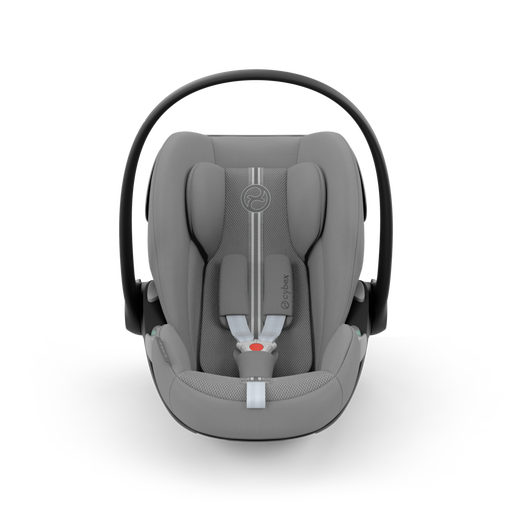
Why This Fits Their Persona: Ideal for parents who refuse to compromise on safety and ergonomics from day one. The near-flat recline position protects the baby's back, even when used on a stroller frame outside the car.
Avoids the "all-in-one" compromise by specialising in the needs of newborns. As part of a modular system (with Base G), the transition to the next seat is seamless without sacrificing safety.
Ergonomic lie-flat position, 180° rotation mechanism on the base for easy entry and exit, approved according to UN R129/03 (i-Size).
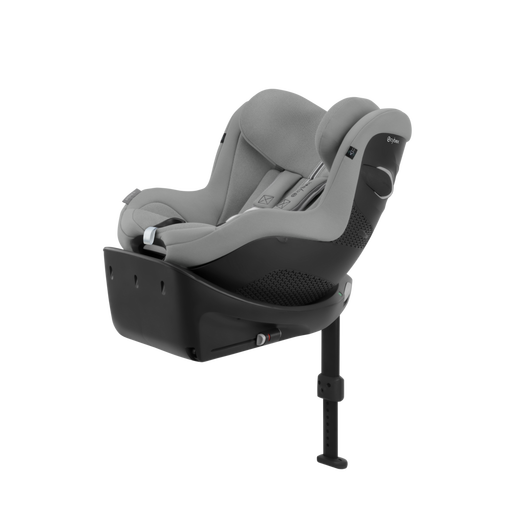
Why This Fits Their Persona: Perfect for daily life with a toddler. The 360° rotation is a real back-saver for parents, and the adjustable recline positions ensure relaxed journeys, even when the child is sleeping.
This seat focuses on a clearly defined age group (approx. 3 months to 4 years), providing an optimal fit. The rotation feature is not a gimmick here, but a core feature that makes daily handling safer and easier.
360° rotation mechanism, integrated side-impact protection, all-round air circulation for better climate comfort, and multiple adjustable recline positions.
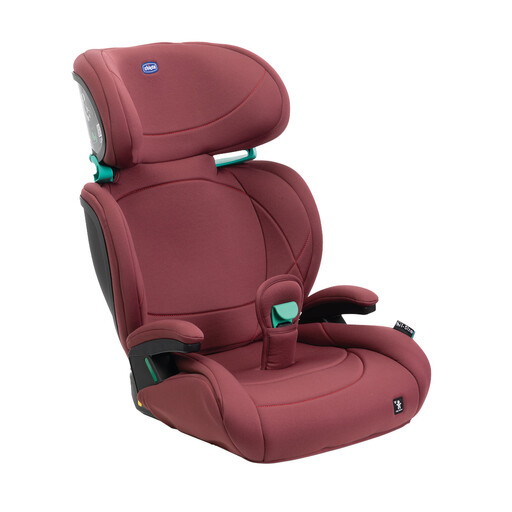
Why This Fits Their Persona: A pragmatic and safe solution for the final stage of car seat requirements (100–150 cm). Its light weight makes it easy to switch between the family car and the grandparents' car.
This seat focuses on the essentials: safely guiding the vehicle's seat belt according to the i-Size standard. It forgoes expensive extra features that are often no longer needed in this age group, offering certified safety instead.
Approved according to UN R129/03 (i-Size), very lightweight (4.5 kg), adjustable headrest and backrest for more comfort on long journeys.
Sometimes it's the little things that make everyday life easier. A suitable summer cover for the car seat made from breathable materials like cotton or bamboo viscose can reduce sweating on hot days and protect the original cover. Brands like Cybex offer custom-fit covers for their models like the Solution X or Sirona Gi. A seat protector mat also protects your car's upholstery from pressure marks and dirt.
We have compiled a complete, up-to-date list of products that fully meet these strict selection criteria and European safety regulations.
1. How long does my child have to travel in a rear-facing car seat? According to the i-Size standard (UN R129), rear-facing travel is legally required until at least 15 months of age and a height of 76 cm. However, safety organisations like the ADAC recommend transporting children in a rear-facing seat for as long as possible, ideally up to the age of four. This position offers up to five times better protection for the sensitive head and neck area in a frontal collision.
2. When is the right time to switch from an infant carrier to the next seat? The switch should be made when the maximum weight or height limit specified in the infant carrier's manual is reached. A practical guideline is when the top of the child's head reaches the top edge of the carrier or is less than two fingers' width away from it. Switching too early can compromise safety, as the child's body may not yet be stable enough for the next-stage seat.
3. Do child car seats have an expiry date? Yes. Most manufacturers specify a recommended service life of about 6 to 10 years. Over time, plastics can become brittle due to UV radiation and temperature fluctuations in the car, losing their protective properties. The manufacturing date can usually be found on a sticker on the seat. Regardless of age, a child car seat must be replaced after any accident (even at low speed), as invisible hairline cracks can weaken the structure.