
Lieferung heute & morgen

Qualitätsgarantie

Willkommens-Angebote freischalten: KOSTENLOSE Lieferung | Bis zu 80 % RABATT | Kostenlose 30-Tage-JoyPlus-Testphase
App herunterladen
A child car seat must suit your child, your vehicle and the intended period of use. Yet product names like “i-Size”, “growing” or “side-impact protection” don’t automatically lead to the right purchase decision. What really matters are the technical specifications, the installation method and how practical the seat actually is in daily life.
A growing child car seat that covers many age groups can be practical. However, it won’t automatically fit perfectly at every stage of development. For example, a model for 76–150 cm is not intended for newborns. For babies, different seating areas, a suitable reclining position and rearward-facing use are what count.
So always pay attention to:
An ISOFIX child car seat can usually be attached in a repeatable way. This reduces installation errors, but it doesn’t replace checking your vehicle and seat instructions. Some models also need a Top Tether, while others are secured with the vehicle’s three-point belt in later usage modes.
Before buying, you should check:
A child car seat with side-impact protection may have structural protective components such as reinforced side areas or energy-absorbing materials. However, the term alone says little about compatibility with your own vehicle. Likewise, a child car seat with an impact shield requires the correct size and weight assignment.
What can be objectively compared includes:
An i-Size child car seat is based on the European approval standard UN R129. Selection is mainly based on height rather than just weight. The standard also includes requirements for side-impact protection and, for certain height ranges, mandates rearward-facing use.
The term i-Size does not mean that every seat fits every vehicle. What remains decisive are the specifications from the seat manufacturer and the vehicle manufacturer.
Age indications are only a rough guide. A child car seat for 15 months to 12 years may, according to the product data, be intended for children from 76 to 150 cm and about 9 to 50 kg. What matters is whether the child’s head is sufficiently enclosed by the headrest and whether the belt sits correctly against the body.
When moving to the next usage mode, the respective minimum values must not be undercut. With the CYBEX Pallas B i-Size, the impact shield is used for children up to 105 cm or 21 kg, according to the product information. After that, the child is secured with the vehicle’s three-point belt.
A child car seat should be adjustable without complicated intermediate steps. Practical features include a height-adjustable headrest, an adjustable backrest and clearly visible installation indicators. Removable covers that are machine-washable at 30 °C make regular cleaning easier.
After an accident, a child car seat should be replaced regardless of its visible condition. With second-hand models too, the age, completeness of parts and a traceable history are important.

Why this product fits the profile: According to the product data, this 2-in-1 seat covers the range from around 15 months to 12 years, or 76–150 cm, so it can accompany your child through several developmental stages.
The clearly stated height range prevents the seat from being mistakenly bought for newborns. The impact shield must be used according to the manufacturer’s instructions and later removed.
UN R129/04, ISOFIX and Top Tether; 12-way adjustable headrest and washable cover at 30 °C.
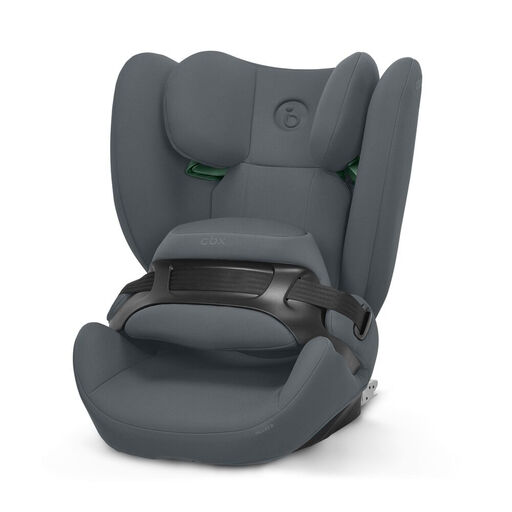
Why this product fits the profile: Ideal for families looking for a long-term solution with clearly defined installation and adjustment features.
The technical limits for the impact shield and vehicle belt are specified. This makes it easier to plan the switch to the next mode than with vague age promises.
Three ISOFIX connection points, top tether, adjustable backrest and 12 headrest positions.
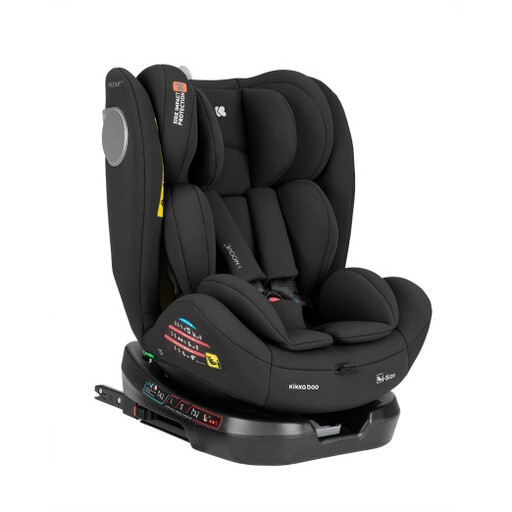
Why this product fits the profile: This model is aimed at families who want to combine use from birth, rearward-facing travel up to 105 cm and a 360-degree swivel function in one system.
The specific range of 40–150 cm, along with separate details for rearward and forward-facing use, makes the usage limits clear and easy to understand.
UN R129/04, ISOFIX with Top Tether, 24-way adjustable headrest and integrated side-impact protection according to the product description.

Why this product fits the profile: According to the product data, this infant carrier is designed for 40–87 cm and up to 13 kg, making it suitable for the first stage of life.
The limited height and weight range prevents the infant carrier from being used for too long. For installation, ISOFIX or alternatively the three-point belt is intended.
UN ECE R129-03, rearward-facing use, height-adjustable headrest and a weight of 4.4 kg according to the product data.
We have put together a complete, regularly updated list of products that fully meet these strict selection criteria and the safety regulations in force in the EU.
For mealtimes, a high chair for children with a 5-point harness and a stable base can be useful. The foldable Hauck High Chair Sit N Fold has, according to the product data, three seat heights, a removable tray and folds away compactly to save space. It is intended for children from 6 to 36 months and up to 15 kg.
For older children, a toilet seat for children with an adjustable holder, splash guard and side handles is a good option. Before each use, the seat must be firmly in place on the toilet and an adult should stay nearby.
That depends on the approved height and weight range. A seat for 76–150 cm can be used for several years, whereas an infant carrier usually reaches its limit much sooner. After an accident, the seat should be replaced.
ISOFIX makes standardised attachment easier and can reduce installation errors. However, it is only suitable if both the vehicle and the child car seat are approved for it. In some seat modes, the vehicle belt is also needed.
The specific rule depends on the approval standard, the child’s height and the manufacturer’s instructions. With many i-Size systems, defined minimum and maximum heights apply for rearward-facing travel. So always check the details for your specific model and vehicle.