
Lieferung heute & morgen

Qualitätsgarantie

Willkommens-Angebote freischalten: KOSTENLOSE Lieferung | Bis zu 80 % RABATT | Kostenlose 30-Tage-JoyPlus-Testphase
App herunterladen
A child car seat needs to suit your child, your vehicle and the way you plan to use it. Eye-catching padding or an unusually wide age range alone don’t tell you much about how practical it will be day to day. What really matters are the approval standard, your child’s height, the installation method and correct usage.
A claim like “from birth to 12 years” sounds convenient, but it isn’t always realistic or suitable for every model. Under UN R129, an i-Size child seat is classified primarily by the child’s height. That’s why parents should check before buying whether the seat is approved for their child’s current height and how the adjustment changes as the child grows.
A 0–12 year child seat can cover several developmental stages, but it often involves different installation and securing methods. The instruction manual must clearly explain when, for example, a impact shield should be removed and the vehicle seat belt used instead.
An ISOFIX child seat cannot automatically be used the same way in every vehicle. Depending on the model, you may also need a Top Tether, a support leg or specific ISOFIX seating positions. So before you buy, you should check both your vehicle manual and the child seat manufacturer’s approvals.
Even a visible green installation indicator doesn’t replace a proper check of the belt routing. The seat must be firmly attached, and the seat belt must not be twisted or incorrectly threaded through the guides.
A reclining position, ventilation or a swivel child seat can make daily life easier. However, they don’t replace the right size or correct installation. A swivel child seat is especially helpful when strapping your child in, but it needs enough space between the seat and the front seat. When using it rear-facing, the active front airbag must be switched off.
The UN R129 mark indicates a European approval standard for child restraint systems. It takes into account, among other things, the child’s height and requirements for side-impact protection. With an i-Size child seat, the stated height range should match your child’s current height.
Important: an approval is not a free pass for every installation situation. What remains decisive are the specifications of the seat and your particular vehicle.
Check before you buy:
For babies and small children, the direction of travel is also relevant. Rear-facing use distributes the forces in a frontal collision differently than forward-facing use. The permitted direction of travel and minimum height must always be clear from the instruction manual.
An adjustable headrest, a growing harness system and removable covers can make long-term use easier. Look for specific details rather than general marketing claims: how many adjustment positions are there? Up to what height does the seat extend? Is the cover machine-washable at 30 °C?
Weight also matters. Families who frequently move the child car seat between several vehicles will benefit from a lighter weight or a foldable design. For daily use, operation should be possible without unnecessarily complicated steps.

Why this product fits the profile: The infant carrier is designed for 40 to 87 cm and up to 13 kg. According to the product details, it can be secured with ISOFIX or alternatively with a three-point belt, and it weighs 4.4 kg.
The clear height and weight limits prevent the infant carrier from being used beyond its intended phase. The installation indicators help you check the connection.
Rear-facing use, removable newborn insert and washable covers at 30 °C according to the product description.
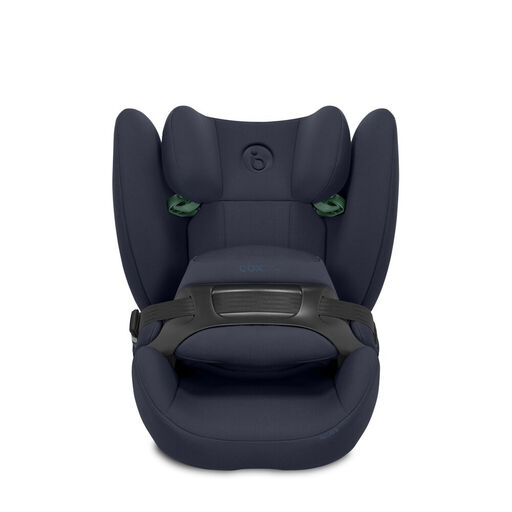
Why this product fits the profile: According to the manufacturer, the CYBEX child seat is designed for 76 to 150 cm, approximately 9 to 50 kg, and for use from around 15 months up to about 12 years.
The transition from the impact shield to the vehicle seat belt is determined by height and weight. This keeps the restraint linked to the child’s developmental stage.
UN R129/04, ISOFIX and Top Tether, plus a 12-way adjustable headrest according to the product details.
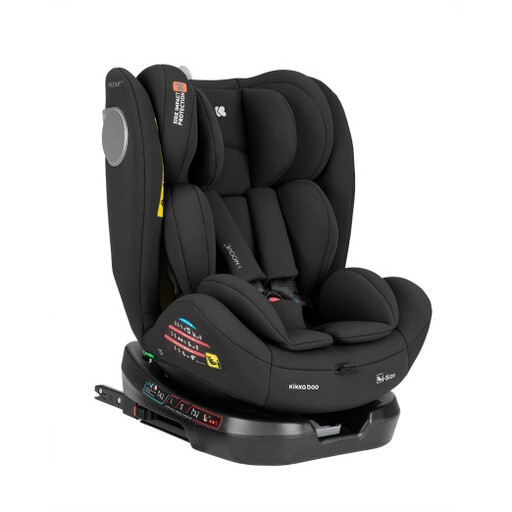
Why this product fits the profile: According to the product description, this model covers 40 to 150 cm and offers a 360-degree swivel function, several recline positions and rear-facing use from 40 to 105 cm.
The specific changeover limits for rear-facing and forward-facing use reduce the risk of deciding based only on a general age recommendation.
24 headrest positions, 5-point harness system, ISOFIX with Top Tether and integrated side-impact protection according to the manufacturer.
We’ve put together a complete, regularly updated list of products that fully meet these strict selection criteria and the safety regulations in force across the EU.
The useful life depends on the approved height and weight limits, the condition of the seat and the manufacturer’s instructions. With growing models such as a Group 1/2/3 child seat or an i-Size seat up to 150 cm, use can span several years. After an accident, the seat should always be replaced.
ISOFIX makes it easier to create a stable connection with the vehicle and can reduce the risk of incorrect installation. However, it is not universally suitable for every vehicle or every seating position. A correctly routed three-point belt can also be an approved method of securing. What matters are the instructions for the child car seat and the vehicle approval.
The price depends on factors including the approval range, installation method, materials, adjustability and additional features such as a swivel mechanism or side-impact protection. Rather than comparing only the purchase price, families should also consider the length of use, replacement parts, compatible bases and the care of the cover.